


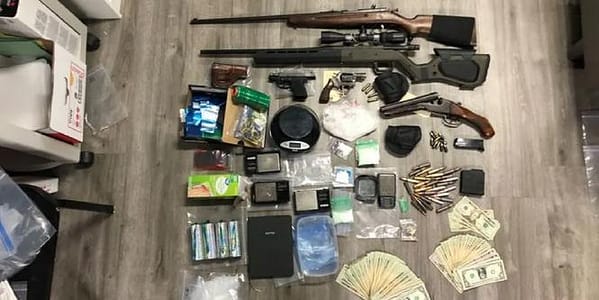
Constructive Possession Cases
The constructive possession meaning in California often surprises people: you can face drug charges even if the substance never touched your hands. However, prosecutors don't need proof of ownership, only evidence that you knew about the drugs and had control over them. Whether it's a backpack in a friend's car or a stash in a shared apartment, these situations can lead to serious charges. In this article, we'll break down what constructive possession means, what prosecutors must prove, and how a skilled defense attorney can challenge these accusations.
What Does Constructive Possession Mean in California?
California law splits drug possession into three distinct categories, and understanding where you fall can make or break a defense strategy. The state doesn't require police to catch you holding a baggie of pills for a possession charge to stick. Instead, prosecutors build cases around control and awareness, concepts that stretch far beyond what's physically in your hand.
Actual possession vs. Constructive possession vs. Joint possession
Actual possession is the simplest to grasp: the drug sits on your body, in your pocket, your purse, or a bag you're carrying. If an officer pats you down and finds cocaine in your jacket, that's actual possession, plain and simple.
Constructive possession works differently. You don't need to be touching the substance at all. Instead, the law asks whether you had the ability to control it, or the right to control it, even from a distance. A person who rents a storage unit and keeps methamphetamine inside has constructive possession of those drugs the moment they hold the key, regardless of whether they're standing in front of the unit or miles away. The same logic applies to a locked desk drawer at work: if the drawer is yours to access, whatever sits inside it can be attributed to you, even while you're out of the building.
Here's the catch though: constructive possession typically requires more than mere access to a location. Courts have been clear that simply being near drugs, or having the ability to reach a space where drugs are stored, isn't enough on its own. The California Supreme Court addressed this directly in People v. Williams (1971), ruling that mere presence in a vehicle where drugs were found doesn't establish constructive possession without additional evidence connecting a specific person to those drugs.
Joint possession is when more than one person controls drugs. Drugs often turn up in spaces that belong to nobody exclusively, a shared apartment, a car with multiple passengers, a hotel room rented by one person but occupied by several. Two or more people can be charged simultaneously when each had knowledge of the drugs and the ability to control them.
Consider roommates Sarah and Mike: even if heroin turns up only in Mike's bedroom, both can face joint possession charges if evidence shows they both knew about the stash and intended to share control over it. Ownership of the drugs isn't what matters here. What matters is whether control was direct, meaning immediate access like a car or house, or indirect, meaning access through someone else holding the substance temporarily on your behalf.
Why drug ownership is not required for a possession charge
Here's the point that trips up most defendants: you don't need to own drugs to be convicted of possessing them. Prosecutors only need to establish control and knowledge, not a receipt or a claim of ownership.
This distinction matters enormously in shared environments. A homeowner might have legal authority over an entire property while remaining completely unaware of something a guest hid in a spare room. Similarly, a person assigned a company vehicle might never know what a previous driver left under the seat. Ownership can serve as evidence prosecutors point to, but it never substitutes for proof that a specific person knew the substance was there and had genuine authority over it. That gap between ownership and knowledge is often where a solid defense takes shape.
Call Now 213-932-8922, for a free consultation.
What Must Prosecutors Prove in a Drug Possession Case?
Every drug possession case in California, whether it rests on actual or constructive possession, hinges on the same set of legal elements. Prosecutors cannot simply point to a baggie in a shared space and call it a day. They have to walk through each requirement under CALCRIM 2304 and prove it beyond a reasonable doubt, or the case collapses entirely.
Knowledge that the drugs were present
The first hurdle is knowledge of presence. A person who genuinely had no idea a controlled substance was sitting in their car, backpack, or apartment hasn't committed a crime, even if police later find drugs in a spot connected to them. The California Supreme Court addressed this head-on in People v. Rubacalba (1993), holding that awareness of the narcotic's presence is the ultimate test for possession. Proximity alone doesn't cut it. Prosecutors typically lean on circumstantial evidence such as statements made to officers, fingerprints, text messages, or who actually controlled the location to establish this element.
Knowledge of the substance’s controlled nature
Knowing drugs exist somewhere isn't enough on its own. The defendant must also have understood that the substance was a controlled one. That said, prosecutors don't need to prove you identified the exact chemical name. In People v. Palaschak (1995), the California Supreme Court confirmed that knowledge of the substance's general character as a drug satisfies this element, so claiming you thought cocaine was actually meth won't get you out of a charge. Genuinely believing the item was a legal supplement or an authorized medication, however, can present a real defense.
Control or the right to control the drugs
This is where constructive possession cases often turn. Control doesn't require physical contact; it just requires the ability to direct what happens to the substance, either directly or through someone else. The courts have repeatedly clamped down on prosecutors who try to stretch this concept too far. In People v. Williams (1971), the California Supreme Court ruled that mere presence in a vehicle doesn't establish dominion and control. Similarly, People v. Showers (1968) and People v. Harrington (1970) confirm that access to a location, without more, doesn't prove possession of what's inside it.
A usable amount of a controlled substance
Quantity matters too. The substance has to exist in an amount usable for consumption, not just detectable residue. People v. Leal (1966) established that trace amounts useless for sale or consumption don't satisfy this element, while People v. Rubacalba later clarified that the amount doesn't need to be enough to produce an actual narcotic effect, just enough to be usable.
Proof beyond a reasonable doubt—not just suspicion
Taken together, these elements create a high bar. Prosecutors must establish possession, knowledge of presence, knowledge of nature, a usable quantity, and the controlled status of the substance beyond a reasonable doubt. If any single element falls short, in other words, the charge cannot stand, regardless of how suspicious the circumstances may appear.
When Can Someone Else’s Drugs Lead to Charges?
Real cases rarely involve someone caught holding drugs outright. Instead, most constructive possession charges grow out of messy, shared situations where more than one person had access to the same space. Here's how that plays out in practice.
Drugs in a shared car or a passenger's bag
Traffic stops create the most common scenario. Police find a baggie under a seat, in the glove box, or tucked into the trunk, and suddenly every occupant becomes a suspect. The driver often bears the brunt of this, even when a passenger sat closer to the stash or had equal access to it. A backpack belonging to someone else, left on the back seat, complicates things further: control of a container like a bag or jacket generally points to whoever owns it, not whoever happens to be driving. The same logic extends to borrowed vehicles. If you're driving a car that isn't yours and a previous driver left something behind, that substance isn't automatically yours simply because you were behind the wheel when police searched the car.
Drugs in a roommate's bedroom or a shared kitchen
Shared housing raises a different version of the same problem. Contraband discovered in your own bedroom supports a stronger inference of control than something found in a kitchen, living room, or bathroom used by everyone in the house. A roommate's stash hidden in a shared cookie jar, for example, can put every tenant under suspicion even though only one person actually put it there. On the other hand, drugs confined to a lock box that only one roommate can open typically point to that individual alone, since nobody else had the key.
Drugs kept by someone acting on your instructions
Control isn't limited to spaces you occupy directly. California law also recognizes indirect control, meaning you can be charged if someone else held the drugs on your behalf, acting as your agent. If instructions were given to stash or transport a substance for you, prosecutors can argue you exercised control through that person, even without ever touching the drugs yourself.
Drugs hidden away from your home
Distance from your residence doesn't eliminate liability either. Courts have held that hiding a substance in a public spot, say, burying a bag under a park bench across the street from your house, still supports a finding of constructive possession if prosecutors can tie the hiding spot back to you. Physical remoteness matters less than proof of knowledge and the intent to retain control over where the drugs ended up.
What Penalties Can Constructive Drug Possession Bring?
California treats constructive possession exactly like actual possession when it comes to sentencing. A conviction doesn't hinge on whether you were caught with drugs in hand or drugs locked in a drawer you controlled from a distance. What matters is whether prosecutors proved the elements covered above, and once they do, the penalties that follow are identical regardless of which category the case falls under.
Why actual and constructive possession carry the same legal weight
Proposition 47 reshaped drug sentencing across California by converting most simple possession offenses into misdemeanors. That shift applies equally whether the substance was found in a pocket or in a glove compartment tied to the defendant through constructive possession. A conviction can still bring up to a year in county jail, steep fines, probation, and lasting consequences for employment, housing, and immigration status. Courts don't carve out a lighter standard for constructive possession simply because no one caught the defendant physically holding the substance.
How the charge and criminal history affect possible penalties
Several factors shape the actual sentence: the type of drug, whether it was for personal use or sale, prior convictions, the quantity involved, and any aggravating circumstances. A standard misdemeanor conviction under Health and Safety Code 11350 or Health and Safety Code 11377 typically brings:
- Up to 1 year in county jail
- A fine as high as $1,000, plus court fees
- Misdemeanor probation lasting one to three years, mandatory drug education, and community service
The charge escalates to a felony when the defendant has disqualifying prior convictions, such as sex offenses requiring registration under Penal Code 290 or prior "Super Strikes" listed under Penal Code 667(e)(2)(C)(iv). Felony penalties range from 16 months to 3 years in county jail under California's realignment program, with fines reaching $70,000 depending on the substance. Possession for sale or transportation carries separate, harsher ranges, 2 to 4 years for HS 11351 and 3 to 5 years for HS 11352, and these charges aren't eligible for Proposition 47 relief or pretrial diversion. Aggravating factors like proximity to a school, firearm involvement, or offenses tied to minors can push sentences even higher.
When treatment or diversion may be available
First-time and non-violent defendants often avoid incarceration entirely. Proposition 36, under Penal Code 1210.1, mandates community-based treatment instead of jail for qualifying offenders. Penal Code 1000 offers Deferred Entry of Judgment, letting defendants complete a drug education program in exchange for dismissal of the charges. Drug Court programs serve a similar function for eligible participants.
How Can You Defend Against a Constructive Possession Charge?
Facing a constructive possession charge doesn't mean the outcome is already decided. Several defense strategies specifically target the gaps prosecutors leave in these cases.
Challenge evidence of knowledge or control
An attorney can argue you had no idea the substance existed. For example, borrowing a car and getting pulled over only to have officers find methamphetamine stashed beneath the back seat doesn't establish possession if you never knew it was there. Proximity or access to a location, standing alone, doesn't prove the required knowledge or control.
Show lawful possession through a valid prescription
A written prescription from a licensed physician, dentist, podiatrist, or veterinarian defeats a possession charge entirely. Significantly, the burden falls on the prosecution, not the defendant, to prove beyond a reasonable doubt that no valid prescription existed.
Ask whether an unlawful search supports suppressing evidence
The Fourth Amendment protects against unreasonable searches. If officers lacked a warrant, probable cause, or genuine consent, counsel can file a motion to suppress under Penal Code 1538.5. When a judge grants that motion, the drugs become inadmissible, and prosecutors often cannot proceed without them.
Preserve records and witness details without disturbing evidence
After release, write down the timeline, what officers said, and any witness contact details while memory is fresh. Save citations, booking paperwork, bail documents, and prescription records rather than explaining them informally to police.
Invoke your right to remain silent and seek legal counsel
Simply staying quiet isn't always enough under California case law; a clear statement such as "I'm exercising my right to remain silent" is recommended. Once properly invoked, questioning must stop, and officers cannot use that silence as evidence of guilt. Contacting a defense attorney before any further conversation protects every option listed above.
Free Consultation
Constructive possession surely proves that California prosecutors don't need drugs in your hand to build a case; they only need proof of knowledge and control. Given that shared cars, apartments, and even borrowed vehicles can trigger charges, understanding these legal standards matters for anyone caught in such situations. On the other hand, prosecutors still carry the full burden of proving each element beyond a reasonable doubt, and that burden creates real opportunities for defense. Questionable searches, missing knowledge, or valid prescriptions can all dismantle a case. Overall, knowing your rights and acting carefully after an arrest can make the difference between a conviction and a dismissal.

Call Now 213-932-8922, for a free consultation.