


How to Get a Drug Trafficking Charge Dismissed: LAX Federal Cases Options
Understanding how to get a drug trafficking charge dismissed starts with recognizing that federal cases at LAX present unique defense opportunities. Federal drug charges carry severe penalties, particularly when they involve airport arrests where jurisdiction and constitutional issues frequently arise. Strategic defense by an experienced federal drug charges LAX lawyer can identify critical weaknesses in the government's case. From Fourth Amendment violations to chain of custody failures, multiple paths exist for dismissal. This guide explores essential airport drug arrest defense strategies that protect your rights and challenge federal prosecution at every stage.
Understanding Federal Drug Trafficking Charges at LAX
What Triggers Federal Jurisdiction at LAX
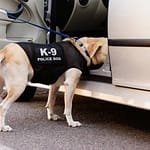
Airport drug cases at LAX automatically fall under federal jurisdiction due to several factors that distinguish them from typical state offenses. The involvement of federal agencies triggers federal prosecution. When TSA discovers drugs during security screening, they contact law enforcement, which often includes DEA agents stationed at the airport. Drug-sniffing dogs deployed by federal and local agencies at baggage claim and departure gates create additional detection points.
The location itself establishes jurisdiction. LAX operates as federally regulated property where federal law governs, regardless of state cannabis laws. A passenger carrying marijuana between two states where recreational use is legal commits a federal offense the moment they enter the terminal. The aircraft constitutes federal space, and air travel inherently involves interstate commerce, allowing prosecutors to pursue enhanced charges even for quantities that might be simple possession elsewhere.
International flights create the most serious jurisdictional complications. Arrestees on incoming international flights face referral to federal authorities more frequently than those on domestic flights. The border search exception reduces Fourth Amendment protections at international terminals, though domestic flights operate under standard constitutional rules.
Differences Between Federal and State Drug Cases
Federal drug cases carry substantially harsher penalties than state prosecutions. Federal charges proceed in federal district court under procedural rules that differ significantly from state practice. Mandatory minimum sentences apply without possibility of parole in most cases.
State charges typically involve localized incidents like small-scale sales or routine traffic stops. Federal investigations, however, span months or years using advanced surveillance, wiretaps, undercover agents, and confidential informants. Federal prosecutors access vast resources including inter-agency cooperation and forensic tools unavailable to state authorities.
The sentencing structure creates the most substantial difference. State courts offer more flexibility in plea bargaining, sentencing alternatives, and drug treatment programs. Federal convictions trigger mandatory minimums that eliminate judicial discretion. Trafficking 28 grams of crack cocaine or 100 grams of heroin results in a mandatory minimum five-year sentence.
Common Federal Drug Charges Under 21 U.S.C. § 841
Section 841 makes it unlawful to manufacture, distribute, dispense, or possess controlled substances with intent to distribute. The statute applies to both actual controlled substances and counterfeit substances designed to resemble legitimate drugs.
Penalties escalate based on drug type and quantity. Lower-tier mandatory minimums carry five-year minimum sentences and 40-year maximums for offenses involving 100 grams or more of heroin, 500 grams or more of cocaine, 28 grams or more of crack, 50 grams or more of methamphetamine mixture, or 100 kilograms or more of marijuana.
Higher-tier offenses trigger ten-year mandatory minimums and life maximums. These apply when quantities reach 1 kilogram or more of heroin, 5 kilograms or more of cocaine, 280 grams or more of crack, 500 grams or more of methamphetamine mixture, 400 grams or more of fentanyl, 100 grams or more of PCP, 10 grams or more of LSD, or 1,000 kilograms or more of marijuana.
Prior convictions dramatically increase exposure. A defendant with one prior serious drug or violent felony faces a 15-year mandatory minimum. Two or more prior convictions mandate 25 years minimum. When death or serious bodily injury results from drug use, the mandatory minimum increases to 20 years.
Federal law also prohibits importing narcotics under 21 U.S.C. Section 952, creating additional charges for international airport cases. Working with an experienced federal drug charges LAX lawyer becomes necessary to navigate these complex statutes and identify viable airport drug arrest defense strategies.
Immediate Steps After Arrest to Protect Your Case
Federal drug arrests at LAX require immediate, precise actions that directly impact your ability to mount a successful airport drug arrest defense. The hours following arrest determine whether critical evidence remains admissible and whether constitutional violations can be effectively challenged.
Invoke Your Right to Counsel Immediately
The Sixth Amendment guarantees representation by counsel once criminal proceedings begin. This right activates at arrest, not at trial. Requesting legal help immediately creates protection that pauses questioning until proper representation is present.
Invoking this right requires clear, unambiguous language. The Supreme Court clarified in Davis v. U.S. that defendants must make an "unambiguous or unequivocal request" for counsel. Simply hinting at wanting a lawyer is insufficient. State clearly: "I am invoking my right to counsel and will not answer questions without my attorney present."
If federal agents continue questioning after you make this unambiguous request, they violate your Sixth Amendment rights. Any statements obtained after this violation can be challenged and potentially suppressed in court. Working with a federal drug charges LAX lawyer from the moment of arrest prevents self-incrimination and ensures procedural violations get identified early.
What Not to Say to Federal Agents
Federal agents often conduct "knock and talk" interviews where Miranda warnings are not required because you are not in custody. Without hearing Miranda, these conversations feel casual, but everything said can be used against you.
Limit responses to basic identifying information: name, date of birth, and address. Beyond that, state only that you will respond after speaking with your lawyer. Avoid these specific statements that create prosecution leverage:
Never say "these are not my drugs," "I only had a little bit," "I was just holding it for a friend," or "I didn't know it was illegal". Each phrase creates evidentiary problems. Claiming items aren't yours can be interpreted as acknowledging their presence. Minimizing quantity still admits possession. Explanations, even truthful ones, get twisted to build different versions of events.
Do not lie or make misleading statements. Federal false statement statutes and obstruction of justice charges apply even to seemingly minor inaccuracies. When uncertain about details, remain silent rather than guess. Inconsistent statements weaken your case over time.
Casual remarks during transport or in holding facilities carry the same weight as formal statements. No clear line exists between formal and informal communication during arrest.
Securing Evidence and Documentation Early
Write a detailed summary immediately after any law enforcement interaction, even before calling your lawyer. Include questions asked, as these indicate the investigation's focus. Document agent names and badge numbers.
Understanding the Initial Appearance and Detention Hearing
Federal law requires bringing arrested individuals before a magistrate judge within 24 to 48 hours. At this initial appearance, the magistrate explains charges and rights, arranges for counsel, and addresses bail.
If you cannot afford private counsel, the court appoints representation based on financial need. Your attorney can appear at this hearing to inform the court of their representation scope.
The magistrate decides whether to grant bail or whether prosecutors will request pretrial detention. If detention is requested, a separate detention hearing occurs within five days [8][10]. At this hearing, both sides present evidence regarding flight risk and danger to the community. Defense witnesses who demonstrate you are not a danger or flight risk help rebut detention presumptions. Family members who can sign onto an unsecured bond strengthen release arguments.
Factors considered include length of residence in the area, family ties, criminal history, and whether witnesses have been threatened. Understanding how to get a drug trafficking charge dismissed often depends on securing pretrial release, which allows better preparation with your federal drug charges LAX lawyer for mounting constitutional challenges and other defenses.
Constitutional Defenses That Lead to Dismissal
Constitutional violations provide the strongest foundation for dismissal in federal drug cases. When law enforcement obtains evidence through unconstitutional methods, courts can exclude that evidence from trial, often resulting in case dismissal or favorable plea negotiations. Understanding these defenses allows defendants to challenge prosecution evidence at its core.
Fourth Amendment Violations and Motion to Suppress
The Fourth Amendment prohibits unreasonable searches and seizures [1]. Under the exclusionary rule, evidence obtained through unconstitutional searches cannot be used in the government's case-in-chief at trial. A motion to suppress asks the court to exclude evidence that violates constitutional rights.
When courts grant suppression motions in drug cases, prosecutors frequently lose their ability to prove charges beyond a reasonable doubt. If the excluded evidence consists of the drugs themselves or core evidence linking a defendant to trafficking, dismissal or substantially better plea offers become common outcomes. Federal courts require defendants to establish standing by showing a privacy or property interest in the searched location or item before filing suppression motions.
Challenging Illegal Search and Seizure at LAX
LAX presents unique search and seizure issues depending on whether arrests involve international or domestic flights. International airports qualify as the "functional equivalent" of the border, where federal officers may conduct warrantless searches of persons and items upon entry into the United States without needing reasonable suspicion or probable cause [2][3]. Routine searches at international terminals, including searches of automobiles, baggage, purses, and outer clothing, require no individualized suspicion [2].
However, nonroutine searches that go beyond limited intrusions, such as prolonged detentions, strip searches, or body cavity searches, require particularized suspicion of illegal activity [2]. Recent Justice Department actions suspended DEA "consensual encounter" programs at airports after investigators found these searches created substantial risks of civil rights violations and imposed unwarranted burdens on innocent travelers [4].
Warrantless Searches of Vehicles and Luggage
Vehicles may be searched without warrants if officers have probable cause to believe the vehicle contains contraband [5]. This automobile exception stems from Carroll v. United States, which recognized vehicle mobility as justification for warrantless searches [5]. Officers still must have probable cause based on specific facts rather than vague suspicions. Luggage and closed containers found in automobiles may also be subjected to warrantless searches based on probable cause.
Lack of Probable Cause in Search Warrant Affidavits
Search warrant affidavits must establish probable cause through specific facts suggesting criminal evidence exists at the searched location [10]. Affidavits relying on unreliable informant tips or vague suspicions create grounds for suppression [10]. Courts reject "bare bones" affidavits that merely state suspicions or conclusions without underlying factual circumstances. When affidavits contain knowing or reckless falsehoods essential to probable cause, defendants may obtain Franks hearings to challenge warrant validity.
Technical and Evidentiary Defense Strategies
Beyond constitutional challenges, technical and evidentiary weaknesses frequently create paths for how to get a drug trafficking charge dismissed. Federal prosecutors rely on forensic evidence and witness testimony that defense attorneys can systematically dismantle through procedural scrutiny.
Chain of Custody Failures in Drug Evidence
Chain of custody documentation tracks evidence from collection through courtroom presentation. Any gap in this chronological record casts doubt on evidence integrity. Common failures include missing documentation of transfers between officers and labs, samples left unattended in vehicles or evidence rooms, inadequate sealing of containers, and failure to properly identify samples at collection or testing. Each transfer must be documented with dates, times, and signatures. Missing records, unclear timestamps, or unaccounted periods of possession create grounds for suppression motions. When evidence handling shows irregularities, courts may exclude compromised evidence, leading to reduced charges or dismissal.
Challenging Drug Quantity Calculations
Federal sentencing relies heavily on drug quantity under the Federal Sentencing Guidelines. Laboratory technicians calculate gross weight including the narcotic, any adulterants or cutting agents, and packaging material. Field tests used during arrests produce high rates of false positives and are not 100% reliable. Approximately 30,000 people who do not possess controlled substances are falsely implicated by these tests and arrested each year [6]. Defense strategies include cross-examining laboratory technicians to identify errors, requesting documentation proving scales were properly calibrated and maintained, and working with expert witnesses to verify testing procedures and identify potential contamination.
Laboratory Testing Errors and Contamination
Laboratory misconduct significantly impacts drug cases. Contamination occurs when test equipment is reused without proper cleaning or when samples decompose from improper storage. Dry labbing involves testing only a few samples among a collection and labeling all samples with the same result. In April 2017, a chemist's criminal misconduct led to the dismissal of nearly 20,000 Massachusetts drug convictions after she intentionally contaminated thousands of test samples. Cross-contamination, equipment calibration failures, and technician errors provide grounds for challenging prosecution evidence. Independent retesting by separate laboratories can reveal discrepancies that weaken the government's case.
Proving Lack of Knowledge or Intent to Distribute
Prosecutors must prove defendants knowingly possessed controlled substances with intent to distribute. Lack of knowledge defenses succeed when drugs are found in shared vehicles, apartments with multiple occupants, or areas where the defendant had no exclusive control. When drugs are discovered in a borrowed car's glove compartment or a roommate's personal area, defendants can argue they had no knowledge of the substance's presence. Prosecutors must link drugs to the defendant through more than mere proximity or access to shared spaces.
Identifying Entrapment by Federal Informants
Entrapment occurs when government agents induce defendants to commit crimes they would not have otherwise committed. The defense requires proving government inducement and lack of predisposition to commit the crime. Confidential informants working for federal agencies count as government agents for entrapment purposes. If informants use excessive persuasion, offer substantial rewards, or repeatedly pressure defendants into drug transactions, entrapment defenses become viable. The burden shifts to the government to prove beyond reasonable doubt that defendants were predisposed to commit the crime. Working with a federal drug charges LAX lawyer helps identify when informant conduct crosses into entrapment territory, strengthening airport drug arrest defense strategies.
Pre-Indictment Intervention and Negotiation Tactics
Pre-indictment work creates opportunities that disappear once formal charges are filed. An experienced federal drug charges LAX lawyer can engage Assistant U.S. Attorneys before indictment to shape case outcomes through strategic intervention.
Working with the Assistant U.S. Attorney Before Charges
Written declination guidelines are currently used by 83 U.S. Attorneys' offices to channel prosecutorial resources into high priority activities [7]. These guidelines consider availability of state prosecution, crime seriousness, defendant's prior record, and evidence strength [7]. Defense attorneys can present information addressing these factors before charges are filed. Engaging prosecutors early allows counsel to provide context, challenge evidence quality, and propose non-criminal alternatives. Having an attorney before indictment proves essential, as substantial evidence typically exists by the time formal charges are filed.
Voluntary Surrender vs. Public Arrest
When arrest becomes likely, voluntary surrender offers significant advantages over public arrest. Attorneys can arrange pre-planned surrender at federal facilities, avoiding workplace or home arrests. Self-surrender practices vary between districts, with some jurisdictions granting it frequently while others restrict the practice. Voluntary surrender allows defendants to prepare financially and emotionally while demonstrating cooperation.
Negotiating Reduced Charges or Declination
Prosecutors may agree to reduce charges carrying higher mandatory minimums to lesser offenses during pre-indictment negotiations. Federal pretrial diversion programs provide alternatives to prosecution for eligible defendants, potentially resulting in charge declination or dismissal upon successful completion [8]. These programs focus on rehabilitation rather than punishment. Negotiating leverage comes from identifying weaknesses in the government's case and presenting compelling reasons for declination before formal prosecution begins.
Need An Attorney?
Federal drug trafficking charges at LAX carry life-altering consequences, but dismissal remains achievable through strategic defense. Constitutional violations, evidentiary weaknesses, and pre-indictment intervention create multiple pathways to challenge prosecution. Consequently, your actions immediately after arrest determine whether these defense opportunities remain viable.
Working with an experienced federal drug charges LAX lawyer from the moment of arrest protects your constitutional rights and identifies case weaknesses prosecutors hope you'll overlook. Invoke your right to counsel, remain silent, and document everything. The government possesses substantial resources, but that doesn't mean their case is unbeatable.
Specifically focus on building your defense systematically. Challenge every procedural step, question every piece of evidence, and explore all negotiation opportunities before trial.
References
[1] – https://www.uscourts.gov/about-federal-courts/educational-resources/about-educational-outreach/activity-resources/what-does-fourth-amendment-mean
[2] – https://www.law.cornell.edu/constitution-conan/amendment-4/searches-at-international-borders
[3] – https://constitution.congress.gov/browse/essay/amdt4-6-6-2/ALDE_00000238/
[4] – https://www.nbcnews.com/politics/dea-passenger-searches-halted-watchdog-finds-signs-civil-rights-violat-rcna181262
[5] – https://www.law.cornell.edu/constitution-conan/amendment-4/vehicle-searches
[6] – https://www.law.upenn.edu/live/news/16363-false-positive-field-drug-tests-lead-to-wrongful
[7] – https://ojp.gov/ncjrs/virtual-library/abstracts/united-states-attorneys-written-guidelines-declination-alleged
[8] – https://www.justice.gov/jm/jm-9-22000-pretrial-diversion-program
Need an Attorney? CALL NOW: 213-932-8922
Yuliya Kelmansky is an Expert Attorney who has over 10 years of practice defending a variety of cases.