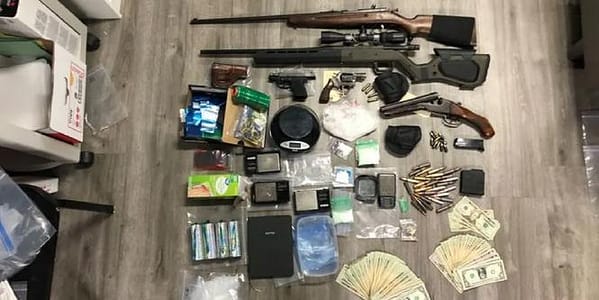
Roommate’s Drugs?
Constructive possession laws in California can put you at legal risk even when drugs aren’t yours. Sharing an apartment with roommates can create complex legal situations that many people don’t understand until the police arrive at their door. You might assume that keeping your personal space clean protects you from liability, but prosecutors can charge you with drug possession based on access and control over shared areas. Our drug crimes attorneys explain what constructive possession means, when you can be arrested for your roommate’s illegal drugs, potential legal consequences, defenses available to you, and practical steps to protect yourself.
What is Constructive Possession in California?
California law recognizes a legal fiction that allows prosecutors to charge people with drug possession even when contraband isn’t physically on their person. This concept extends criminal liability beyond what most people consider possession, creating situations where roommates can face charges for drugs they never touched or knew existed.
Call Now 213-932-8922, for a free consultation.
Actual Possession vs. Constructive Possession
Actual possession describes straightforward scenarios where drugs are found directly on someone’s body. This includes controlled substances in pockets, purses, backpacks, or anything a person physically carries or touches. The prosecution’s case becomes simple when officers discover drugs in your hand, hidden inside your jacket, or anywhere you have immediate physical contact.
Constructive possession operates differently. Under California law, you can possess something without having immediate access to it if you have control over it or the right to control it. This applies when drugs are discovered in your house, car, office desk, or any location you exercise authority over. The law treats constructive possession identically to actual possession for conviction purposes.
The distinction matters because constructive possession cases rely on circumstantial evidence rather than direct proof. Prosecutors must establish your relationship to the location and your awareness of the drugs, which becomes significantly harder when multiple people share the same space.
Control and Access: The Two Key Elements
Courts require prosecutors to prove two specific elements beyond reasonable doubt for constructive possession convictions. First, you must have had the right and power to exercise dominion and control over the drugs. Second, you must have possessed knowledge of the drug’s presence, which includes the intent to control the disposition or use of those drugs.
Knowledge extends beyond simply seeing drugs on a kitchen table. In constructive possession cases, knowledge means having the intent to control the disposition or use of the controlled substances. Prosecutors cannot secure convictions based on speculation about what you knew.
Control can be exercised directly through locations like your home or vehicle, or indirectly through other people acting as your agents. Simply having access to a place where drugs are kept does not automatically establish constructive possession. The prosecution must demonstrate you had authority over the specific area where contraband was discovered.
Exclusive control over a location provides strong evidence of constructive possession, but exclusive access is not required. Joint possession occurs when you and one or more people share either actual or constructive possession of contraband. However, mere presence at a location where drugs are found fails to meet the legal standard for conviction.
How Prosecutors Prove Constructive Possession
Prosecutors build constructive possession cases using several circumstantial factors. Courts examine proximity to the drugs, particularly if contraband appears within your immediate reach. Ownership or rental of the property where drugs are discovered helps establish control, though ownership alone doesn’t end the inquiry.
Your behavior during police encounters matters. Nervous actions, attempts to flee, or incriminating statements can be used as evidence. Officers often rely on statements made during arrests, prior drug activity evidence, or behavior during the encounter to demonstrate knowledge.
Personal belongings found near drugs create stronger connections to possession. Courts also consider whether you had exclusive access to the area where contraband was located. Fingerprints, DNA evidence, and the location of drugs within a vehicle or residence all contribute to the prosecution’s case.
The state bears the burden of proving both elements beyond reasonable doubt. If prosecutors fail to establish either knowledge or control, jurors must return a not guilty verdict.
Can You Be Arrested for Your Roommate’s Drugs?
Living with roommates exposes you to arrest risks you never created. Nearly half of adults in the Los Angeles metro area share housing with roommates. This living arrangement puts you in legal jeopardy when police discover drugs anywhere in your shared residence.
Shared Living Spaces and Legal Liability
Your roommate’s drug possession automatically increases the likelihood of police searching your home. Having drugs in the house subjects every tenant to suspicion and potential legal problems. Police may arrest everyone present and allow courts to determine guilt later. Officers don’t typically listen when you claim innocence at the scene, particularly if drugs appear in living rooms or other common areas rather than in a specific roommate’s bedroom.
Constructive possession charges can result even when you’ve done nothing wrong. Prosecutors argue that you had control over shared living spaces, making you responsible for illegal contraband discovered there. The loose definition of possession means your roommate’s stash hidden in a shared kitchen cookie jar could work against you.
When Police Search Your Apartment
Roommates possess equal authority to consent to searches of common areas in your home. Your roommate can grant police permission to search spaces he or she controls, including their bedroom and any shared space they occupy. However, in reality, one roommate’s consent doesn’t extend to your private bedroom.
Courts have established clear boundaries. In State v. Hawks, officers entered a home after one roommate gave permission to search. Police found drugs in the defendant’s bedroom and arrested him. The court threw out his arrest because the roommate’s consent didn’t grant authority to search the defendant’s bedroom. Officers needed either a warrant or the defendant’s direct consent to enter his private space.
Different scenarios produce different outcomes. If one roommate is home and consents to a search, police may search the house except private areas belonging to absent roommates. Conversely, if multiple roommates are present and one objects, officers must obtain a warrant or gain consent from all present roommates.
Search warrants present distinct problems. When police arrive with a warrant, it likely won’t limit itself to your roommate’s bedroom or belongings. Officers will probably search the entire premises, including your room and possessions.
Drugs Found in Common Areas
Drugs discovered in common areas create the most dangerous situations for innocent roommates. Police can arrest you if contraband appears in locations accessible to all occupants. Kitchen cabinets, living rooms, and bathrooms used by everyone raise suspicions about multiple people.
Proving ownership becomes far more complicated when multiple people share access to the same areas. Defense strategies often focus on lack of control or knowledge, particularly when drugs belong to another resident.
Drugs Found in Your Personal Space
Drugs found solely in your roommate’s bedroom present a different scenario. If contraband remains confined to their room and you never see it, prosecutors face tougher challenges proving a case against you. Drugs discovered in a lock box accessible only to one roommate with a key typically lead to charges against the individual who had access.
Legal Consequences of Constructive Possession Charges
Constructive possession charges carry identical penalties to actual possession cases. The distinction between having drugs in your pocket versus having them in your apartment makes no difference in sentencing outcomes.
Misdemeanor vs. Felony Drug Charges
Proposition 47 changed California’s drug sentencing landscape in 2014. Before this reform, simple possession of controlled substances like cocaine, heroin, or methamphetamine could result in felony charges and state prison time. Most simple possession cases are now charged as misdemeanors rather than felonies.
Possession of a controlled substance can be charged as either a misdemeanor or felony depending on the type of drug, the amount, where you had it, how it was obtained, and your prior criminal history. Felony charges remain possible for defendants with prior convictions involving serious or violent felonies, or qualifying sex offenses.
Penalties Under California Health and Safety Code 11350
California Health and Safety Code Section 11350 makes it illegal to possess specified controlled substances without a valid prescription, covering heroin, cocaine, codeine, oxycodone, ecstasy, ketamine, and other narcotics and Schedule III through V controlled substances.
A standard misdemeanor conviction under HS 11350 carries up to one year in county jail. Courts can impose fines up to $1,000. Probation of up to three years often accompanies these sentences. Judges typically require mandatory drug education or treatment programs as part of sentencing.
Felony convictions carry substantially harsher penalties. If your charges are bumped up to a felony, you can face up to three years in prison and hefty fines. A felony conviction carries a sentence of 16 months, 2 years, or 3 years in state prison.
Impact on Your Criminal Record
A conviction creates a criminal record that is publicly searchable. This record stays on file for years unless you successfully pursue expungement. Many people underestimate how much a criminal record can influence their future opportunities.
Employment discrimination based on drug convictions remains legal in most circumstances. Many employers automatically exclude applicants with drug records, creating lasting economic consequences. The impacts on employment can last for years, creating financial and personal challenges that make it difficult to move forward in your career.
Additional Consequences Beyond Jail Time
Housing becomes significantly harder with a drug conviction on your record. Landlords and property management companies conduct background checks before approving rental applications. A drug charge can result in your application being denied, limiting your housing options.
For non-citizens, drug convictions may affect immigration status, potentially leading to deportation, denial of citizenship, or difficulties in obtaining visas. A drug conviction can prevent green card holders from becoming naturalized U.S. citizens.
Professional licensing boards scrutinize drug convictions carefully. Medical fields, law, education, and financial services tend to have the strictest rules regarding criminal history.
Common Legal Defenses Against Constructive Possession
Skilled defense attorneys challenge constructive possession charges through several proven strategies. Prosecutors bear the burden of proving both knowledge and control beyond reasonable doubt, creating multiple points where defense lawyers can attack the state’s case.
Lack of Knowledge of the Drugs
The prosecution must prove you knew about the drug’s presence. This defense works particularly well when drugs are found in locations not exclusively controlled by you, such as shared apartments or vehicles used by multiple people. If you borrowed a friend’s car unaware that illegal drugs were hidden in the glove compartment, lack of knowledge can lead to dismissed charges.
A successful case involved an individual charged with possession of narcotics found in a shared apartment. The defense presented evidence that drugs belonged to a roommate and were kept in exclusively personal areas of the apartment. The court dropped charges after finding no direct link between the accused and the narcotics.
Lack of Control Over the Location
You can argue you did not have the ability to control the substance. For example, if drugs are found in a vehicle, the defense might argue you had no access to the area where drugs were found, such as a locked glove compartment you could not open. Demonstrating shared access challenges the notion of exclusive possession and weakens the prosecution’s case.
Multiple People Had Access
When multiple people have access to the area where drugs were found, this defense becomes stronger. Shared vehicle situations create many chances for drugs to appear without the driver’s knowledge. Prosecutors struggle to prove who controlled the substance when several people share the space. Fingerprints or DNA that don’t match yours create reasonable doubt. Witness testimony from others who admit to owning the drugs can lead to full dismissal.
Illegal Search and Seizure
Fourth Amendment protections guard against unreasonable searches and seizures. If drugs were discovered during an illegal search without a warrant or probable cause, the evidence may be inadmissible in court. Defense attorneys file motions to suppress evidence obtained through constitutional violations. Successful suppression often results in reduced charges or case dismissal. Common violations include searches without warrants or valid exceptions, warrants based on false information, searches exceeding consent scope, and pretextual traffic stops.
Mere Presence is Not Possession
Simply being near drugs does not automatically mean you were aware of them or had control over them. Proximity alone is insufficient to prove constructive possession. Courts have held that mere presence at the scene of a crime committed by someone else, even with knowledge that an offense occurred, is insufficient to sustain a conviction. The defense can argue that proximity alone does not establish control or knowledge.
How to Protect Yourself from Your Roommate’s Illegal Activity
Proactive steps reduce your exposure to constructive possession charges when living with roommates. Taking specific measures protects your legal standing if police discover drugs in your shared residence.
Document Your Living Arrangement
Written roommate agreements establish boundaries and responsibilities. These documents specify payment arrangements, guest policies, and household rules. Specifically, include clauses prohibiting illegal drug activity in shared spaces. Written contracts provide evidence that you set clear expectations against drug possession.
Keep Personal Spaces Separate
Maintain locked private areas that roommates cannot access. Your bedroom should remain exclusively under your control. Insist that no drugs or drug accessories appear in common areas like living rooms or kitchens. If roommates’ bedrooms lock, ensure they keep them locked and you lack keys or access. Physical separation creates clear boundaries for constructive possession defenses.
Caveats to Reporting to Your Landlord or Authorities
Reporting creates risks alongside benefits. Informing landlords may trigger eviction proceedings against all tenants, leaving you liable for remaining lease payments. Police involvement can create legal complications even for innocent parties. Anonymous reporting reduces personal risk. Weigh whether breaking your lease outweighs potential arrest.
Consider Moving Out
Moving provides the safest protection from your roommate’s illegal behavior. Breaking a lease carries fewer consequences than criminal charges. Find replacement housing before law enforcement intervenes.
What to Do If Police Show Up
State clearly: “I do not consent to a search”. Avoid explanatory statements like “It’s my roommate’s stuff” or “I didn’t know it was there”. These statements become evidence against you. Exercise your right to remain silent.
Ease Your Worries By Hiring A Defense Attorney
Living with roommates shouldn’t put your freedom at risk, yet constructive possession laws create exactly that scenario. As a matter of fact, prosecutors can charge you for drugs you never touched, purchased, or knew existed simply because they were found in shared spaces.
Protect yourself by maintaining clear boundaries, documenting your living arrangement, and keeping personal spaces completely separate. Should police arrive at your door, remember your rights: refuse consent to searches and remain silent.
Your best defense against your roommate’s poor choices is either establishing clear separation or finding new housing altogether. Prevention beats fighting criminal charges every time.

Call Now 213-932-8922, for a free consultation.