


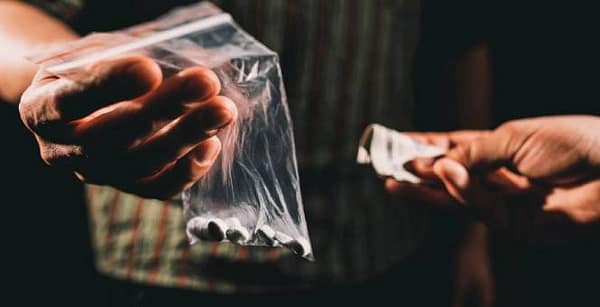
Intent is Everything
Prosecutors can charge you with possession with intent to distribute even without witnessing a single drug sale. Instead, they rely on circumstantial evidence to build their case against you. Large drug quantities, packaging materials, digital scales, cash in small denominations, and text messages all serve as indicators of intent to sell. Understanding how prosecutors piece together these elements is crucial when facing such serious charges. This article explains the evidence prosecutors use, how they construct their arguments using the totality of circumstances, and defense strategies that can challenge these allegations effectively.
What Possession with Intent to Distribute Means Under California Law
California Health and Safety Code Section 11351 establishes the felony offense of possession with intent to distribute. This statute applies specifically to controlled substances including cocaine, heroin, hallucinogens like GHB, peyote, ecstasy, and LSD, as well as prescription opiates such as oxycodone, hydrocodone, and codeine. A parallel statute, Health and Safety Code Section 11378, covers methamphetamine, MDMA, GHB, ketamine, and Schedule III and IV stimulants or depressants.
The Legal Definition of Health and Safety Code 11351
Before prosecutors can secure a conviction under HS 11351, they must establish five specific elements beyond a reasonable doubt. The defendant must have possessed or purchased the drug, known they did so, understood the substance’s nature as a controlled substance, possessed a usable amount (trace residue alone won’t suffice), and specifically intended to sell or furnish the substance. Whether you intend to sell the drugs often becomes the most critical part of the prosecution’s case in a possession for sale charge.
The law covers both actual possession, where drugs are physically on your person, and constructive possession, where you exercise control over substances stored elsewhere. If drugs are hidden in your bedroom safe or kept in a rented locker under your name, prosecutors can still pursue charges based on constructive possession. Joint possession applies when multiple people share control over the same stash.
Notably, you don’t need to intend to sell the drugs personally. A conviction can occur as long as you specifically intend for someone to sell the drugs. This distinction broadens the statute’s reach considerably.
Why Prosecutors Don’t Need Evidence of an Actual Sale
Many people mistakenly believe prosecutors must supply ample evidence of an actual drug transaction. This assumption is wrong. The prosecution only needs to prove that when you possessed the substance, you had the intent to sell or distribute it to another person. Intent alone suffices. Prosecutors don’t need to prove completed transactions or demonstrate that drugs were exchanged for money or anything of value.
Rarely do prosecutors possess a confession or recorded statement such as “I was selling heroin”. Instead, they invite jurors to infer intent from surrounding circumstances. California appellate cases like People v. Parra and People v. McChristian affirm that expert testimony interpreting circumstantial factors is admissible to show how dealers package, advertise, and deliver narcotics.
How Intent to Distribute Differs from Simple Possession
The difference between possession for sale under HS 11351 and simple possession under Health and Safety Code 11350 determines your eligibility for alternative sentencing. Simple possession charges may qualify for drug diversion programs where your case gets dismissed upon successful completion of treatment. Unlike simple possession, a conviction under HS 11351 makes you ineligible for drug diversion.
A first-time violation of HS 11351 carries punishment by imprisonment for two, three, or four years in county jail, plus fines up to $20,000. If prosecutors prove you possessed a controlled substance but cannot prove intent to sell, the judge or jury could convict you of the lesser included offense of personal possession under HS 11350. This reduction can mean the difference between drug treatment and a lengthy prison sentence.

Call Now 213-932-8922, for a free consultation.
Direct Evidence vs Circumstantial Evidence in Drug Cases
Understanding the types of evidence prosecutors use helps you grasp how they construct possession with intent to distribute cases. Two categories exist: direct evidence and circumstantial evidence. Both hold equal weight in California courts.
What Qualifies as Direct Evidence
Direct evidence proves a fact without requiring any inference or interpretation. It directly supports the truth of a claim and doesn’t require jurors to draw conclusions based on other facts or circumstances.
Eyewitness testimony serves as direct evidence when someone saw the crime happen firsthand. If a witness observed you selling drugs to another person, their testimony directly proves the transaction occurred. Video or audio recordings fall into this category as well. Surveillance footage showing you handing drugs to someone in exchange for cash constitutes direct evidence. A confession also qualifies. If you admitted to selling drugs, that statement directly proves your intent to distribute.
Direct evidence appears straightforward, but it carries limitations. Eyewitnesses can be unreliable due to memory lapses, stress, or bias. Video or photos may not tell the full story, missing context or critical details.
How Circumstantial Evidence Works in Intent Cases
In contrast, circumstantial evidence requires jurors to make inferences or draw conclusions based on the evidence presented. It doesn’t directly prove a fact but suggests a fact or creates a strong presumption about it. Jurors must connect the dots to decide whether you’re guilty, making inferences based on what’s presented.
Intent presents a unique challenge since reading someone’s mind is impossible. The way intent is most often proved is by the facts and circumstances of the case. For instance, the presence of scales, baggies, a ledger book, cash, or cutting agents are circumstances which may tend to show an intent to distribute, even where the quantity of drugs is small.
In most criminal cases, especially those involving illegal drugs, police make an arrest based on circumstantial evidence. With drug cases involving possession with intent to distribute, circumstantial evidence would be large quantities of drugs, money, and drug paraphernalia like bags, twist ties, and scales.
Why Most Cases Rely on Circumstantial Evidence
Circumstantial evidence dominates drug prosecutions for a practical reason: direct evidence rarely exists. A large number of criminal cases don’t have eyewitnesses and many of these cases end with convictions. In reality, most of the evidence used in criminal cases is circumstantial.
California law allows prosecutors to convict a defendant on circumstantial evidence alone. Both direct and circumstantial evidence are legitimate proof that someone committed a crime. California Criminal Jury Instructions inform jurors that one type of evidence is not necessarily more reliable than the other and that neither type is entitled to any greater weight.
Circumstantial evidence can be just as compelling, if not more so, than direct evidence. While a single piece of circumstantial evidence may not demonstrate guilt, prosecutors combine multiple pieces together, asking jurors to connect the dots to determine you committed the alleged offense. Circumstantial evidence is sometimes enough to prove a person guilty beyond a reasonable doubt.
Common Types of Evidence Prosecutors Use to Prove Intent
Prosecutors build possession with intent to distribute cases using specific types of physical and digital evidence. Each piece alone might seem insignificant, but together they create a pattern suggesting sales activity.
Large Quantities of Drugs Beyond Personal Use
Possessing an amount that exceeds personal consumption levels implies intent to distribute. The inference strengthens when drugs are packaged in a manner consistent with distribution. Courts evaluate quantity based on the type of drug involved. A few grams of heroin carries more weight than a larger quantity of marijuana. In effect, prosecutors don’t need a specific threshold. They argue that 20 baggies, 60 glassines, or 30 pills combined with cash in small denominations indicates intent to sell.
Packaging Materials and Multiple Small Baggies
Small plastic bags serve as concrete evidence that substances were being weighed out for individual street sales. Prosecutors aggressively argue guilt when they find these items near controlled substances. Baggies with individual compartments or specific packaging materials suggest an organized distribution operation rather than personal consumption. The proximity between packaging materials and drugs becomes a critical factor. Even common household items like plastic bags can support paraphernalia charges when found near illegal drugs or cash.
Digital Scales and Measuring Equipment
Digital scales frequently appear as evidence in drug cases. Small scales containing trace powder residue are presented as the smoking gun proving a distribution operation was underway. Residue serves as a physical connection between the scale and alleged controlled substances. Prosecutors examine whether clear evidence suggests the scale was used to weigh drugs, whether a legitimate legal use existed, the physical proximity between the scale and discovered drugs, and the presence of drug residue on the scale. A bathroom scale is less likely to be considered paraphernalia than a smaller digital scale, especially when found near drugs.
Large Amounts of Cash in Small Denominations
Drug transactions are conducted in cash and typically involve small denominations, specifically bills of $20 and under. Large amounts of money in small denominations found alongside controlled substances indicate drug sales. Cash neatly folded in small bills is characterized by officers as illegal proceeds from street-level sales. Drug trafficking organizations amass large volumes of small bills that must be smuggled or placed into the financial system.
Text Messages and Phone Records
Law enforcement uses text messages to show intent to buy, sell, distribute, or traffic drugs. Officers focus on messages organizing sales, meeting locations, or discussing prices. A string of text messages discussing prices and quantities, combined with drugs found at a location, can be enough for a jury to conclude distribution was planned. Prosecutors present old messages to paint a history of drug activity even when those messages aren’t directly connected to current charges. They identify coded language frequently used in drug transactions.
Frequent Short Visits to Your Location
A high volume of people coming and going from your residence, especially brief visits, suggests transactional activities related to drug distribution. Properties used for drug sales typically show frequent short visits at all hours, with cars pulling up and leaving within minutes. This pattern indicates customers making quick purchases rather than social visits.
How Prosecutors Build Their Case Using the Totality of Circumstances
No single piece of evidence proves possession with intent to distribute on its own. Courts apply the totality of circumstances test, a method of analysis where judges and jurors balance all circumstances and contributing factors rather than rely on strict rules. This flexible approach allows prosecutors to combine individually weak evidence into a compelling case. In effect, the whole becomes greater than the sum of its parts, especially when parts are viewed in isolation.
The Absence of Drug Use Paraphernalia
Finding drugs without any pipes, bongs, syringes, or other consumption tools strengthens the prosecution’s argument. The lack of personal use items suggests you weren’t keeping drugs for yourself. Prosecutors point to this absence as proof that substances were meant for distribution, not consumption. Courts consider the proximity of objects to controlled substances and whether legitimate uses exist for items found at the scene. When officers discover large quantities of drugs but zero evidence of personal use, juries draw natural inferences about your true intentions.
Expert Witness Testimony from Narcotics Officers
Narcotics officers testify as expert witnesses to interpret evidence patterns for juries. These experts explain how drug dealers typically operate, package products, and conduct transactions. In one case, a law enforcement agent testified that traffickers rarely risk large losses on “blind mules” who don’t know they’re carrying drugs, and that most couriers know they’re transporting substances across borders. Expert testimony helps prosecutors connect circumstantial evidence to distribution intent. Specifically, officers explain industry standards for drug weights, typical packaging methods, and common pricing structures. This testimony transforms seemingly innocent items into indicators of sales activity.
Combining Multiple Pieces of Weak Evidence
Prosecutors compile these pieces to build a picture that goes beyond simple possession. Individual indicators aren’t definitive proof on their own, but prosecutors combine them with other evidence to argue intent to distribute, strengthen their case, and influence jury perceptions. Courts recognize that possession alone doesn’t automatically indicate a plan to sell or distribute drugs. Hence, prosecutors must rely on combinations of evidence, circumstances, and witness testimony to make their case. Any one fact standing alone might appear innocent, but taken together, multiple factors create reasonable suspicion. Officers document everything they observe because small facts matter when combined with other small facts.
Defense Strategies to Challenge Intent to Distribute Allegations
Defense attorneys attack possession with intent to distribute allegations through multiple strategies. Success often depends on identifying weaknesses in how prosecutors gathered evidence and constructed their case.
Arguing Personal Use Despite Large Quantities
Attorneys provide legitimate reasons for evidence prosecutors claim proves intent. Digital scales might serve legitimate purposes, cash could come from legal employment, and large quantities might represent personal use. Buyers who purchase in bulk to avoid frequent risky transactions can challenge distribution assumptions. Timing is critical in preserving evidence and filing legal motions.
Challenging Illegal Searches and Seizures
Fourth Amendment violations offer the strongest defense path. When evidence is obtained through illegal searches, attorneys file suppression motions under PC 1538.5. Successful suppression excludes the drugs themselves, statements made after the search, digital evidence from phones, and any evidence derived from the constitutional violation. When suppressed evidence is the prosecution’s main link to the defendant, cases frequently end in dismissal or major charge reduction.
Proving Lack of Knowledge or Control
Prosecutors must prove you knew the substance was present and understood its nature as contraband. This defense applies when drugs are found in shared spaces, vehicles with multiple occupants, or areas where others had access. Constructive possession challenges focus on whether you had sufficient control to establish legal possession.
Getting Charges Reduced to Simple Possession
Attorneys negotiate with prosecutors to reduce felony charges when evidence is weak. A misdemeanor plea may carry jail time instead of prison and allow later expungement.
Need a Lawyer?
Prosecutors build possession with intent to distribute cases by combining circumstantial evidence rather than relying on direct proof of sales. As a matter of fact, large quantities, packaging materials, scales, cash, and text messages create patterns that suggest distribution activity. The totality of circumstances approach allows them to turn multiple weak indicators into a compelling case against you.
Facing these charges requires immediate action. Defense attorneys can challenge illegal searches, argue legitimate purposes for evidence, or negotiate reduced charges to simple possession. Your best chance at fighting these allegations depends on securing experienced legal representation early in the process.
Call Now 213-932-8922, for a free consultation.