



How to Reduce a Felony to Misdemeanor?
We are commonly asked at our offices if it’s possible to reduce a felony conviction to a misdemeanor, and the answer is commonly yes. I say commonly because there are some limitations to the types of crimes that are eligible for such treatment. The two most important factors that determine if your crime is eligible are:
- Was your offense a wobbler?
- Was probation granted?
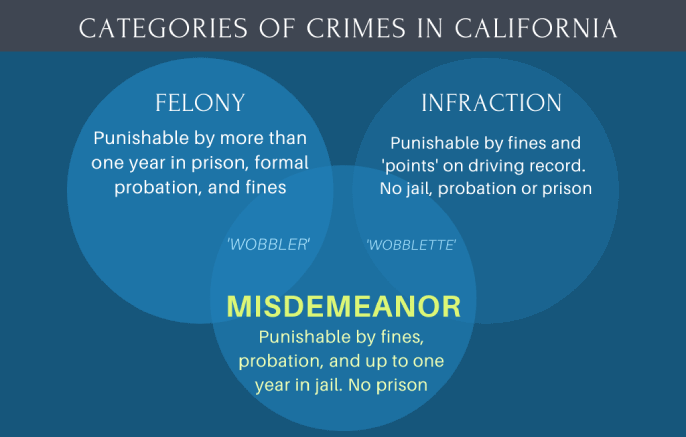
The first element requires that your crime was a wobbler. A wobbler is a crime that can be tried as both a felony and misdemeanor, this eliminates some sex related crimes and violent offenses. There are a plethora of wobblers in our system but here is a list of the most common:
- CA Penal Code 459 – Burglary
- CA Penal Code 422 – Criminal Threats
- CA Penal Code 245 – Assault with a Deadly Weapon
- CA Penal Code 314 – Indecent Exposure
The second element requires that you were granted probation and that your probation term was served successfully, meaning without any violations. If you were granted probation but then violated the terms of your probation then you are not eligible to have your felony conviction reduced to a misdemeanor.
When am I Eligible to Reduce my Felony Conviction?
You are eligible to have your conviction reduced upon the completion of your probation term. If you want to petition for an early termination of your probation you can contact an attorney who can petition on your behalf. In order to be eligible for early termination of your probation there must be good cause, such as:
- Your probation is preventing you from advancing at your job
- It is preventing you from obtaining employment
- Qualifying for a loan
Furthermore, you must have successfully completed all the terms of your probation before a judge will grant early termination.
What Factors Determine Whether the Reduction Will be Granteed
Just because you successfully completed your probation term and your offense was a wobbler does not guarantee that your felony conviction will be reduced. There are several factors that the judge will explore before making the decision, namely:
- Your criminal background
- How quickly and efficiently you completed the terms of your probation
- The facts of the case that led to your felony conviction
- Your personal background
What are the Benefits/Drawbacks of Reducing a Felony Conviction?
The benefits of reducing a felony conviction to a misdemeanor are numerous. Firstly, you can honestly and truthfully say that you are not a convicted felon. You become more desirable for companies when seeking employment and you also become eligible for certain professional licenses that are only available to non-convicted felons. You are also able to serve on a jury and you might be able to have your California gun rights restored.
However, there are limitations as to what the reduction can do for you. Firstly, you will still be required to register as a sex offender in accordance to CA Penal Code 290[2]. Secondly, if your felony was for a serious or violent offense, a reduction will not erase the strike you received in accordance to California’s Three Strike’s Law. Next, not all state licensing agencies will consider the reduction to be official.
If you are a convicted felon and want to have your conviction reduced to a misdemeanor then it’s imperative to talk to a skilled attorney who knows the court system inside and out.
Call Us for a FREE Case Review: 213-932-8922

Understanding the Motion to Reduce Felony to Misdemeanor in California
Navigating the legal landscape after a felony conviction can be daunting, especially when considering the possibility of reducing that conviction to a misdemeanor. In California, Penal Code § 17(b) provides a pathway for individuals seeking to lessen the impact of their felony convictions. This guide explains who qualifies for a felony reduction under Penal Code § 17(b), the benefits of reducing a felony to a misdemeanor, and how the court process works.
What is Penal Code § 17(b)?
California Penal Code § 17(b) allows people convicted of certain “wobbler” offenses to ask the court to reduce a felony conviction to a misdemeanor. A wobbler is an offense that prosecutors may charge as either a felony or a misdemeanor based on the facts of the case and other legal considerations.
The Importance of Understanding Wobblers
Understanding what constitutes a wobbler is crucial for anyone considering a motion for reduction. Common examples of wobbler offenses include:
- Assault with a deadly weapon (Penal Code § 245(a)(1))
- Grand theft (Penal Code § 487)
- Spousal battery (Penal Code § 273.5)
- Possession of controlled substances (Health & Safety Code § 11377)
These offenses can significantly impact an individual’s life, affecting employment opportunities, housing options, and civil rights.
Eligibility Criteria for Reduction
Only certain felony convictions qualify for reduction under Penal Code §17(b). To be eligible, the following criteria must be met:
- The offense must be a wobbler: Only crimes that can be classified as either felonies or misdemeanors are eligible for reduction.
- Probation must have been granted: If the individual was sentenced to state prison, they are not eligible for a reduction. However, if they served time in county jail or were granted probation, they may qualify.
- No prior felony convictions in the same case: If multiple felonies were charged, all must be eligible for reduction; otherwise, none can be reduced.
The Role of the Court
The decision to grant a reduction is ultimately at the discretion of the court. In deciding whether to grant the motion, the court may consider: the nature of the offense, the individual’s behavior during probation, and their overall criminal history.
Real World Benefits of Reducing a Felony to a Misdemeanor
Successfully reducing a felony to a misdemeanor can make it easier to move forward by removing many of the consequences associated with a felony conviction. Some of the key advantages include:
- Restoration of Rights: A misdemeanor conviction typically does not carry the same restrictions as a felony. Individuals may regain their right to vote, serve on a jury, and, in some cases, have their gun rights restored.
- Improved Employment Opportunities: Many employers conduct background checks, and having a misdemeanor on record is often viewed more favorably than a felony. This can open doors to job opportunities that were previously closed.
- Easier Access to Professional Licenses: Certain professions may be more accessible with a misdemeanor conviction, allowing individuals to pursue careers that require licensing.
- Less Stigma: A misdemeanor carries less social stigma than a felony, which can positively impact personal relationships and community standing.
The Process of Filing a Motion for Reduction
Filing a motion to reduce a felony conviction to a misdemeanor involves several steps. While individuals can navigate this process independently, seeking the assistance of an experienced attorney can significantly improve the chances of success.
Step 1: Gather Documentation
Before filing, gather documents that demonstrate your eligibility and rehabilitation, including:
- Sentencing documents
- Probation reports
- Evidence of rehabilitation efforts (e.g., completion of programs, letters of recommendation)
Step 2: Consult with an Attorney
Engaging a knowledgeable attorney who specializes in criminal defense can provide valuable insights into the eligibility of the case and the likelihood of success. They can help craft a compelling argument in support of the motion.
Step 3: Prepare the Motion
The attorney will draft the motion for reduction, outlining the reasons for the request and presenting supporting evidence. This document must be filed with the court that handled the original felony case.
Step 4: Attend the Hearing
Once the motion is filed, a hearing date will be set. During this hearing, the attorney will present the case to the judge, highlighting the reasons for the reduction and addressing any concerns raised by the prosecution.
Factors Considered by the Court
When evaluating a motion for reduction, the court will consider several factors, including:
- Nature of the Offense: The seriousness of the crime and its impact on victims and society.
- Behavior During Probation: Compliance with probation terms and any evidence of rehabilitation.
- Criminal History: The individual’s overall criminal record and whether the offense was an isolated incident.
- Public Safety: The potential risk to the community if the reduction is granted.
Timing for Filing a Motion
There is no specific deadline for filing a motion to reduce a felony conviction under Penal Code § 17(b). However, it is advisable to file the motion as soon as possible, especially after completing probation. Although there is no statutory deadline, filing after successfully completing probation and demonstrating rehabilitation may strengthen the request.
Potential Challenges
While many motions for reduction are granted, challenges can arise. The prosecution may oppose the motion, arguing against the reduction based on the severity of the offense or the individual’s criminal history. Having a skilled attorney can help navigate these challenges and present a strong case.
Conclusion: A Path to Redemption
The ability to reduce a felony conviction to a misdemeanor under Penal Code § 17(b) offers a valuable opportunity for individuals seeking to move forward in their lives. By understanding the eligibility criteria, benefits, and process involved, individuals can take proactive steps toward reclaiming their rights and rebuilding their futures.
If you or someone you know is considering a motion for reduction, consulting with an experienced attorney can provide the guidance needed to navigate this complex legal landscape. If you believe you may qualify for a felony reduction, speaking with an experienced criminal defense attorney can help you understand your options and prepare the strongest possible motion.
References
[1] – https://leginfo.legislature.ca.gov/faces/codes_displaySection.xhtml?sectionNum=17.&lawCode=PEN
[2] – https://selfhelp.courts.ca.gov/clean-your-record/felony-prop47?utm_source=chatgpt.com
[3] – https://leginfo.legislature.ca.gov/faces/codes_displaySection.xhtml?sectionNum=1170.18.&lawCode=PEN
[4] – https://selfhelp.courts.ca.gov/clean-your-record/misdemeanors

Need a Criminal Defense Attorney? CALL NOW: 213-932-8922
Yuliya Kelmansky is an Expert Criminal Defense Attorney who has over 10 years of practice defending a variety of criminal cases.