

How Do I Get a Copy of a Police Report? Your Complete Guide to Access
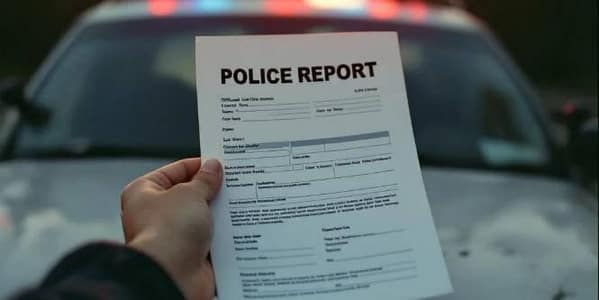
Getting a copy of a police report is a common need after accidents, crimes, or incidents requiring official documentation. However, many people find themselves unsure about the proper process, their legal rights to access these records, or what information they need to provide. Police reports serve as crucial evidence for insurance claims, legal proceedings, and personal records. Understanding how to navigate the request process can save you time and frustration.
Police often refuse to provide a copy of a police report because it may identify witnesses or victims.
Disclosing this information could give a defendant a roadmap for intimidating or threatening witnesses, potentially even putting their lives at risk, in an effort to prevent a conviction. Disclosure also could facilitate the destruction or concealment of evidence.
Understanding Police Report Access and Your Rights
A Police report serves multiple purposes beyond basic documentation. Investigating officers use it as a point of reference throughout their work. Victims rely on these records when filing insurance claims. Court personnel access the reports when criminal charges occur. Given that these documents capture official observations and evidence, they become crucial pieces of evidence in personal injury cases, particularly because physical evidence often disappears and human memory proves unreliable.
Police report formats vary by agency, with no standardized form used across all departments. Most reports include the date, time, and location of the incident, identifies people involved and witnesses, describes what happened according to participants and witnesses, documents available evidence, and records the officer's observations and impressions. Retention periods differ by case type. Traffic collisions typically remain on file for 5 to 10 years, while criminal investigations with filed charges may be retained permanently or indefinitely.
Public vs confidential law enforcement data
Not all police records fall under public access. The distinction between public and confidential information determines what you can obtain. Public records laws require disclosure of certain basic information: the time, date, location, and nature of reported crimes; names, sex, age, and addresses of arrested persons or crime victims (with exceptions); incident and arrest details; and charges filed.
Active criminal investigative information remains exempt from public disclosure. This exemption exists to prevent premature disclosure that could impede ongoing investigations or allow suspects to avoid apprehension. Information qualifies as "active" as long as the investigation continues with reasonable, good faith anticipation of securing an arrest or prosecution in the foreseeable future.
Several categories of law enforcement records receive discretionary protection. Criminal investigative files, including complaints, court orders, memoranda, notes, diagrams, photographs, witness statements, and evidence, may be withheld. Records submitted in confidence to law enforcement agencies receive similar protection. The identity of individuals providing information about crimes under anonymity promises cannot be disclosed.
Additional restrictions protect specific information types. Records containing tactical plans that would jeopardize law enforcement personnel safety or public security remain confidential. Background investigations of law enforcement applicants and administrative investigations into employee wrongdoing stay protected. Victim and witness identities may be withheld when disclosure faces prohibition or restriction.
Your legal right to access under public records laws
Public records laws establish your fundamental right to access government documents. The Freedom of Information Act operates at the federal level. At the same time, every state maintains its own public records statute governing access to local and state government information.
These laws follow a principle of presumptive openness. California's Public Records Act and state Constitution grant residents the right to access public information maintained by government agencies. Nevada law declares that public books and records must be open during office hours for inspection by any person, with the right to prepare copies or abstracts. The Nevada Legislature specifically found that providing prompt public access to records fosters democratic principles.
Exemptions from mandatory disclosure must be construed narrowly. Analogous to this approach, if a record isn't declared confidential by law, it shouldn't be treated as such. This framework places the burden on agencies to justify withholding information rather than on requesters to prove their need.
Enforcement mechanisms strengthen these access rights. Some states include mandatory fee shifting provisions. Under this system, agencies that unlawfully deny requests must pay the requester's legal fees if they sue and win access. This financial consequence incentivizes agency compliance because they know wrongful denials carry monetary penalties.
District attorneys and police possess discretion to share information they hold unless prohibited by statute, rule, or court order. Disclosure decisions must consider whether sharing serves the interests of justice. These protections balance transparency with legitimate law enforcement needs and individual privacy rights.
Step-by-Step: How to Request a Police Report
Most police departments offer multiple ways to request reports, with specific procedures varying by jurisdiction. The method you choose depends on your location, the type of report needed, and how quickly you need access.
Requesting in person at the police department
Visit the records unit or designated report counter at police headquarters during business hours. Many departments operate Monday through Friday, with hours typically running from 8:00 am to 4:00 or 5:00 pm. Some locations maintain reduced hours, such as 8:00 am to 1:30 pm or 8:00 am to 2:00 pm.
Reports may be available at area command stations or district locations in your jurisdiction. However, certain agencies process all requests exclusively through central records offices. Some departments allow walk-ins, while others require scheduled appointments. You must present valid photo identification when requesting reports in person.
Accepted identification includes state-issued driver's licenses, DMV identification cards, valid passports (including those from other countries), permanent resident alien registration cards, military IDs, or consulate matricula identification cards. When picking up reports for juveniles, bring original or certified birth certificates or guardianship paperwork from family court.
Requesting by mail or online
Online portals provide electronic submission options in many jurisdictions. You create an account, specify your delivery preference (email, mail, or in-person pickup), and submit your request through the system. Traffic collision reports often become available through dedicated online retrieval portals.
For mail requests, send your written request to the records division with specific case details. Include a self-addressed stamped envelope with your submission. Checks or money orders should be made payable to the city or police department, with some agencies accepting only certified payment methods. Mail requests to authorized representatives require notarized letters and photocopies of valid identification.
Required information and materials for your request
Provide as much detail as possible to speed up record retrieval:
- Case number or event number (if known)
- Full names and dates of birth of involved persons
- Date and time of incident
- Specific location or address where incident occurred
- Type of crime or incident description
- Vehicle license plate numbers (for collision reports)
- Your relationship to the case
- Valid photo identification
- Payment for applicable fees
What to expect during the request process
Reports need processing time before becoming available. Allow 5 to 10 business days minimum after an incident before requesting the report. Some jurisdictions require waiting periods of up to 15 or 20 business days.
Processing times for submitted requests vary significantly. Turnaround ranges from 10 business days to 12-16 weeks for online systems or 24 weeks for standard requests. Philadelphia collision reports typically take two to three weeks, though volume affects processing speed. The department reviews requests, retrieves records, and notifies you through your selected method. In-person pickups must occur within 30 days at your designated location.
Who Can Access Police Reports and When
Access rights depend heavily on your relationship to the incident and the investigation's status. Different rules apply based on whether you were directly involved or seeking information as an outside party.
If you are the victim
Victims receive the strongest access rights to police reports. If you experienced vandalism, burglary, assault, or traffic collision involvement, you are entitled to receive a copy of the report. Many states recognize victims' rights to receive copies of police reports, with a majority having laws that explicitly grant at least some crime victims this access.
Victims need these documents for insurance claims, crime victim compensation, employer documentation for time off, civil or family court proceedings, protective orders, and lease modifications. In effect, meaningful exercise of victims' constitutional rights to due process, fairness, and participation in criminal proceedings requires timely access to police reports.
Several jurisdictions provide free copies to victims without charge. For domestic and sexual violence victims specifically, some states prioritize their requests over others and waive all fees. On the other hand, if your case resulted in an arrest, you receive a redacted copy until the district attorney's office completes adjudication.
If you are the defendant or arrestee
Law enforcement has no legal obligation to provide arrestees with police reports until formal charges are filed. During active investigations, withholding protects witness identities, investigative strategies, and evidence integrity. After arraignment, your defense attorney receives the report through discovery procedures and can review it with you line by line.
If you are a third party or witness
Third parties face significant barriers. In civil lawsuits arising from accidents or injuries, police records provide crucial evidence. However, commencing a civil action does not automatically entitle you to police records. Police operate as non-parties to civil proceedings, requiring court orders obtained through motions to compel document production.
When the investigation is ongoing vs closed
Active criminal investigative information remains exempt from public disclosure. Information qualifies as active when the investigation continues with reasonable, good faith anticipation of securing arrest or prosecution. Once investigations conclude and are no longer active, no exemption prevents inspection and copying of police reports.
Special cases: Juvenile records and domestic violence
Juvenile law enforcement and court records remain confidential from inception, kept separate from adult arrest records and withheld from public inspection. Access limits to parents, guardians, attorneys, law enforcement, school authorities, and specific authorized entities.
Domestic violence victims receive enhanced protections. The victim's right to prevent disclosure of information that could locate or harass them supersedes standard public records laws. Especially significant, victims can assert these privacy rights to block third-party requests without written consent or court order.
Costs, Fees, and Processing Times
Fees vary considerably by jurisdiction and report type. Most agencies charge between $12 and $25 for standard police reports. Las Vegas Metropolitan Police Department charges $12 for accident and crime reports, while their updated fee schedule shows $13 for incident and traffic collision reports. New York City Police Department charges $25 for most reports. San Diego County Sheriff sets fees at $20, and San Diego Police Department charges $12 per report. Pennsylvania State Police requires $22 for crash reports, while Philadelphia charges $25.
Payment methods differ across departments. Cash payments require bills no larger than $20 denominations in some locations. Money orders and cashier's checks must match the exact transaction amount, as agencies provide no change for overpayment. Credit cards (Visa, Mastercard, Discover) and bank-issued debit cards work for online payments. Mail requests need certified checks or money orders.
Standard copy fees and charges
Background checks and specialized documents carry higher costs. New York City charges $50 for certificates of conduct. Work card applications in Las Vegas cost $62, with some requiring an additional $40.25 FBI background fee.
How long it takes to get your report
Processing times span from several days to multiple weeks. Reports typically become available 3 to 5 business days after filing, though Las Vegas recommends allowing up to 10 business days. North Carolina crash reports post within 3 to 5 business days, extending to 7 to 10 business days for serious crashes. Mail requests generally require 3 to 4 weeks. Philadelphia processes reports in two to three weeks.
Free or reduced cost options for victims
Equally important, many jurisdictions waive fees for victims. San Diego County Sheriff provides the first copy of crime reports and alcohol-related accident reports free to victims or their representatives. Livermore Police Department eliminates the $12 fee for victims listed on reports. New York City offers complaint report verifications and aided reports at no charge.
Common Reasons for Denial and How to Address Them
Denials happen for specific legal reasons, and understanding them helps you respond appropriately.
Active investigation blocking access
Active investigations exempt records from disclosure to protect ongoing work. Agencies withhold reports when release would endanger investigation completion or allow suspects to avoid arrest. The most common reason for denial to reporting parties is an active investigation that would be impacted by premature release.
Redacted or blocked information in reports
Victim information is redacted in almost every state. Victim Rights laws require protection of identifying details, making it a violation to reveal this information to the general public. States with Marsy's Law, including California, Florida, and Ohio, provide victims the right to privacy of contact information in publicly released police records.
Privacy protections for witnesses and victims
Defendants must go through proper court motions to access victim information. The person who called is always redacted unless other circumstances make them more involved. Personally identifying information like names, dates of birth, addresses, phone numbers, and gender should not come from law enforcement offices.
Speaking to data compliance officials
Contact your local data compliance officer if you believe your request was improperly denied. They can review the exemption applied and explain the legal basis.
Requesting prosecutor review for confidential data
Appeals of denials for criminal investigative records must be directed to the District Attorney's Office within 15 business days. A victim or legal representative can make a written request to the prosecutor's office to release investigative data collected.
Call Your Lawyer
Accessing police reports doesn't have to be complicated once you understand the process. Most importantly, know your rights as a victim, defendant, or third party, as each status determines what you can access. Choose the method that works best for your situation, whether in-person visits, mail requests, or online portals. Be prepared with all required information and expect reasonable processing times between several days and a few weeks.
Your relationship to the case matters significantly for access rights. Victims receive the strongest protections and easiest access, while third parties face more restrictions. If your request gets denied, reach out to data compliance officials or request prosecutor review to understand the legal basis and explore your options. Contact an experienced attorney for guidance on your rights and next steps.

Need a Criminal Defense Attorney? CALL NOW: 213-932-8922
Yuliya Kelmansky is an Expert Criminal Defense Attorney who has over 10 years of practice defending a variety of criminal cases.