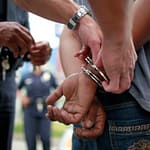



The 12 Most Common Offenses in California
Few phone calls are more frightening for a parent than the one that starts with "your child has been arrested." You need clear answers on what are juvenile crimes right then, including how California's justice system treats minors, whether the charge involves petty theft, vandalism, or something more serious such as robbery or assault. The law treats minors differently than adults, but the consequences can still be significant. This guide breaks down the 12 most common juvenile offenses in California, covering definitions, classification, and defense options available in 2026.
1. Petty Theft and Shoplifting
Petty Theft and Shoplifting: Definitions and Common Examples
California law defines petty theft as taking property valued at $950 or less without force or threat. Shoplifting under Penal Code 459.5 involves entering a store during business hours with intent to steal merchandise worth $950 or less. Common examples include concealing clothing, cosmetics, or electronics, price-switching tags, or walking out without paying for an item accidentally left in a bag.
Petty Theft and Shoplifting: California Classification and Charging Factors
Most first-time petty theft and shoplifting cases are charged as misdemeanors, although theft of a valuable item or repeat offenses may lead to felony charges, depending on the prosecutor's discretion. Intent matters significantly; a genuine mistake at self-checkout differs from deliberate concealment.
Petty Theft and Shoplifting: Potential Juvenile Court Outcomes and Defense Options
Juvenile courts favor rehabilitation over punishment. Judges may order:
- Informal probation, requiring restitution, classes, or community service
- Formal probation, adding court appearances, curfews, and counseling
Incarceration remains unlikely for first-time offenders unless prior history exists. Defense strategies include challenging intent, mistaken identity, or disputed property value. Successful completion of probation can lead to sealing records under Welfare and Institutions Code 786.
2. Grand Theft
Grand theft escalates the stakes beyond simple shoplifting, since Penal Code 487 applies once stolen property, labor, or services exceed $950, or when the item taken is an automobile, a firearm, or fish from a commercial fishery. The statute also covers theft directly from a person's body and employee theft that adds up to $950 or more within a 12-month period. Common examples among minors include stealing a car for a joyride, shoplifting designer merchandise, or taking a firearm from a family member's home.
California treats grand theft as a "wobbler," meaning prosecutors can file it as a felony or misdemeanor depending on the juvenile's record and case specifics. A felony conviction involving a firearm carries 16 months, two, or three years in state prison for an adult, while other grand theft offenses bring county jail time up to one year or a state prison term.
Juvenile court outcomes vary widely. First-time offenders may qualify for deferred entry of judgment, avoiding a formal record. Minors with serious conduct or prior adjudications can become wards of the court, facing probation camp or commitment, in rare cases until age 25. Defense strategies include disputing property valuation, challenging intent, or arguing mistaken identity.
3. Vandalism and Graffiti
Vandalism charges surface often in juvenile court, and the conduct ranges from spray-painted tags to a scratched car door.
Vandalism and Graffiti: Definitions and Common Examples
Penal Code 594 makes it illegal to maliciously deface, damage, or destroy property belonging to someone else. Graffiti qualifies even if the marking is not permanent, so a marker on a window or initials etched into wet cement both count. Typical juvenile cases involve tagging school walls, keying a car, smashing windows, or slashing tires. Possessing aerosol paint, etching cream, or markers with intent to tag can bring separate charges under Penal Code 594.2.
Vandalism and Graffiti: California Classification and Charging Factors
Damage under $400 is a misdemeanor, punishable by up to a year in county jail and a $1,000 fine. Once damage reaches $400 or more, the offense becomes a wobbler, and felony convictions carry up to three years in state prison along with fines reaching $10,000, or $50,000 for damage exceeding $10,000. Gang involvement or a hate crime motive, such as targeting a place of worship, can push charges toward felony enhancement.
Vandalism and Graffiti: Potential Juvenile Court Outcomes and Defense Options
Courts frequently order restitution, counseling, and up to 300 hours of graffiti cleanup over 240 days. Parents may bear financial responsibility under Welfare and Institutions Code 730.7. Defense options include accident, mistaken identity, and false accusation.
4. Burglary
Burglary charges carry more weight than typical theft cases because the law punishes the act of entering a space with criminal intent, regardless of whether anything gets taken.
Burglary: Definition and Common Examples
Penal Code 459 defines burglary as entering a structure, residential or commercial, with the intent to commit grand larceny, petty larceny, or any other felony. No force or broken window is required; slipping a hand through an open door with that intent satisfies the entry element. A minor who enters a neighbor's garage to steal a bike commits first degree burglary, while one who walks into a department store already planning to steal clothing commits second degree burglary.
Burglary: California Classification and Charging Factors
First degree burglary, involving an inhabited dwelling, is always a felony and qualifies as a strike offense under California's Three Strikes Law. Second degree burglary is a wobbler, charged as a misdemeanor or felony. Possessing burglary tools adds a separate misdemeanor under Penal Code 466. Property crimes, including burglary, accounted for roughly 57% of juvenile felony arrests in 1993.
Burglary: Potential Juvenile Court Outcomes and Defense Options
Given the felony classification, juvenile courts may order camp placement for serious or repeat cases. Defense options include mistaken identity, owner consent, lack of entry, and disputing intent.
5. Assault
Unlike theft or vandalism offenses, assault charges focus on the threat of harm rather than actual contact or stolen property.
Assault: Definition and Common Examples
California law defines assault as an unlawful attempt, coupled with present ability, to commit a violent injury on another person. Physical contact does not need to occur; the charge rests on the attempt and the capability to carry it out. Common examples among minors include throwing a punch that misses, lunging at a classmate during a fight, or brandishing an object in a threatening manner during an argument at school.
Assault: California Classification and Charging Factors
Simple assault is typically charged as a misdemeanor. The classification shifts, however, once a deadly weapon enters the picture, or when the target belongs to a protected category such as a police officer, firefighter, or school employee performing official duties. These aggravating circumstances can push the charge toward a wobbler, giving prosecutors room to file felony charges depending on the minor's record and the surrounding facts.
Assault: Potential Juvenile Court Outcomes and Defense Options
Juvenile courts weigh intent and context heavily. Self-defense remains a central defense strategy, along with disputing the "present ability" element or challenging witness identification. Diversion programs, counseling, and informal probation remain common outcomes for first-time, non-weapon cases.
6. Battery
Battery charges often appear alongside assault in juvenile cases, but the law treats the two offenses differently based on whether contact actually occurred.
Battery: Definition and Common Examples
California law defines battery as any willful and unlawful use of force or violence against another person. Unlike assault, battery requires actual physical contact, even if that contact causes no visible injury. A minor who shoves a classmate during a hallway dispute, slaps someone during an argument, or throws an object that strikes another student commits battery. The touching does not need to cause pain or leave a mark; an offensive or unwanted contact satisfies the legal definition.
Battery: California Classification and Charging Factors
Simple battery, where no injury results, is typically charged as a misdemeanor. The charge escalates when the victim suffers a visible injury, qualifying as battery causing serious bodily injury, or when the victim holds a protected status such as a teacher, school employee, or peace officer acting in an official role. These factors can turn the offense into a wobbler, giving prosecutors discretion to pursue felony charges depending on the circumstances and the minor's prior record.
Battery: Potential Juvenile Court Outcomes and Defense Options
Juvenile courts often favor counseling, anger management classes, and informal probation for first-time, low-injury cases. Defense strategies include self-defense, defense of another person, consent, and disputing that unlawful contact occurred.
7. Robbery
Robbery stands apart from theft and burglary because the law requires force or fear directed at a person, not just the taking of property.
Robbery: Definition and Common Examples
Penal Code 211 defines robbery as taking personal property from another person's immediate presence, against their will, using force or fear. Any amount of force qualifies, and no injury needs to result. A minor who grabs a phone while threatening to hurt the owner, or who struggles with a store clerk while fleeing with stolen merchandise, commits robbery; the latter scenario is sometimes called an "Estes robbery".
Robbery: California Classification and Charging Factors
Robbery splits into two degrees. First degree applies to robbery of a bus, taxi, or streetcar operator, or robbery inside an inhabited dwelling, punished by three, six, or nine years in state prison for an adult. Second degree covers all other robbery, carrying two, three, or five years. Robbery is always charged as a felony and counts as a strike offense once the minor reaches age 16.
Robbery: Potential Juvenile Court Outcomes and Defense Options
Given the strike classification, courts may order camp placement or commitment for older minors. Defense strategies include claiming right to the property, mistaken identity, absence of force or fear, and false accusation.
8. Drug Possession
Drug-related arrests send many California teenagers into the juvenile justice system each year, and the charges carry their own set of rules distinct from adult court.
Drug Possession: Definition and Common Examples
Health and Safety Code 11350 makes it illegal to knowingly possess a usable amount of a controlled substance, whether the possession is actual, constructive, or joint. Controlled substances span five schedules, from Schedule I drugs like heroin, LSD, and PCP, which carry no accepted medical use, down to Schedule V medications with low abuse potential. Common juvenile cases involve cocaine, methamphetamine, prescription pills such as Xanax or Vicodin without a valid prescription, and marijuana, which remains illegal for anyone under 21 regardless of statewide legalization.
Drug Possession: California Classification and Charging Factors
Simple possession can be charged as an infraction, misdemeanor, or felony, depending on substance type, quantity, and intent to sell. For minors, the offense typically results in an infraction carrying a $100 fine, community service, and drug counseling. Adults convicted of the same misdemeanor face up to one year in jail and a $1,000 fine.
Drug Possession: Potential Juvenile Court Outcomes and Defense Options
Most cases end in probation, deferred entry of judgment, or placement in a group home. Defense options include disputing ownership, lack of control, a valid prescription, or an illegal search.
9. Drug Sales and Possession for Sale
Drug sales allegations push a juvenile case into more serious territory, since prosecutors now must prove intent to distribute rather than personal use.
Drug Sales and Possession for Sale: Definitions and Common Examples
Health and Safety Code 11351 prohibits possession for sale of cocaine, heroin, and prescription opioids, while Section 11378 covers methamphetamine and similar stimulants. Common scenarios include pills found in a school backpack, drugs discovered in a car shared by several teens, a minor accused of giving medication to a classmate, or text messages and payment-app records suggesting a sale took place.
Drug Sales and Possession for Sale: California Classification and Charging Factors
HS 11351 is a straight felony carrying 2, 3, or 4 years in county jail, with no misdemeanor option. HS 11378 ranges from 16 months to 3 years. Prosecutors often treat more than 5 grams of cocaine, methamphetamine, or heroin as a sales quantity, especially alongside digital scales, individual packaging, pay-owe sheets, or large cash in small denominations.
Drug Sales and Possession for Sale: Potential Juvenile Court Outcomes and Defense Options
Outcomes range from dismissal and informal supervision under Welfare and Institutions Code 654 to formal probation, wardship, placement, or confinement. Defense strategies include disputing intent, challenging constructive possession, and filing suppression motions over unlawful searches.
10. Underage Alcohol Possession
Not every juvenile case in California involves theft or violence; alcohol possession charges touch far more households, often starting with a party, a parking lot, or a backpack search at school.
Underage Alcohol Possession: Definition and Common Examples
Business and Professions Code 25662 prohibits anyone under 21 from possessing alcohol on a street, highway, or any public place. A minor holding a beer at a park, carrying liquor into a restaurant, or sharing a drink at a parking lot gathering falls under this law. Possession in a private residence does not violate the statute, though adults present could face separate liability. Delivering alcohol for a parent or employer qualifies as an exception.
Underage Alcohol Possession: California Classification and Charging Factors
A first offense is a misdemeanor, carrying a $250 fine or 24 to 32 hours of community service. A second violation raises the fine to $500 and community service to 36-48 hours. Conviction triggers an automatic one-year driver's license suspension, or a one-year delay for minors without a license yet. Possessing alcohol inside a vehicle brings harsher consequences: up to six months in jail, a $1,000 fine, and vehicle impoundment for 30 days if registered to the minor.
Underage Alcohol Possession: Potential Juvenile Court Outcomes and Defense Options
Juvenile proceedings replace jury trials with an adjudication hearing before a judge. Defenses include disputing possession, proving delivery under parental or employer direction, challenging an illegal search, or citing immunity granted to minors who call 911 for alcohol-related medical emergencies.
11. Driving Under the Influence (DUI)
Alcohol charges often pair with another offense that lands minors in court: driving after drinking, which California treats far more strictly for teenagers than for adults.
Driving Under the Influence (DUI): Definition and Common Examples
Vehicle Code 23152 criminalizes driving under the influence of alcohol, with a BAC of 0.08% or higher, under the influence of any drug, or a combination of both. California's "zero tolerance" policy applies to drivers under 21, setting the legal limit at just 0.01% BAC, meaning any detectable alcohol can trigger a charge. A minor who drinks one beer at a party, then drives home, falls squarely under this standard regardless of actual impairment.
Driving Under the Influence (DUI): California Classification and Charging Factors
A first underage DUI conviction can bring a one-year license suspension, mandatory DUI school, fines starting at $100, and three to five years of probation. Jail time becomes possible once a minor's BAC reaches legal intoxication levels. Consequently, prosecutors treat even low-level violations with urgency when the driver is underage.
Driving Under the Influence (DUI): Potential Juvenile Court Outcomes and Defense Options
Separately, a DMV Administrative Per Se hearing can suspend driving privileges within 10 days of arrest, regardless of the criminal case outcome. Defense options include challenging the traffic stop, disputing field sobriety or breath test accuracy, and negotiating a "wet reckless" plea.
12. Weapons Offenses
California law draws a hard line when a firearm turns up in a minor's possession, and the circumstances surrounding that discovery often decide the outcome.
Weapons Offenses: Definitions and Common Examples
Penal Code 29610 bars a minor from possessing a firearm, though exceptions under Penal Code 29615 allow possession during hunting, shooting sports, ranching, or supervised entertainment activities. A handgun found in a backpack, bedroom, locker, or vehicle during a traffic stop frequently triggers these cases. Possessing live ammunition without parental consent or supervision carries similar restrictions.
Weapons Offenses: California Classification and Charging Factors
A single firearm discovery can produce several charges at once, including carrying a concealed weapon under Penal Code 25400, carrying a loaded firearm in public under Penal Code 25850, or firing from a vehicle under Penal Code 26100. Bringing a gun onto school grounds violates California's Gun-Free School Zone Act under Penal Code 626.9. Serious firearm allegations involving minors aged 16 or older may prompt a transfer hearing, moving the case toward adult criminal court.
Weapons Offenses: Potential Juvenile Court Outcomes and Defense Options
Penal Code 29820 bars gun ownership until age 30 for wards adjudicated on qualifying offenses. A felony reduced to a misdemeanor under Penal Code 17(b) can shorten that ban. Defense strategies include disputing constructive possession, challenging unlawful searches, and citing statutory exceptions.
Need a Lawyer?
These 12 offenses, petty theft, grand theft, vandalism, burglary, assault, battery, robbery, drug possession, drug sales, underage alcohol possession, DUI, and weapons charges, cover most cases that bring California minors into juvenile court. Essentially, the system leans toward rehabilitation rather than punishment, although serious or repeat offenses can still result in wardship, camp placement, or strike enhancements. Up against a confusing mix of codes, degrees, and court procedures, parents need to act quickly once an arrest occurs. In light of what's at stake for a minor's future, consulting a juvenile defense attorney early remains the single most important step toward protecting their record and their options going forward.
RELATED ARTICLE:

Call 213-932-8922, for a free consultation. We’re affordable.