



College Drug Busts: How Proposition 36 Changes Felony Charges for Students
A single dorm room search can now carry felony weight under Proposition 36, catching many California students off guard. What once resulted in a simple misdemeanor citation may escalate quickly when campus police, student conduct staff, and new sentencing rules intersect. Furthermore, the law's impact depends heavily on timing, prior convictions, and how evidence was gathered inside shared living spaces. Understanding these distinctions matters, because a dorm drug bust affects more than criminal records, it can also threaten housing, financial aid, and academic standing. This guide breaks down what students need to know before making any statements or decisions.
What Happens During a California College Dorm Drug Bust?
A dorm drug bust rarely starts with a single phone call. Three separate groups can become involved at once: campus police, local law enforcement, and student conduct staff, each operating under different rules and reaching different conclusions about the same incident.
Campus police, local police, and student conduct staff
Campus police departments typically respond first since they patrol residence halls directly. Local police may get pulled in when campus officers refer a case for criminal prosecution or when off-campus activity triggers a joint response. Student conduct staff operate on a completely separate track. A college's disciplinary process doesn't lead to a criminal conviction, and it can only result in a conduct record maintained for a limited time, though some public institutions are required to hold these records indefinitely.
The standards of proof also differ sharply. Criminal cases require proof beyond a reasonable doubt, roughly a 97% threshold. Campus hearings use a far lower bar: a preponderance of the evidence, meaning just 51%, or "more likely than not." Some schools apply a middle standard called clear and convincing evidence, landing around 75% to 80%. This gap means a student could avoid criminal conviction and still get suspended for the same incident, since the conduct office only needs to find it more likely than not that the violation occurred.
Dorm inspections versus police searches
Resident assistants and housing staff aren't law enforcement, and their authority is limited to safety checks, maintenance, and policy enforcement. If an RA spots something illegal during a routine inspection, the report usually goes straight to campus police, who then need their own legal basis to search further.
Dorm rooms at public universities receive Fourth Amendment protection similar to apartments or hotel rooms. Courts have consistently ruled that students don't lose their constitutional rights just because they live on campus. A warrantless police search generally requires one of three things: consent, a valid warrant, or exigent circumstances such as an immediate safety threat. Without any of these, students have the right to refuse entry, and anything found during an unlawful search can potentially be challenged later.
Housing officials can rely on contract language or safety regulations to justify administrative searches, but that authority doesn't extend to searches conducted for criminal investigation purposes. The source of a search matters quite a bit when a case later moves to court.
Shared rooms: when a roommate's drugs can lead to charges
Living with a roommate complicates everything. California treats possession as either actual or constructive, and constructive possession applies when someone has the right and power to control an item along with knowledge of its presence. This means prosecutors don't need to prove a student physically held the drugs, only that the student had access and awareness.
Multiple roommates can face constructive possession charges for the same stash, particularly when drugs surface in shared spaces like a common room or kitchen cabinet. A roommate's consent to search typically covers their own space, not areas belonging to someone else, though a warrant usually sweeps through the entire unit regardless.

Need an Attorney? CALL NOW: 213-932-8922
Mere presence near drugs isn't enough for conviction on its own. Courts require proof of both control and knowledge, which is exactly why explaining things away at the scene ("it's not mine," "I didn't know") tends to backfire, since those statements can be used as evidence later.
How California Classifies Student Drug Charges
Once police or housing staff establish that drugs were present and someone had control over them, the next question becomes what kind of charge applies. California draws a sharp line between simple possession and possession for sale, and that line determines whether a student faces a misdemeanor or a felony, long before Proposition 36 enters the picture.
Simple possession versus possession for sale
Simple possession, charged under Health and Safety Code 11350 or 11377, covers drugs held for personal use with no sign of intent to distribute. Since Proposition 47 passed, most of these charges are misdemeanors, except for people with certain serious or violent priors or a Penal Code 290 registration requirement. Possession for sale works differently. Charged under HS 11351 or HS 11378, it remains a straight felony that cannot be reduced to a misdemeanor under Penal Code 17(b), carrying two, three, or four years in state prison. Unlike simple possession, prosecutors don't need to prove an actual sale occurred, only that the person intended one.
How packaging, messages, and quantity affect sales claims
Intent to sell lives inside the evidence surrounding the drugs, not just the drugs themselves. Prosecutors typically point to:
- Quantity that appears to exceed personal use
- Multiple small baggies or packaging materials
- Digital scales or cutting agents
- Cash, especially in small denominations
- Text messages or call logs referencing prices or meeting locations
None of these factors alone proves intent, and a heavy user buying in bulk can offer an innocent explanation for quantity that otherwise looks suspicious. Even so, these details often decide whether two students found with the same substance walk away with completely different charges.
Prescription drugs without a valid prescription
Possessing a prescription drug without a valid prescription falls under HS 11350a, and this is typically a misdemeanor punishable by up to one year in county jail. A valid prescription in the student's name is a complete defense, and a narrow exception also protects someone who temporarily holds a prescription drug only to dispose of it or return it to the rightful holder, with that person's permission and no intent to use, sell, or conceal it. Borrowing a roommate's Adderall without permission falls outside that exception, even for something as ordinary as exam prep. Intent to sell a prescription drug moves the charge to HS 11351, punished by two, three, or four years and a fine up to $20,000.
Why legal cannabis can still violate campus rules
Cannabis sits in its own category. After Proposition 64, most adult possession is legal under state law, and cultivating up to six plants or holding up to an ounce falls outside criminal exposure for most adults. Campus rules, however, answer to federal law. Any school that accepts federal research or financial aid funding must prohibit cannabis use and possession under the Drug-Free Schools and Communities Act, regardless of what state law allows. Marijuana remains a Schedule I substance federally, so a student who is completely legal under state law can still face campus discipline, including dismissal, for the same conduct.
How Proposition 36 Can Turn Possession Into a Felony
Proposition 36 changes the equation for students who already have a drug record, turning what used to be a routine misdemeanor into something far more serious. The measure doesn't touch every possession case, but when it applies, the consequences multiply quickly.
The December 18, 2024 effective date and why offense dates matter
Proposition 36 took effect on December 18, 2024, after California voters approved it the previous November . For students, the date of the alleged offense determines which rules apply. A dorm room incident from early 2024 falls under the old misdemeanor framework, while the same conduct occurring after the effective date opens the door to the new treatment-mandated felony category under Health and Safety Code Section 11395 .
Which drugs fall under Health and Safety Code Section 11395?
Section 11395 only reaches what the law calls "hard drugs": fentanyl, heroin, cocaine, cocaine base, methamphetamine, phencyclidine, and their chemical analogs, as defined under Health and Safety Code Sections 11054 and 11055 . Cannabis, peyote, LSD, and other psychedelics such as mescaline and psilocybin sit outside this definition entirely, regardless of quantity . A student caught with mushrooms or a vape cartridge, in other words, isn't exposed to this particular felony pathway, even under the harshest reading of the new law.
The requirement for two qualifying prior convictions
A single possession arrest doesn't trigger Section 11395. The law requires two or more prior convictions for specified drug offenses, including simple possession under 11350 or 11377, possession for sale under 11351 or 11378, sales and transportation offenses, and even a prior 11395 conviction itself . Those priors must be formally alleged in the charging document and then either admitted by the student in open court or proven true by a judge or jury .
Why old convictions may count but arrests alone do not
There's no age limit or "wash-out" period on qualifying priors, meaning a conviction from a decade earlier, even one that predates Proposition 36 entirely, can still count toward the two-prior threshold . An arrest on its own carries no weight here. Only a conviction counts, and police are expected to pull a criminal history check before booking someone under this section, since officers need to confirm qualifying priors exist before the felony charge attaches .
What a wobbler and treatment-mandated felony mean for students
Section 11395 is written as a wobbler, giving prosecutors discretion to file it as either a misdemeanor or a felony . A felony filing can bring up to three years in county jail for a first offense, with a second or subsequent conviction exposing the student to state prison time instead . Students charged this way can elect treatment instead of incarceration by pleading guilty or no contest, admitting the priors, and completing a court-approved program; finishing that program leads to dismissal, with the arrest treated as if it never happened . Failing to complete treatment, by contrast, sends the case back for sentencing and up to three years behind bars .
How Drug Charges Can Affect College and Future Plans
A criminal charge is only one part of the fallout a student faces after a dorm drug incident. Campus discipline often moves on its own track, with its own timeline and its own definition of proof.
School discipline can proceed separately from the criminal case
California school districts can pursue discipline while a case proceeds separately, and the two tracks use different rules, decision-makers, and standards of proof. An arrest is not a conviction, so school officials cannot treat an accusation as settled fact while the matter is still being examined. Even so, some schools forward adjudication reports to police once a student is found responsible on campus, keeping law enforcement looped into a case that started as a conduct matter.
Housing removal, suspension, and expulsion
Housing violations typically trigger immediate termination of a student's housing assignment, alongside suspension or expulsion from the institution itself. Some schools build in an alternative path: suspension held back in exchange for a substance program lasting several weeks, combined with random drug testing paid for by the student, though housing termination still applies regardless. Sanctions often increase in severity based on frequency and seriousness of violations, and a student expelled under this system is not eligible for a refund and may carry a permanent notation on their transcript. Since the conduct process runs independently and uses a lower standard of proof, consequences can still follow even after criminal charges get dropped.
Federal aid rules versus campus scholarship requirements
Older federal rules tied financial aid eligibility to drug convictions, with escalating penalties for repeat offenses and eligibility restored only after completing a rehabilitation program and passing two unannounced drug tests. That penalty structure no longer applies to federal aid, since the FAFSA Simplification Act repealed the disclosure requirement effective July 1, 2023. State aid programs haven't necessarily followed suit, and some still require annual certification that a student has no felony or controlled substance conviction before funds are released. Campus scholarships may apply stricter rules than the federal government now does, so reviewing the specific award terms matters.
Possible effects on internships, licensing, and immigration status
Schools sometimes report drug offenses to licensing boards, a risk that follows students into health, law, or education programs long after graduation. Graduate programs and employers that run background checks may also treat a possession record as a red flag. For noncitizen students, the stakes climb further: most drug convictions trigger deportability, aggravated felony classifications tied to sales allegations are an absolute bar to relief such as asylum, and even an arrest without conviction can support a "reason to believe" finding tied to trafficking.
Legal Options After a Dorm Drug Arrest
Several avenues open up once charges are filed, and the right strategy depends on how the arrest unfolded.
Reviewing search legality and proof of knowing possession
An attorney can file a Penal Code 1538.5 motion to suppress evidence gathered through an unlawful search, which may weaken or dismiss the case if granted . Lack of knowledge about drugs found in a shared room remains a core defense, since control alone, without awareness, doesn't establish possession .
Challenging sales claims and qualifying prior convictions
Sales allegations under HS 11351 or 11378 often rest on circumstantial evidence like packaging or cash, so defense counsel typically argues personal use instead . For Proposition 36 cases, counsel can scrutinize whether prior convictions were properly alleged and proven, since no washout period currently limits how old those priors can be .
Comparing Proposition 36 treatment with other diversion options
Students may also qualify for Penal Code 1000 pretrial diversion, a separate program open to non-violent first-time offenders that leads to dismissal upon completion .
Understanding dismissal, record relief, and campus hearing deadlines
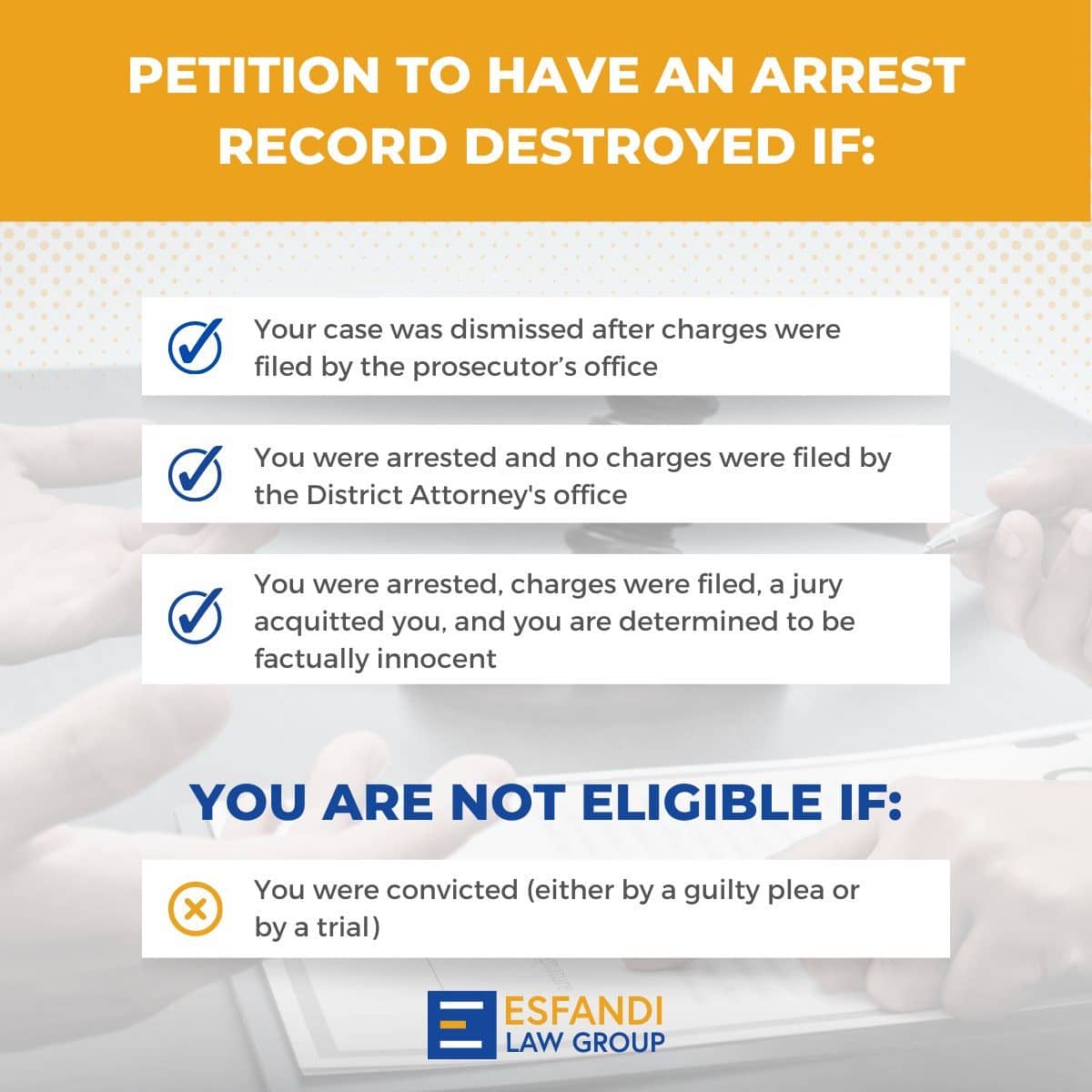
Arrests without conviction can often be sealed under Penal Code 851.91, while diversion-related dismissals fall under sections 851.87, 1001.9, or 851.90 .
Getting legal advice before statements or plea decisions
Consulting an attorney before answering questions or entering a plea protects both the criminal case and any pending campus hearing .
Call An Attorney
A dorm drug bust touches far more than a single police report. Since campus discipline, criminal charges, and Proposition 36's treatment-mandated felony rules all operate under different standards, students can face overlapping consequences from one incident. Essentially, the key factors are the offense date, prior convictions, and how evidence was gathered inside a shared space. While Section 11395 only applies to hard drugs with two qualifying priors, its reach into housing, financial aid, and immigration status makes early legal guidance essential. Provided that students understand these distinctions before speaking to police or campus staff, they stand a far better chance of protecting their record, their education, and their future.
Need an Attorney? CALL NOW: 213-932-8922
Yuliya Kelmansky is an Expert Attorney who has over 10 years of practice defending a variety of cases.