



What is a wobbler in California law?
A wobbler is a crime that can be charged and punished as either a felony or a misdemeanor under California law. The term refers to offenses involving conduct that varies widely in its level of seriousness, allowing legal authorities flexibility in determining the appropriate charge based on case-specific circumstances. These offenses are also known as alternative felony/misdemeanor offenses, reflecting their dual classification potential.
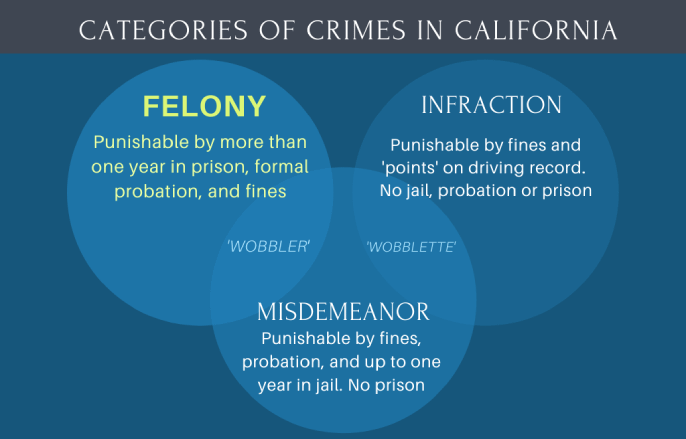
California law recognizes three categories of criminal offenses, arranged from most to least serious: felonies, misdemeanors, and infractions. While some crimes can only be punished as felonies (known as "straight felonies"), wobblers occupy a unique position within this framework. The wobbler meaning stems from the offense's ability to "wobble" between felony and misdemeanor status, depending on prosecutorial charging decisions and judicial determinations.
Under California law, a wobbler is presumptively a felony and remains a felony unless a court exercises its discretion to classify the crime as a misdemeanor. Prosecutors hold significant power in deciding whether to charge a wobbler offense as a misdemeanor or felony at the time of filing charges. Subsequently, judges possess broad authority to downgrade a wobbler to a misdemeanor under California Penal Code 17(b), based on an elastic standard that considers the nature and circumstances of the offense, the defendant's appreciation of and attitude towards the offense, traits of character evidenced by behavior and demeanor at trial, and general objectives of sentencing.
No single statute defines all wobbler offenses. Various provisions within the California Penal Code classify specific crimes as wobblers, covering a wide range of offenses including assault with a deadly weapon, vehicular manslaughter, money laundering, defacement of property, domestic violence, fraud crimes, theft crimes, and sexual-related crimes. This flexibility allows legal authorities to consider the unique details of each case before determining the severity of the charge.
Correspondingly, the wobbler designation means that two people accused of the same crime may face vastly different consequences based on how the offense is ultimately charged. Additionally, California law recognizes misdemeanor/infraction wobblers, commonly referred to as "wobblettes," which wobble between misdemeanor and infraction status rather than between felony and misdemeanor classifications.
Why does the felony or misdemeanor distinction matter?
The classification of a crime as a felony or misdemeanor determines both the severity of punishment and the long-term collateral consequences that follow a conviction. Felonies carry a minimum sentence of one year in custody, while misdemeanors typically involve up to six months in jail. Beyond incarceration, the distinction affects gun ownership, employment prospects, professional licensing, and civil rights.
Loss of gun rights
A felony conviction results in a lifetime ban on firearm ownership under California law. This prohibition applies permanently and affects individuals in firearm-related professions with particular severity. In contrast, most misdemeanor convictions carry no firearm restrictions. However, specific misdemeanor offenses, including domestic violence, stalking, and battery, trigger a 10-year ban on gun ownership. The federal law also imposes firearm consequences for qualifying misdemeanor crimes of domestic violence.
Employment and housing challenges
Convicted individuals must disclose felony convictions on job applications when asked. Both felony and misdemeanor convictions appear on background checks and create barriers to employment opportunities. California's Fair Chance Act provides some protection against discrimination based on criminal history, yet employers can still consider convictions within statutory limits, especially where the offense relates to the specific occupation. Housing applications similarly present challenges, as landlords conduct background screenings that reveal criminal records.
Professional license restrictions
Convictions of either classification can lead to the revocation of professional licenses. State licensing boards examine convictions for occupations in healthcare, finance, real estate, and education. Professional disqualification occurs particularly in industries requiring public trust, with felonies creating more severe barriers than misdemeanors. Nurses, teachers, contractors, and real estate brokers face scrutiny from licensing authorities regardless of whether the conviction is classified as a felony or misdemeanor.
Voting rights and other civil liberties
Misdemeanor convictions do not impact voting rights in California, and individuals serving misdemeanor jail sentences retain the right to vote while incarcerated. Conversely, individuals convicted of state or federal felonies cannot vote while serving prison terms. Voting rights are restored upon release from custody, including for those on parole or probation, though individuals must re-register to vote. Besides voting, felony convictions may count as strikes under California's three strikes law and require sex offender registration under Megan's Law for qualifying offenses.
How do prosecutors decide to charge a wobbler?
California law does not establish specific standards for how prosecutors should charge wobbler offenses. The decision remains within prosecutorial discretion, though prosecutors generally follow Uniform Crime Charging Standards published by the California District Attorneys Association (CDAA). These recommended factors guide charging decisions, yet their application varies significantly across jurisdictions, with some counties prosecuting most wobblers as felonies while others favor misdemeanor filings.
Severity of the crime
The seriousness of the alleged conduct influences whether prosecutors pursue felony or misdemeanor charges. Prosecutors evaluate whether the loss, injury, or threat of violence exceeded ordinary misdemeanor thresholds. Aggravating factors that elevate the severity include victim vulnerability, such as crimes against elderly or child victims, and the extent of harm caused. The nature and circumstances of the offense form a central component of the charging analysis.
Defendant's criminal history
Prior criminal record ranks among the first factors prosecutors consider when determining how to charge a wobbler. A clean criminal history increases the likelihood of misdemeanor filing, whereas prior felonies push charging decisions toward felony treatment. Probation violations, prior strike convictions, and recent felony convictions significantly influence charging decisions. Prosecutors assess not only the existence of prior convictions but also their nature and recency.
Strength of the prosecution's case
The available evidence and strength of the prosecution's case factor into charging decisions. Prosecutors review the quality and reliability of evidence when deciding between felony and misdemeanor filing. Strong legal advocacy at the charging stage can influence this determination, as defense attorneys present mitigating factors that may encourage misdemeanor treatment rather than felony prosecution.
Defendant's age and cooperation
The defendant's age represents a consideration in wobbler charging decisions. Equally important is the defendant's cooperation with law enforcement, as willingness to assist authorities can affect whether prosecutors pursue felony or misdemeanor charges. The defendant's attitude toward the offense and demonstrated traits of character also enter the evaluation.
Likelihood of continued criminal conduct
Prosecutors assess the probability that the defendant will engage in future criminal behavior when making charging determinations. This forward-looking evaluation considers the defendant's eligibility for probation and potential for rehabilitation. The assessment incorporates both the defendant's history and the specific circumstances suggesting future risk.
Call 213-932-8922, for a free consultation. We’re affordable.
When can a wobbler be reduced from a felony to a misdemeanor?
California Penal Code Section 17(b) authorizes courts to reduce wobbler felonies to misdemeanors at multiple stages throughout the criminal process. Defense attorneys can file motions for reduction at three primary procedural points, each offering distinct strategic advantages based on case circumstances and defendant cooperation.
Initially, reduction becomes available at the conclusion of the preliminary hearing. At this stage, after the judge determines sufficient evidence exists to proceed with felony charges, defense counsel can file a motion requesting misdemeanor classification. This timing allows defendants to seek reduction before trial proceedings commence. Alternatively, defense advocacy can occur even earlier during the pre-filing stage, where attorneys present mitigating evidence, witness statements, and contextual information directly to the filing deputy district attorney, potentially securing misdemeanor filing from the outset.
The second opportunity arises at sentencing. Provided the court imposes probation rather than state prison time, defense counsel can request felony reduction during the sentencing hearing. This option remains available even if a jury returns a felony verdict. However, defendants sentenced to prison become ineligible for reduction under this provision. The distinction between probation and prison sentences creates a critical threshold for reduction eligibility.
The third procedural window opens after successful completion of felony probation. Once defendants satisfactorily fulfill all probation conditions, attorneys can file a motion to reclassify the conviction as a misdemeanor. At that point, if the court grants the motion, the verdict changes from guilty of a felony to guilty of a misdemeanor. Defense counsel may petition for early termination of probation to expedite this process for defendants demonstrating good behavior during their probation period.
Post-conviction motions can also be filed after completing jail sentences, frequently combined with expungement petitions under Penal Code Section 1203.4 to maximize record relief. Courts exercise discretion based on case facts, criminal history, and defendant conduct when evaluating reduction requests. Straight felonies, unlike wobblers, cannot be reduced to misdemeanors under any circumstances.
What are common wobbler offenses in California?
California law designates numerous offenses as wobblers, spanning violent crimes, property offenses, and sex-related violations. The designation allows prosecutors and courts to assess individual circumstances when determining appropriate charging levels.
Assault with a deadly weapon
Penal Code 245(a)(1) criminalizes assault with a deadly weapon other than a firearm, as well as assault with force likely to produce great bodily injury. This wobbler encompasses attacks using objects like knives, bats, or vehicles. Related offenses include Penal Code 245(a)(2), which addresses assault with a firearm, and Penal Code 243(d), battery resulting in serious bodily injury.
Grand theft and forgery
Penal Code 487 defines grand theft as taking property valued over $400, including money, labor, agricultural products, or farm animals. Forgery under Penal Code 470 involves falsifying documents or signatures with fraudulent intent. Related property crimes classified as wobblers include receiving stolen property under Penal Code 496 and embezzlement by public officers under Penal Code 504.
Domestic violence related crimes
Penal Code 273.5 addresses inflicting corporal injury on a spouse, cohabitant, or former cohabitant. Child endangerment under Penal Code 271 and child abuse causing traumatic injury under Penal Code 273d also qualify as wobblers. Making criminal threats under Penal Code 422 frequently arises in domestic contexts.
Sexual battery and statutory rape
Penal Code 243.4 defines sexual battery as touching intimate parts of another person against their will for sexual gratification. Statutory rape under Penal Code 261.5 involves unlawful sexual intercourse with a minor, with subsections 261.5(c) and (d) addressing age differences exceeding three years. Lewd acts with a minor under Penal Code 288 constitutes another wobbler in this category.
Burglary and stalking
Second-degree burglary under Penal Code 459 involves unauthorized entry into commercial establishments or vehicles with intent to commit theft or felony. Stalking under Penal Code 646.9(a) criminalizes repeated following or harassment causing reasonable fear.
How to get a wobbler conviction expunged
Expungement petitions under Penal Code Section 1203.4 allow defendants to withdraw guilty or no contest pleas and obtain case dismissals after completing sentence requirements. For wobbler convictions initially charged as felonies, defendants frequently combine expungement petitions with motions to reduce the felony to a misdemeanor, maximizing record relief. This combined approach proves particularly effective once probation concludes successfully.
Eligibility requires successful completion of probation for the entire period, or early discharge from probation, provided the defendant is not currently serving a sentence for any offense, on probation for another case, or facing pending charges. Defendants cannot have served state prison time for the offense they seek to expunge, though those sentenced to county jail under Proposition 47 Realignment may still qualify. Sex crimes against minors remain categorically excluded from expungement relief.
The petition process requires filing a Petition for Relief form with the Superior Court where the conviction occurred. Filing fees are USD 120.00 for felonies and USD 60.00 for misdemeanors or infractions, though courts may waive fees based on financial inability to pay. Prosecutors must receive 15 days' written notice before the expungement hearing. Felony petitions require additional written motions and mandatory court appearances, whereas misdemeanor petitions typically proceed without hearings unless probation violations occurred.
Granted petitions result in dismissal rather than complete erasure. The conviction remains on record for sex offender registration and immigration purposes. Defendants remain obligated to disclose expunged convictions when applying for public office, state or local agency licenses, or California State Lottery Commission contracts. Expungement does not restore firearm rights or permit those prohibited from holding public office to do so.
Conclusion
Whether a California wobbler is treated as a felony or misdemeanor can affect the sentence and the consequences that follow a conviction. The options available depend on the specific offense, the facts of the case, and its procedural history. A reduction or expungement is not automatic, so it is important to understand the requirements that apply to your situation.
If you are facing a wobbler charge or have a related conviction, contact a qualified California criminal defense attorney to discuss your case. An attorney can review your record, explain whether you may qualify for a reduction or other relief, and help you understand the next steps.
RELATED ARTICLE:

Call 213-932-8922, for a free consultation. We’re affordable.