

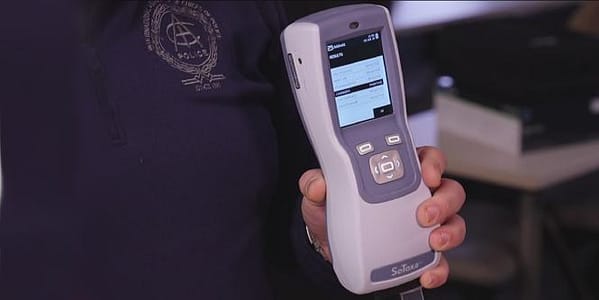
San Diego Police Launch SoToxa Roadside Drug Saliva Tests
Drug saliva tests are transforming DUI enforcement in Southern California as San Diego Police Department introduces SoToxa, a new roadside drug detection system. The handheld devices, recently deployed throughout the city, allow officers to detect the presence of drugs including marijuana, methamphetamine, cocaine, and opioids through a simple mouth swab. Previously, officers relied primarily on breathalyzers for alcohol detection and field sobriety tests to identify potential drug impairment. However, this new technology significantly enhances their ability to identify drugged drivers at the roadside.
Furthermore, the implementation of these testing devices comes at a critical time, as California law enforcement agencies report alarming increases in drug-related DUI incidents since marijuana legalization. San Diego Police officials indicate the SoToxa system produces results within minutes, consequently allowing for more efficient processing during traffic stops. Despite its rapid adoption, the technology raises important questions about accuracy, legal admissibility, and drivers' rights during roadside encounters. This article examines how these new narcotic saliva tests work, when officers are authorized to use them, and what drivers should understand about their rights when facing this new enforcement tool.
San Diego Police Deploy SoToxa for On-Site Drug Testing
The San Diego Police Department has equipped its traffic division with SoToxa devices to combat what officers describe as a concerning uptick in drug-impaired driving. This innovative technology enables officers to perform preliminary drug screenings during routine traffic stops through a simple oral fluid test.
Device introduced to address rise in drug-related DUIs
The implementation of SoToxa comes in response to alarming statistics regarding drug-related driving incidents. According to the District Attorney's Office, 22 suspected DUI drivers involved in fatal crashes were charged through October 2024, with seven cases involving drugs alone or combined with alcohol. This trend prompted SDPD traffic division investigators to explore more effective detection methods.
Officer Michael Denigan from the department's traffic division explains that these handheld devices provide crucial roadside screening capabilities that were previously unavailable. "One of the primary missions here at traffic division is to keep impaired drivers off our streets and to ensure roadways—safety for all motorists in the city of San Diego," Denigan stated .
The department acquired five SoToxa devices at approximately $5,000 each \. Notably, funding came entirely from state grants supported by tax revenue collected from legal cannabis sales . This represents an interesting financial circle—taxes from legal marijuana helping to fund technology that can detect its impairing effects on drivers.
Each SoToxa unit tests for multiple substances, including:
- THC (marijuana's active ingredient)
- Methamphetamine
- Prescription medications
- Cocaine
- Opioids
- Amphetamines
- Benzodiazepines
The device is designed to detect only recent drug use rather than residual traces. For instance, with cannabis, it identifies only the active ingredient causing impairment, not remnants that might remain in a user's system days after consumption .
Initial field use cases and early results
Early deployments have shown promising results. The devices are assigned specifically to officers certified as Drug Recognition Experts (DREs) who have completed specialized training to identify signs of impairment. These trained officers first conduct standard field sobriety tests before offering the SoToxa screening.
In a recent case observed by media, Officer Denigan administered the test to a driver who subsequently tested positive for impairment by a central nervous system stimulant . The process works through a simple protocol: drivers who consent to testing are provided with a swab to collect their own oral fluid sample. Once the swab turns blue—indicating sufficient saliva collection—the officer inserts it into the SoToxa analyzer, which delivers results within minutes .
For a positive result, substances must be present at or above established thresholds—such as 50 nanograms of methamphetamine or 25 nanograms of THC . The manufacturer, Abbott Diagnostics, guarantees an accuracy rate exceeding 90% .
A critical aspect of the program is its voluntary nature. Drivers may decline without immediate penalties, as the test serves primarily as a preliminary screening tool . Nevertheless, positive results provide officers with probable cause for more definitive testing. Officer Jennifer Gregory, a certified DRE, clarified that there's "no limit that says, so long as you're under 50 nanograms of meth, you're good" . Any detected impairment remains grounds for intervention.
The technology addresses particular challenges in detecting substances like nitrous oxide (whippets), which the San Diego County Sheriff's Crime Lab has seen in 29 DUI cases since October 2024, including three fatality cases .
How SoToxa Detects Drug Use Through Saliva
The SoToxa Mobile Test System utilizes oral fluid analysis as a rapid screening method for drug detection. Unlike traditional blood or urine tests that require laboratory processing, this handheld device provides immediate results at roadside stops through a simple saliva collection process.
Substances detected: THC, meth, cocaine, opioids, etc.
The SoToxa system analyzes saliva samples for six primary drug classes simultaneously from a single oral fluid sample . The device screens for:
- Amphetamine: Common in prescription ADHD medications
- Methamphetamine: A potent central nervous system stimulant
- Benzodiazepines: Includes prescription anti-anxiety medications
- Cannabis (THC): The psychoactive component in marijuana
- Cocaine: A powerful stimulant drug
- Opiates: Includes heroin and prescription painkillers
Each test targets specific compounds within these drug classes. For instance, the device screens for Delta-9-THC (the active component causing marijuana impairment) rather than inactive metabolites that might remain in the system for days or weeks . This focus on active compounds helps officers identify recent drug use that could affect driving ability.
One limitation worth noting is that the device does not detect fentanyl , an increasingly prevalent opioid among drug users. Additionally, studies have identified accuracy limitations particularly with benzodiazepines and certain opioids .
Threshold levels for positive results
The SoToxa analyzer reports either a positive or negative result based on established cutoff thresholds for each substance. These threshold levels vary by drug class:
- Amphetamine: 50 nanograms per milliliter (ng/mL)
- Benzodiazepines: 20 ng/mL
- Cannabis (THC): 25 ng/mL
- Cocaine: 30 ng/mL
- Methamphetamine: 50 ng/mL
- Opiates: 40 ng/mL
These cutoff values represent the minimum concentration required to trigger a positive result. The device does not display the actual concentration amount—it simply indicates whether the substance exceeds the threshold .
Essentially, the testing process begins when a driver provides a saliva sample using a swab that changes color once sufficient fluid is collected . The officer then inserts this swab into the analyzer, which processes the sample and displays results within approximately five minutes .
Comparison to breathalyzer for alcohol
While both SoToxa and breathalyzers provide roadside screening, fundamental differences exist between these technologies. First, breathalyzers measure alcohol concentration quantitatively, allowing comparison to legal limits like the 0.08% blood alcohol content threshold . In contrast, SoToxa provides qualitative results (positive/negative) without indicating impairment levels .
Moreover, California has not established legal concentration limits for drugs while driving , unlike the clearly defined standards for alcohol. Some states like Colorado have implemented limits (5 ng/mL for THC in blood), yet California relies on officer observation of impairment alongside testing.
Another key distinction involves the relationship between detection levels in different bodily fluids. The nanogram measurements in oral fluid differ substantially from equivalent blood concentrations. Research indicates that 1 ng/mL of THC in blood would be equivalent to approximately 44 ng/mL in oral fluid . Similarly, 20 ng/mL of amphetamine in blood corresponds to roughly 290 ng/mL in oral fluid .
The SoToxa analyzer can store over 10,000 test results , allowing officers to print results immediately or retrieve them later. While not admissible as evidence in court, these preliminary screenings help establish probable cause for more definitive blood testing .
Officers Use SoToxa After Field Sobriety Tests
Unlike traditional roadside alcohol testing, the process for administering SoToxa oral fluid screening follows a carefully structured protocol designed to identify impaired drivers through multiple verification steps.
Standardized field sobriety tests remain first step
San Diego police officers initially employ Standardized Field Sobriety Tests (SFSTs) before considering any alcohol saliva test. These tests consist of three validated components:
- Horizontal Gaze Nystagmus examination
- Walk and Turn test
- One Leg Stand evaluation
Originally validated for alcohol detection, these standardized procedures help officers identify potential impairment regardless of substance. Officer Anthony Bueno explains, "I actually like to do my standardized field sobriety test first, get to see where the impairment's at, and then ask them to perform either a breath test and/or the SoToxa" .
Throughout this process, officers carefully observe for signs of drug influence, especially if they notice impairment without detecting alcohol odor. As Officer Bueno notes, "When I'm speaking to them, and I'm checking their eyes, and I can smell that there's not that odor of alcoholic beverage, it may lead my suspicion to, hey, there might be something else on board" .
Device used by certified Drug Recognition Experts
The SoToxa device is not available to all officers but exclusively to those who have completed extensive specialized training as Drug Recognition Experts (DREs). These certified professionals undergo a rigorous three-phase certification program:
First, they complete a 16-hour DRE Pre-school covering evaluation procedures and drug categories . Next follows a comprehensive 56-hour DRE School with expanded training on drug categories, vital signs assessment, and courtroom testimony preparation . Finally, candidates must conduct at least 12 supervised drug evaluations, identifying three of seven drug categories with a minimum 75% toxicological confirmation rate .
This thorough preparation ensures that only qualified personnel administer and interpret oral fluid tests. Indeed, officers view SoToxa as "the last tool they reach for" in their evaluation sequence .
Voluntary nature of the test and driver rights
An important aspect of SoToxa implementation is its voluntary status. San Diego police confirm that "it's completely voluntary for a driver to take the test, and a refusal brings no consequences" . Unlike breathalyzer refusals, declining an oral fluid test does not automatically trigger license suspension or other administrative penalties.
Nonetheless, officers present the test as "a quick way for a driver to show they have no drugs in their system" . This approach offers drivers an opportunity to demonstrate sobriety promptly without extended detention.
Legal experts caution that while SoToxa tests themselves are voluntary, refusing all testing may still have consequences. If officers establish probable cause through other observations, they may still seek blood samples through warrants .
Positive Results Trigger Blood Tests and Legal Action
A positive SoToxa result marks only the beginning of legal proceedings against suspected drugged drivers. Following roadside detection, multiple additional steps must occur before charges can be filed.
SoToxa results not admissible in court
Although alcohol saliva tests provide immediate results, courts throughout the United States do not accept these preliminary findings as evidence. In fact, SoToxa results have no scientific value in legal proceedings. Even law enforcement agencies acknowledge this limitation, with the San Diego Police Department declining to discuss whether results could be admissible in court .
This restriction exists primarily due to accuracy concerns. Research in Michigan found SoToxa results were incorrect more than 23% of the time when compared with blood tests. False positive rates ranged from 5% for marijuana to 65% for opiates, while false negatives occurred in 30% of cannabis samples. Furthermore, the device cannot detect fentanyl, an increasingly common substance in impaired driving cases .
Blood draw required for legal evidence
Upon a positive SoToxa result, officers typically request a blood sample for laboratory testing, as this remains the only legally accepted method for confirming drug presence. Unlike roadside tests, blood analysis can precisely measure drug concentrations and detect metabolites that SoToxa cannot identify .
An important consideration involves timing—blood samples may be collected hours after the initial traffic stop, whereas oral fluid tests happen immediately . Throughout this interval, drugs continue breaking down in the bloodstream, potentially affecting results .
Additionally, oral fluid measurements differ substantially from blood concentrations. As one researcher noted, "there is no direct numeric correlation between the results of an oral fluid test and the blood test" . This disparity further explains why courts rely exclusively on blood evidence.
Refusal may lead to warrant or DMV penalties
Drivers should understand that refusing a SoToxa test generally carries no immediate legal consequences . Officer Herbert Greenman explains: "Since the test should have no scientific value, there's no reason to take the test" . Nevertheless, officers often interpret refusal as an implied admission of drug use.
Declining a blood test, alternatively, triggers serious repercussions under "implied consent" laws. These statutes establish that by driving on public roads, motorists have effectively agreed to chemical testing when lawfully arrested for DUI . Following refusal:
- License suspension for one year (first offense) or two years (subsequent offense)
- Immediate administrative license suspension for 180 days in some jurisdictions
- Officers often seek judicial warrants to compel blood draws regardless
- Evidence of refusal may be admissible in court proceedings
Ultimately, positive SoToxa results serve one primary purpose—establishing probable cause for arrest and obtaining warrants for blood testing .
State Grants Fund Device Rollout Across California
California's investment in SoToxa technology stems directly from its lucrative cannabis industry, creating a unique funding cycle where marijuana tax dollars support enforcement tools.
Cost and funding from cannabis tax revenue
Each SoToxa device costs approximately $5,000, with San Diego's five units fully funded through state grant money derived from legal cannabis sales taxes. This represents just a fraction of California's marijuana tax revenue, which has exceeded $7.61 billion since January 2018. The cannabis excise tax, comprising over half of quarterly revenue, funds various programs beyond law enforcement, including childcare, medical research, and youth substance abuse prevention. Throughout the state, officials have allocated roughly $30 million in grants for marijuana-focused research projects. Ironically, several cities now direct cannabis revenues toward enforcement against illegal operators.
Adoption by other police departments
Beyond San Diego, the technology has gained widespread acceptance throughout California. Presently, almost 100 agencies statewide utilize SoToxa, including neighboring La Mesa Police Department. Nationwide, law enforcement in 32 states have incorporated these devices. Various implementation models exist across jurisdictions – North Dakota purchased approximately 40 units at $4,500 each , whereas Indiana distributed 66 devices using federal highway safety funding .
Accuracy claims and manufacturer recommendations
Abbott Diagnostics, the manufacturer, officially guarantees accuracy exceeding 90%. Yet, independent assessments reveal mixed results. Michigan studies identified error rates above 23% compared to blood tests, with false positives ranging from 5% for marijuana to 65% for opiates . Conversely, Wisconsin researchers reported accuracy rates exceeding 90% for most substances . Abbott emphasizes that SoToxa measures "the active presence of drugs in the person's system, not the level of impairment" . Following positive results, the company consistently recommends confirmatory laboratory testing.
Conclusion
San Diego's adoption of SoToxa roadside testing represents a significant shift in how law enforcement addresses drug-impaired driving throughout California. This technology enables officers to detect substances like THC, methamphetamine, and cocaine within minutes, therefore streamlining the initial screening process during traffic stops. Though quite promising as a preliminary tool, these devices serve primarily as probable cause indicators rather than definitive evidence of impairment.
Undoubtedly, the voluntary nature of these tests establishes an important balance between enforcement capabilities and drivers' rights. Individuals may decline without immediate penalties, although refusal might still lead officers to pursue blood tests through warrants if other signs of impairment exist. Additionally, the accuracy limitations—with error rates exceeding 23% in some studies—highlight why these results cannot stand alone in court proceedings.
The funding mechanism for these devices creates an interesting circular relationship. Cannabis tax revenue directly supports the very technology used to identify marijuana-impaired drivers on California roads. Meanwhile, the technology continues spreading across the state, with almost 100 agencies now utilizing SoToxa devices.
Despite widespread adoption, several questions remain unresolved. First, California lacks established legal concentration limits for drugs while driving, unlike the clear 0.08% threshold for alcohol. Second, the substantial difference between detection levels in saliva versus blood complicates interpretation of results. Last, the inability to detect increasingly common substances like fentanyl points to ongoing technological limitations.
For drivers in San Diego, understanding these developments proves essential. While the roadside test itself carries no legal penalties when refused, positive results still trigger further investigation through blood testing. The implementation of SoToxa consequently reflects law enforcement's evolving approach to combating impaired driving—balancing new technology with established legal procedures to address changing patterns of substance use on California roads.
In Short:
1. Field Sobriety Tests are tricky and are ‘not required’. It is advised to refuse it.
2. Breath, Blood or Urine Tests are ‘required’. It is advised to comply.
References
https://www.police1.com/drug-interdiction-narcotics/san-diego-police-roll-out-handheld-testing-device-for-on-scene-drug-tests
https://www.toxicology.abbott/us/en/products/sotoxa-mobile-test-system.html
https://content.veeabb.com/1d09429b-8373-419f-8f1a-d28f9586863a/b80c16cf-dd49-4792-bde3-55467aacdfd8/b80c16cf-dd49-4792-bde3-55467aacdfd8_source__v.pdf
https://pubmed.ncbi.nlm.nih.gov/35767245/
https://www.acsh.org/news/2023/07/17/kansas-flawed-dui-drug-screen-isnt-better-nothing-its-worse-17194
https://www.theiacp.org/how-to-become-a-drug-recognition-expert

Yuliya Kelmansky has over 15 years of experience representing clients for a myriad of criminal matter and providing other valuable legal services.
Call Us for a FREE Case Review: 213-932-8922