

Pretextual Stop Laws in Los Angeles: What You Need to Know About Your Rights
A pretextual stop can turn a minor traffic violation into a serious legal situation if you don’t know your rights. Police officers may use legitimate traffic infractions as justification to investigate unrelated criminal activity, but California law provides important protections for drivers. Understanding these protections is essential for anyone driving in Los Angeles.
This guide explains what pretextual stops are, your constitutional rights during traffic stops, California Vehicle Code Section 2806.5, common Fourth Amendment violations, and practical steps to take if you’re stopped by police in Los Angeles.
What Are Pretextual Traffic Stops in Los Angeles
Definition and Common Examples
A pretextual stop occurs when law enforcement pulls you over for a minor traffic violation while the actual purpose is investigating unrelated criminal activity. Officers across the United States make more than 20 million traffic stops each year, and many have little connection to traffic safety. The violation serves as legal justification for the stop, but the officer’s real intention involves searching for drugs, weapons, or outstanding warrants.
Common violations used for pretextual stops include hanging a graduation tassel on your rearview mirror, broken tail lights, expired inspections, speeding, missing license plates, non-working lights, and failing to stop at crosswalks or intersections. These infractions provide officers with legally defensible reasons to initiate contact, even when their underlying motivation centers on investigating more serious offenses.
The practice emerged on a significant scale during the 1980s when the U.S. Drug Enforcement Administration trained state and local agencies to use minor violations as pretexts for pulling over suspected drug couriers. Since then, pretextual stops have become standard police procedure, particularly in areas experiencing high rates of gun violence.
How Pretextual Stops Differ from Regular Traffic Stops
The distinction between pretextual and regular traffic stops lies in the officer’s intent. Regular traffic stops aim to enforce traffic laws and promote road safety. Pretextual stops use traffic enforcement as a tool to investigate unrelated criminal activity.
In Whren v. United States (1996), the U.S. Supreme Court unanimously held that pretextual stops are constitutional as long as officers have probable cause to believe a traffic violation occurred. The Court ruled that an officer’s underlying motivation to investigate unrelated criminal activity doesn’t invalidate the stop. This decision established that police can legally stop someone for a minor violation and escalate the encounter into a broader investigation if they observe something during the stop suggesting criminal activity.
Racial disparities mark a significant problem with pretextual stops. Black drivers are 20% more likely to be stopped than white drivers despite representing a smaller percentage of the population. A large-scale study of nearly 100 million traffic stops found that Black drivers were searched 1.5 to 2 times more often than white motorists, even though white drivers were more likely to possess contraband.
Recent Changes to LAPD Policies
The Los Angeles Police Department implemented Special Order No. 3 on March 9, 2022, requiring officers to provide additional justification beyond a minor violation when conducting stops for investigative purposes. Officers must now record their rationale for pretextual stops using body-worn cameras before making the stop.
The policy states that officers should only make stops for minor equipment violations or infractions when they believe the violation significantly interferes with public safety or when acting upon articulable information regarding a serious crime.
The impact has been measurable. Between April and August following the policy change, minor equipment and non-moving violations accounted for 15% of all stops of Black drivers, down 10 percentage points from 25% during the same period the previous year. Police made 2,990 fewer seizures of illegal items during this period, including 374 fewer firearms and 1,693 fewer drug seizures.
Despite these changes, consent searches during stops for minor traffic violations continue to show failure rates between 91-97%, with discovery rates ranging only between 3-9%. In 2025, the top violations used in pretextual stops included failing to stop at crosswalks or intersections, speeding, missing license plates, and non-working lights.
Your Constitutional Rights During a Traffic Stop
Fourth Amendment Protection Against Unreasonable Searches
The Fourth Amendment protects you from unreasonable searches and seizures during traffic stops. Police need probable cause to search your vehicle, meaning they must have a reasonable and factual basis to believe evidence of a crime exists inside. Probable cause might include visible contraband, the smell of marijuana, or drug paraphernalia in plain view. Without probable cause or your consent, a search is unlawful, and evidence obtained can be suppressed under the exclusionary rule.
Officers can conduct pat-down searches of your clothing if they reasonably suspect you’re armed and dangerous. This protective frisk must be limited to checking for weapons. In vehicles, officers need reasonable suspicion of a readily accessible deadly weapon to search areas where such weapons could be concealed. The search cannot extend beyond locating and removing the weapon.
Your Right to Remain Silent
Both drivers and passengers have the right to remain silent during a traffic stop. You don’t have to answer questions about where you’re going, where you’re traveling from, what you’re doing, or where you live. If you wish to exercise this right, say so out loud: “I choose to remain silent”.
Police can use anything you say as evidence against you in court. You’re not required to answer questions about whether you’ve been drinking, your citizenship status, or where you were born. Politely stating your intention to remain silent is legally sufficient. Don’t give explanations or excuses without a lawyer present.
Right to Refuse Vehicle Searches
You don’t have to consent to a search of your vehicle. If an officer asks for permission to search, you can calmly say, “I do not consent to a search”. Refusing consent may not stop the officer from carrying out the search, but making a timely objection can help preserve your rights in later legal proceedings.
Officers may still search if they have probable cause or if contraband is visible in plain sight. However, consent is one of the main ways vehicle searches happen. Many drivers consent because they feel pressure or are unsure whether they can refuse.
Right to Know Why You Were Stopped
You can ask, “Officer, may I ask why I was pulled over?”. However, police are not legally required to tell you the reason immediately. Officers must justify the stop later through a traffic ticket or police report. The duration of a traffic stop should not exceed the time necessary to explain why you were stopped and issue a ticket.
Recording Police During Traffic Stops
The First Amendment protects your right to record police officers performing official duties in public. You can record an officer during a traffic stop as long as you don’t interfere with their duties. Police officers do not have a reasonable expectation of privacy when performing their jobs.
Officers cannot confiscate or demand to view your photographs or video without a warrant, and they cannot delete your recordings under any circumstances. If an officer orders you to stop recording, politely tell them you do not consent and remind them that recording is your First Amendment right. Make sure your recording device is visible to avoid potential legal issues.
California Vehicle Code Section 2806.5 Explained
California Vehicle Code Section 2806.5 creates specific requirements for how officers conduct traffic and pedestrian stops. Assembly Bill 2773 added this section to the Vehicle Code in 2022, addressing concerns that police engage in widespread practices of stopping individuals for racially biased reasons.
What the Law Requires Police Officers to Do
Officers making a traffic or pedestrian stop must state the reason for the stop before engaging in questioning related to a criminal investigation or traffic violation. This statement must occur before any questioning begins. The officer must document the reason for the stop on any citation or police report resulting from the stop.
An exception exists when the officer reasonably believes that withholding the reason for the stop is necessary to protect life or property from imminent threat. This exception applies particularly to cases of terrorism or kidnapping. Officers retain discretion to withhold information in genuinely dangerous situations.
The law requires documentation on the citation form itself or in the police report. The Judicial Council of California amended the Notice to Appear form to conform to this legislation. Failure to make the required statement provides grounds for filing a motion to suppress evidence using procedures established in Penal Code section 1538.5.
When the Law Went Into Effect
Section 2806.5 became operative on January 1, 2024. The legislation was signed into law on September 29, 2022, but did not take effect immediately. This delayed implementation gave law enforcement agencies time to adjust procedures and train officers on the new requirements.
What the Courts Have Said About This Law
California courts clarified that Section 2806.5 does not make pretextual stops illegal. A unanimous three-judge panel from Division One of California’s First District Court of Appeal ruled in September that the new law has no impact on the legality of pretextual stops or the admissibility of evidence obtained during such stops.
The court explained that Section 2806.5 only requires officers to inform detainees of the reasons for the stop and document those reasons in reports. All stops, pretextual or not, remain subject to federal constitutional limitations. The statute does not alter the federal constitutional analysis regarding pretextual stops.
Courts have noted that consequences of violating this statute remain uncertain, potentially rendering it a “right without a remedy”. Questions persist about whether violations lead to evidence suppression or other meaningful repercussions beyond the motion to suppress process.
Common Fourth Amendment Violations During Pretextual Stops
Even with constitutional protections in place, officers frequently violate the Fourth Amendment during pretextual stops. Recognizing these violations can mean the difference between valid evidence and suppressed charges.
Extending Traffic Stops Beyond Legal Limits
The Supreme Court ruled in Rodriguez v. United States that police cannot prolong traffic stops beyond the time needed to handle the matter that justified the stop. Once officers complete tasks tied to the traffic infraction, such as checking your license, registration, and writing a ticket, the authority for the seizure ends.
A 23-minute questioning session about criminal history and unrelated matters violates this rule. Officers need independent reasonable suspicion to extend a stop for purposes unrelated to the original violation. Extensive questioning about where you’re coming from or your arrest record requires this additional suspicion. Without it, any evidence discovered becomes subject to suppression.
In reality, many officers disregard this limitation. They ask unrelated questions while claiming to process your paperwork, artificially extending the stop to search for probable cause that didn’t exist at the beginning.
Searches Without Probable Cause
Officers need probable cause to search your vehicle, meaning a reasonable belief based on facts that evidence of a crime exists inside. The smell of drugs, visible contraband, or open containers can establish probable cause. Without these indicators, searching your vehicle violates your Fourth Amendment rights.
The plain view doctrine allows seizure of evidence visible from a lawful position. However, if an officer must move items or peer into closed containers to find contraband, the search exceeds this exception. Search incident to arrest also has limitations. Arizona v. Gant requires that you remain unsecured and within reaching distance of the vehicle, or officers must reasonably believe the vehicle contains evidence of the specific crime for which you’re being arrested.
Drug Detection Dogs and Search Legality
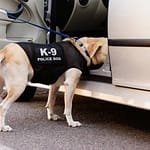
Police can conduct K-9 searches during traffic stops, but cannot extend the stop to wait for a dog to arrive. The Supreme Court held that extending a routine traffic stop to conduct a dog sniff violates the Fourth Amendment unless officers have reasonable suspicion of additional criminal activity. A 7-10 minute wait for drug-sniffing dogs was ruled unreasonable. Once officers complete all tasks associated with the traffic stop, using a canine to detect evidence becomes unlawful.
Coerced Consent to Search
Consent obtained through coercion invalidates any search. Common coercion tactics include threatening to impound your vehicle when doing so would be illegal, promising leniency if you consent, making repeated requests after you’ve refused, and pressuring you during custody when you’re already under duress.
Factors indicating involuntary consent include being under arrest when consent was sought, prior refusal to consent, threats to obtain a search warrant, and giving consent while handcuffed. If officers already began searching before seeking consent, any consent given afterward is neither voluntary nor meaningful.
What to Do If You’re Stopped by Police in Los Angeles
Traffic stops create stressful situations where knowing exactly what to do protects your legal position. The actions you take during the stop can determine whether evidence gets suppressed later in court.
Required Documents You Must Provide
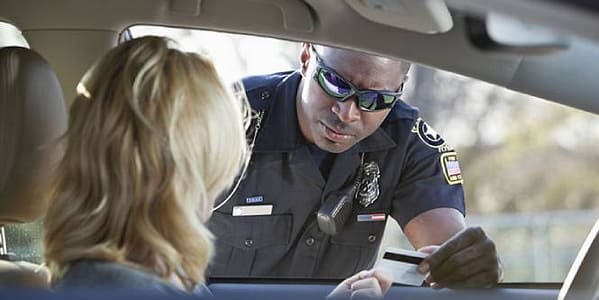
When stopped, you must provide three documents: driver’s license, vehicle registration, and proof of insurance. These verify your identity and legal permission to operate the vehicle. Inform the officer before reaching for documents and wait for acknowledgment. Failing to produce these can lead to fines or additional charges.
Questions You Don’t Have to Answer
Beyond identifying yourself, you can refuse to answer questions about your destination, travel origins, activities, drinking, medication use, citizenship status, or where you were born. State clearly: “I am exercising my right to remain silent”.
How to Refuse a Search Politely
Repeat calmly and clearly: “I do not consent to a search of my vehicle”. Be firm, be respectful, say nothing else. Supreme Court cases have held that wavering or unclear refusals allow officers to interpret them as implied consent. Don’t engage in conversation beyond repeating your refusal.
Documenting the Traffic Stop
Record the interaction using your phone, as long as you don’t interfere with police duties. Note officer badge numbers, patrol car numbers, and citation numbers. Write down everything you remember immediately after.
When to Contact a Criminal Defense Attorney
Contact an attorney if police ask you to sign releases, request extended questioning, or arrest you. Call immediately after the stop ends.
Ease Your Worries By Hiring A Defense Attorney
Pretextual stops remain legal in Los Angeles, but understanding your rights gives you significant protection during these encounters. Now that you know what officers can and cannot do, you can respond appropriately when pulled over for a minor traffic violation.
Remember the essentials: provide your license, registration, and insurance, then exercise your right to remain silent. Refuse vehicle searches clearly and politely. Record the interaction if possible. Most importantly, contact a criminal defense attorney immediately if police extend the stop beyond issuing a ticket or if an arrest occurs. Your constitutional protections only work when you actively use them.

Call 213-932-8922, for a free consultation.