


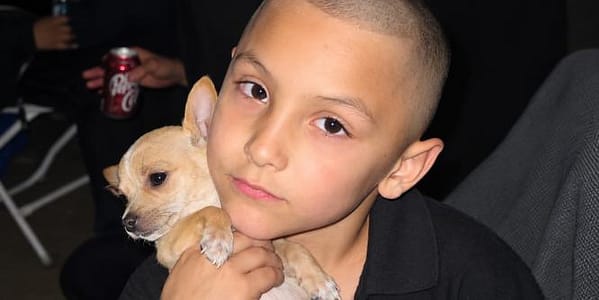
Gabriel Fernandez Social Workers Face Felony Charges Under New Law
Gabriel Fernandez social workers now face unprecedented felony charges following Governor Newsom's signing of Gabriel's Law into immediate effect. The groundbreaking legislation emerged from the tragic 2013 death of eight-year-old Gabriel Fernandez, whose severe abuse went unaddressed despite multiple warnings to Los Angeles County child welfare officials. This law mandates specific criminal consequences for social workers who falsify documents or fail to secure emergency medical care for children in their custody. Understanding this legal reform requires examining the failures that led to Gabriel's death, the new statutory requirements imposed on child welfare workers, and the ongoing debate surrounding accountability measures.
Governor Newsom Signs Gabriel's Law Into Immediate Effect
Governor Gavin Newsom signed Assembly Bill 2304 into law on Sunday, with provisions taking effect immediately. The legislation targets child welfare system failures by establishing mandatory protocols for gabriel fernandez social workers and other county child welfare department employees.
What the New Legislation Mandates
Gabriel's Law creates two primary enforcement mechanisms. Social workers must ensure children in temporary custody receive emergency medical, surgical or other remedial care when the child appears to need it. This requirement applies specifically to instances where mandated reporters, social workers or law enforcement officials observe someone who appears to need urgent treatment.
The second component addresses document integrity. County child welfare department employees who falsify or alter case documents face felony imprisonment. The legislation clarifies that social workers who knowingly falsify or manipulate official records can be held accountable under existing law. Previously, no statutory requirements existed to hold officials accountable for such misconduct, which allowed them to escape responsibility.
The law replaces discretionary actions with statutory consequences. When workers knowingly manipulate, alter or falsify records in any way, mandatory accountability measures apply rather than leaving enforcement to administrative discretion.
Who Authored and Championed the Bill
Assemblymember Tom Lackey of Palmdale authored the legislation and has pursued its passage persistently. The Republican lawmaker introduced the bill again this year after several years of attempting to secure its approval. Senator Suzette Martinez Valladares presented the measure on the Senate floor in August.
Lackey maintained a personal connection to the legislation throughout the process. "Gabriel was never just a name on a bill to me. He was an 8-year-old boy who needed someone to protect him, and the people and systems responsible for doing that failed him," Lackey stated. He reflected on the significance each time he presented the bill to hearings, committees and votes.
Timeline of the Law's Passage
Lackey's efforts to establish these protections span multiple legislative sessions. Earlier versions of the legislation included AB 1911 in 2018, AB 1450 during the 2019-20 session, AB 31 in 2021, AB 2654 in 2022 and AB 1544 in 2023. Each rejection prompted revisions and renewed efforts rather than abandonment of the initiative.
The Legislature approved AB 2304 last month before sending it to Newsom for consideration. Following the governor's signature, Lackey expressed relief after years of persistence. "We came back, we made changes, we fought again, and we refused to let another rejection be the end of this effort," he said. The assemblymember emphasized his hope that the law prevents another child from paying the price for preventable failures.
The Tragedy That Sparked Reform: Gabriel Fernandez's Case
Custody of Gabriel had recently been returned to his mother in October 2012, despite more than 60 complaints lodged with the Department of Children and Family Services and eight investigations into the family. Prior to this, he lived with his maternal grandparents. The decision proved catastrophic.
How Gabriel Suffered Months of Abuse
Pearl Fernandez and her boyfriend Isauro Aguirre subjected Gabriel to systematic torture for eight months. According to Gabriel's older brother Ezequiel, the abuse included beatings, confinement in a locked cabinet, shots from a BB gun, and forced consumption of cat litter, cat feces, spoiled food, and his own vomit. The couple often laughed while inflicting the abuse.
Prosecutors identified Aguirre's belief that Gabriel was gay as one motivation for the violence. Fernandez and Aguirre called Gabriel gay, punished him when he played with dolls and forced him to wear girls' clothes to school. They hit him with a belt buckle, a metal hanger, a small bat and a wooden club. His mother once jabbed Gabriel in the mouth with a bat and knocked out several teeth.
The abuse escalated over time. Gabriel was doused with pepper spray, forced to eat his own vomit and locked in a cabinet with a sock stuffed in his mouth to muffle his screams. He slept in a locked cabinet and was not permitted to use the bathroom. The boy was 7 when the abuse began and was killed three months after he turned 8.
Warning Signs That Were Ignored
Jennifer Garcia, Fernandez's first-grade teacher at Summerwind Elementary School, made the initial report to the child welfare hotline after Fernandez asked her questions about being whipped. This occurred two weeks after Gabriel moved in with his mother. Despite a social worker being assigned to Fernandez's case, Garcia continued to witness escalating injuries.
Garcia called the county several more times after the child came to school with a bloody lip, black eyes and bruises on his face. She testified that Gabriel had demonstrated he knew how to snort cocaine. Garcia continued to call the hotline and was told each time that a social worker would investigate. A social worker who followed up on the complaint about his injured lip said it was a blister.
No medical assessments were ever conducted, and gabriel fernandez social workers visiting the home spoke only with his mother, never interviewing Gabriel himself. In the spring, a counselor at a children's center called 911 after discovering a suicide note Gabriel had written. Authorities dismissed the complaint because he had no specific plan to carry out a suicide.
Several agencies investigated allegations of abuse before Gabriel's death without removing the boy from the home. Deputies went to the family's apartment or to Gabriel's school to investigate reports of abuse and of the boy being suicidal. Each time, they concluded there was no evidence of abuse and did not write a detailed report. A sheriff's homicide detective told grand jurors there was no indication deputies had removed any of Gabriel's clothing to check for signs of abuse.
The Fatal Outcome in May 2013
On May 22, 2013, Fernandez was rendered unresponsive after a beating reportedly inflicted for not tidying his toys. Pearl called 911, and paramedics discovered Fernandez naked with severe injuries, including a cracked skull, broken ribs, and BB pellets lodged in his body. Los Angeles County Fire Department personnel responded to the call that Gabriel was not breathing.
Fernandez was transported to Antelope Valley Hospital, where he was declared brain dead. Dr. Alyssa Rake performed a second examination on Gabriel on May 24, 2013. She found no brain function and confirmed he was brain dead. During the examination, she found a depressed skull fracture, bruising on his eyes and some missing upper teeth. She saw different stages and ages of bruising and scars, small circular cuts, a deep lash on the base of his penis and a burn mark. Gabriel died two days later at Children's Hospital Los Angeles.
From radiological images, Rake found Gabriel had a broken skull, a hematoma on his head, swelling on the brain, a deviation of his nose, removed teeth, neck swelling, a cut to his liver and a hematoma on it, and lung disease. Gabriel also had multiple old and new rib fractures, a BB in his lung and a swollen knee. An autopsy concluded that Fernandez's death was a direct result of blunt force trauma, aggravated by neglect and malnutrition.
Social Workers' Failures That Led to Criminal Charges
In March 2016, prosecutors charged four gabriel fernandez social workers with felony counts following their handling of the case. Stefanie Rodriguez, 35, and Patricia Clement, 69, both caseworkers, along with their supervisors Kevin Bom, 41, and Gregory Merritt, 64, each faced one felony count of child abuse and one felony count of falsifying public records.
Documents Were Falsified to Cover Tracks
Court documents revealed that Merritt downgraded a risk assessment from "high" to "moderate" to close Gabriel's case. When the family's risk assessment indicated a high risk of future abuse or neglect, the supervisor manipulated the official evaluation. Prosecutors alleged the four mishandled evidence of abuse and missed repeated red flags. Judge George Lomeli stated the workers demonstrated "an improper regard for human life" and "a lack of vigilance". The falsification charges stemmed from allegations that they altered documents related to Gabriel's case to cover their tracks.
Emergency Medical Care Was Never Secured
Gabriel never received medical assessments despite visible injuries observed during social worker visits. The Department of Children and Family Services workers who responded to complaints spoke only with Pearl Fernandez and never interviewed Gabriel himself. When one social worker followed up on a complaint about Gabriel's injured lip, she concluded it was merely a blister rather than ordering medical examination. Deputies who investigated abuse reports at the family's apartment or Gabriel's school failed to write detailed reports. A sheriff's homicide detective testified that deputies showed no indication of removing Gabriel's clothing to check for signs of abuse.
Teacher's Repeated Reports Were Disregarded
Rodriguez received multiple calls from Gabriel's teacher reporting escalating abuse but failed to take appropriate protective steps. The teacher testified that she called Rodriguez multiple times after Gabriel disclosed that his mother punched him and shot him in the face with a BB gun. Despite these repeated notifications, the family remained subject to multiple visits without Gabriel's removal from the home he shared with Pearl and Aguirre.
Suicide Note and BB Pellet Went Unaddressed
Authorities dismissed a suicide note Gabriel wrote after a children's center counselor called 911 to report the discovery. Officials concluded no action was necessary because Gabriel had no specific plan to carry out suicide. When Gabriel arrived unresponsive at the emergency room in May 2013, medical personnel discovered open skull fractures, multiple other fractures, burns, internal injuries, and swollen lesions with embedded metal BB pellets throughout his body. These BB pellets provided physical evidence of the shooting incidents Gabriel had reported to his teacher months earlier.
What Gabriel's Law Requires from Child Welfare Workers
Assembly Bill 2304 establishes binding obligations for gabriel fernandez social workers employed by county child welfare departments. The legislation transforms child welfare protocols through specific mandates that eliminate ambiguity in critical situations.
Mandatory Emergency Medical Care Provision
Social workers must take reasonable steps to secure immediate emergency medical care for children when it reasonably appears they need urgent treatment. This applies to instances where mandated reporters, social workers or law enforcement officials observe someone requiring immediate medical, surgical or other remedial care. The requirement builds on existing law that already allows social workers to authorize emergency treatment without a court order.
The provision addresses situations where children appear to need urgent care while in the court's custody. Social workers can no longer defer medical assessments or rely solely on verbal reassurances from guardians. The law mandates action when visual observation indicates potential medical emergencies, creating a duty to act that did not exist in statutory form previously.
Felony Imprisonment for Document Falsification
County child welfare department employees who falsify or alter case documents face felony imprisonment. The legislation clarifies that social workers employed by these departments are not classified as 'officers' for purposes of the state's law against falsifying public records. This clarification ensures clear and consistent accountability standards apply when records are falsified.
Workers convicted of knowingly manipulating, altering or falsifying records in any way will be held accountable through imprisonment. The law removes classification ambiguities that previously complicated prosecution efforts.
Statutory Consequences Replace Discretionary Actions
Gabriel's Law mandates imprisonment rather than leaving consequences to administrative discretion. No such statutory requirements existed when Gabriel suffered his abuse, which allowed officials to escape accountability. When misconduct occurs, statutorily-required consequences apply. Officials cannot brush violations under the carpet through internal reviews or disciplinary procedures that previously substituted for criminal prosecution.
Opposition and Support for the Legislation
Los Angeles Dependency Lawyers emerged as the sole organization to register opposition against Assembly Bill 2304. The group declined to provide interviews but submitted written remarks claiming the legislation would interfere with child protection laws.
Los Angeles Dependency Lawyers Register Concerns
In their legislative analysis submission, the organization acknowledged that social workers for county child welfare agencies can already obtain health and related care for children in their temporary custody. They argued that as government employees acting on behalf of the state, social workers should not be allowed to falsify documents regarding children. Nevertheless, they opposed the bill, asserting it would deny families accountability when social workers engage in such misconduct.
Assemblymember Lackey Defends Accountability Measures
Lackey maintained that holding accountable officials and government employees in child welfare roles was paramount in the legislation. The imprisonment requirement for workers convicted of falsifying or altering documents became a central enforcement mechanism. "When these workers knowingly manipulate, alter or falsify in any way the records, they're going to be held accountable for that," Lackey stated. District Attorney Jonathan Hatami, who prosecuted Gabriel's case, supported the measure as an important step toward preventing similar deaths.
How the Law Prevents Officials from Escaping Responsibility
Prior legislative attempts faced significant resistance. AB 1450 failed on a party-line vote in the Senate Public Safety Committee. Lackey emphasized that no statutory requirements existed when Gabriel suffered abuse, consequently allowing officials to escape accountability. "When that happens, that is just a license to cover your tracks when you're discovered," the legislator explained. The law specifically removes discretionary enforcement that previously shielded gabriel fernandez social workers from prosecution.
Criminal Defense for Social Workers Facing Felony Charges
California social workers can face serious criminal consequences when allegations involve falsifying case records or failing to comply with specific child-protection duties. Gabriel’s Law, recently enacted as Assembly Bill 2304, was inspired by the tragic death of Gabriel Fernandez and changes California law concerning social workers and child welfare records. Among other provisions, the law clarifies that certain social workers may be prosecuted under Government Code Section 6201 when they knowingly alter or falsify public records, potentially exposing them to felony charges. The law also imposes specific obligations concerning emergency medical care when a child appears to require immediate treatment.
For a social worker under criminal investigation, the distinction between a mistake, negligence, a policy violation, and an intentional criminal act can be critical. A missed warning sign or disputed professional judgment does not necessarily establish the elements of a felony. However, allegations involving deliberately altered records, fabricated case information, or knowing violations of statutory duties can result in a criminal investigation and potentially significant penalties. Social workers who learn that they are the subject of a law enforcement investigation should consider speaking with a California criminal defense attorney before providing statements or voluntarily turning over potentially incriminating information.
Social Worker Felony Defense in California
The criminal prosecution of social workers presents complex questions involving intent, professional duties, documentation, supervisory responsibilities, and the difference between an error in judgment and conduct that satisfies the elements of a criminal offense. The Gabriel Fernandez case demonstrated how aggressively prosecutors may pursue criminal charges against child welfare personnel under certain circumstances. The four social workers charged in that case faced felony allegations, but the charges were ultimately dismissed in 2020.
If you are a social worker facing a criminal investigation, subpoena, search, interview request, or felony charge arising from your professional duties, obtaining legal advice early can be important. An experienced California criminal defense attorney can examine the allegations, determine which criminal statutes prosecutors may be relying upon, challenge the government’s interpretation of the evidence, and protect your rights throughout the investigation and court proceedings.
References
[1] – https://www.thecentersquare.com/california/article_b7936942-1ac7-48ab-bfb5-b5a4d2cdd98f.html
[2] – https://lamag.com/news-and-politics/newsom-signs-gabriels-law-to-strengthen-protections-for-children/
[3] – https://abc7.com/story/gabriels-law-named-8-year-old-palmdale-boy-gabriel-fernandez-signed-gov-newsom/19855317/
[4] – https://www.nbclosangeles.com/news/local/timeline-child-abuse-tragedy/1976354/
[5] – https://en.wikipedia.org/wiki/Murder_of_Gabriel_Fernandez
[6] – https://www.latimes.com/local/countygovernment/la-me-gabriel-fernandez-20140819-story.html
[7] – https://abc7.com/post/palmdale-abuse-case-gabriel-fernandezs-mom-seeking-resentencing-8-year-old-sons-torture-death/18562423/
[8] – https://abc7.com/post/doctor-testifies-that-palmdale-boy-gabriel-fernandez-was-brain-dead/2572619/
[9] – https://imprintnews.org/featured/appeals-court-refuses-to-reconsider-dismissed-charges-against-social-workers-in-child-death-case/40508
[10] – https://www.nbcnews.com/news/us-news/case-dismissed-against-social-workers-charged-death-8-year-old-n1234089
[11] – https://www.latimes.com/california/story/2020-07-15/charges-against-the-social-workers-linked-to-gabriel-fernandez-killing-will-be-dropped

Need a Criminal Defense Attorney? CALL NOW: 213-932-8922
Yuliya Kelmansky is an Expert Criminal Defense Attorney who has over 10 years of practice defending a variety of criminal cases.