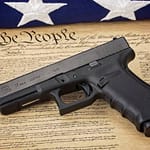



Understanding Federal Firearms Charges
Purchasing a firearm on behalf of another individual might seem like a simple favor to a friend or family member. Perhaps someone asked you to help them acquire a weapon because they were short on time, or maybe they offered you compensation for your assistance. What appears to be a harmless act of kindness can quickly transform into a serious federal criminal matter with devastating consequences. When federal agents arrive at your residence with a warrant, the reality of facing potential decades in prison becomes terrifyingly real. Understanding the legal framework surrounding these transactions and recognizing the severity of the charges you might face is essential for protecting your rights and your future. The legal landscape governing firearm acquisitions is complex, and even well-intentioned actions can result in life-altering criminal prosecution. If you find yourself entangled in such circumstances, seeking immediate guidance from an experienced criminal defense attorney is not just advisable—it’s critical to your freedom [1].
Defining Proxy Firearm Acquisitions Under Federal Law
When an individual acquires firearms from a licensed dealer on behalf of another person, this transaction falls under what federal law defines as a proxy purchase. The person completing the paperwork and paying for the weapon becomes the nominal purchaser, even though they have no intention of keeping the firearm for themselves. This practice violates federal statutes because the buyer must legally attest that they are the genuine purchaser of the weapon when completing the mandatory Bureau of Alcohol, Tobacco, Firearms and Explosives Form 4473. The Federal document explicitly asks whether the person filling it out is the actual transferee or buyer of the firearm. When someone knowingly provides false information on this form, they commit a deliberate violation of federal law.
Why Proxy Purchases Are Prohibited
The underlying reason these transactions are prohibited relates to the circumvention of background check requirements and other legal restrictions. Typically, proxy purchases occur when the intended recipient cannot legally possess firearms due to prior felony convictions, domestic violence convictions, or other disqualifying factors under federal law. By misrepresenting who will actually receive the weapon, the nominal purchaser facilitates an illegal transfer that undermines the entire regulatory framework designed to keep firearms out of dangerous hands. Even if the ultimate recipient could legally own firearms, the act of lying on federal forms constitutes a serious criminal offense. The intent at the time of purchase determines whether a violation has occurred, regardless of what happens to the weapon afterward [2].
Legal Framework and Recent Changes
Understanding this distinction is crucial for anyone who might be asked to help someone acquire a firearm. The federal government does not differentiate between helping a prohibited person and simply concealing the true buyer’s identity. Both scenarios constitute violations of 18 U.S.C. § 932, a statute created by the Bipartisan Safer Communities Act of 2022 specifically to address these transactions. Before this legislation, prosecutors relied on older false statement statutes, but the new law provides enhanced penalties and clearer definitions of prohibited conduct. The Bureau of Alcohol, Tobacco, Firearms and Explosives has maintained a long-running public awareness campaign emphasizing that individuals should never misrepresent the true purchaser of a firearm, regardless of the circumstances [1].
Federal Penalties and Sentencing Realities
The statutory maximum penalties for these offenses are genuinely frightening. Under current federal law, a conviction can result in up to fifteen years in federal prison and fines reaching $250,000. If prosecutors can demonstrate that you knew or had reasonable grounds to believe the firearms would be used in violent felonies, terrorism, or drug trafficking operations, the maximum sentence increases to twenty-five years. These are not state-level charges where probation might be an option—federal convictions typically require serving at least eighty-five percent of the imposed sentence. The severity of these potential consequences reflects the federal government’s commitment to prosecuting firearm-related offenses aggressively [2].
Sentencing Variations and Enhancements
However, the actual sentences imposed vary considerably depending on several factors, including the federal judicial district where prosecution occurs, the number of firearms involved, and whether the weapons were subsequently used in crimes. In districts near international borders, particularly in Southern Texas, average sentences often exceed seven years even for first-time offenders. More rural districts with different judicial philosophies might impose sentences closer to two or three years for similar conduct. This geographic disparity means that where federal prosecutors choose to file charges can dramatically impact the ultimate outcome. Prosecutors have discretion to file charges in any district where part of the offense occurred, giving them significant leverage in determining potential sentence ranges.
Additional Factors That Increase Penalties
Several factors can substantially increase the severity of sentences. If a firearm you purchased is later recovered at a crime scene within ninety days of the transaction, prosecutors will argue for enhanced penalties based on the weapon’s connection to criminal activity. Purchasing multiple firearms within a short timeframe triggers additional scrutiny and higher sentencing calculations. Any financial compensation you received for making the purchase—even minimal amounts for gas money or time—allows prosecutors to characterize the transaction as commercial trafficking rather than a one-time favor. These enhancements can easily double or triple the base sentence range, transforming what might have been a three-year sentence into six or seven years of federal incarceration [2].
Beyond imprisonment, convictions carry devastating collateral consequences that extend far beyond the completion of your sentence. You will permanently lose your right to possess firearms under federal law. Employment opportunities will evaporate as employers conduct background checks revealing your felony conviction. Housing applications will be denied. You will face three to five years of supervised release after completing your prison term, during which any violation can result in additional incarceration. The federal government can also pursue civil asset forfeiture, seizing your vehicle, bank accounts, and even real property connected to the offense. These long-term impacts affect not just you but your entire family, making it essential to understand the full scope of what a conviction entails [3].
How Federal Investigations Develop
Most individuals facing firearms charges had no idea they were under investigation for months before agents appeared at their door. Federal law enforcement agencies, particularly the Bureau of Alcohol, Tobacco, Firearms and Explosives, build cases methodically over extended periods, gathering evidence, interviewing witnesses, and establishing patterns of conduct. By the time agents execute a search warrant or make an arrest, they have typically been investigating for three to eighteen months. Understanding how these investigations develop can help you recognize warning signs and take appropriate protective measures.
The most common trigger for investigations is the Bureau’s electronic trace system, which tracks firearms recovered at crime scenes back through the distribution chain to identify the original purchaser. When firearms appear at a crime scene within ninety days of purchase, the original buyer is automatically flagged as a potential proxy purchaser. The shorter the time between purchase and criminal use, the higher the likelihood of prosecution. If the firearm was recovered in a different state from where it was purchased, this interstate element adds federal jurisdiction and typically results in more aggressive prosecution. Weapons used in homicides or other violent felonies generate nearly certain prosecution of the original purchaser [1].
Multiple firearm purchase reports also trigger investigations. Federal law requires licensed dealers to report when a single individual purchases two or more handguns within five consecutive business days. Purchasing ten or more firearms within thirty days virtually guarantees federal scrutiny. These reports are reviewed by Bureau analysts who look for patterns suggesting trafficking activity. Even if you have no criminal history, purchasing multiple firearms in a short period will result in investigative attention. The Bureau maintains sophisticated databases that cross-reference purchase records with crime gun traces, creating detailed profiles of potential trafficking networks [2].
Sources of Evidence in Firearms Investigations
Cooperating witnesses provide another major source of cases. When someone is arrested with a firearm and faces serious charges, federal prosecutors often offer reduced sentences in exchange for information about where the weapon came from. If you sold or transferred firearms to someone who was later arrested, there is a high probability they will identify you to investigators in exchange for leniency. These cooperating witnesses can provide detailed testimony about the entire transaction, including conversations, payments, and your knowledge of their prohibited status. Cases built on cooperating witness testimony have conviction rates exceeding ninety percent because the witness can provide direct evidence of your intent and knowledge.
Digital evidence has become increasingly important in these investigations. Text messages discussing firearm purchases, payment applications showing transactions around the time of gun purchases, and social media posts displaying weapons you purchased but no longer possess all constitute powerful evidence. Federal agents can obtain search warrants for your phone, computer, and online accounts, recovering messages you thought were deleted. Gun store surveillance footage is now typically retained for five years, providing visual evidence of transactions. This digital trail makes it extremely difficult to deny involvement once investigators have identified you as a suspect [3].
Critical Actions to Take When Confronted by Federal Agents
If federal agents appear at your residence or workplace, the actions you take in the next few hours will profoundly impact the outcome of your case. Most people make devastating mistakes during these initial encounters because they do not understand their rights or the tactics agents employ. Agents are trained to elicit incriminating statements through seemingly casual conversation, and anything you say will be documented and used against you in court. Understanding how to protect yourself during these critical moments is essential.
Never answer questions from federal agents without an attorney present. This is not a suggestion—it is an absolute rule that can mean the difference between conviction and acquittal. Agents will tell you that cooperation will help your situation, that they just need to clear up a few details, or that refusing to talk makes you look guilty. These are interrogation tactics designed to obtain admissions. The single most common mistake people make is trying to explain their side of the story, believing they can talk their way out of trouble. In reality, you are providing prosecutors with evidence they will use to convict you. Even seemingly innocent explanations like “I was just helping a friend” constitute admissions of the essential elements of the offense.
Protecting Your Rights During Searches and Interrogations
Do not consent to searches of your property, vehicle, phone, or computer. If agents ask for permission to search, the answer is always no. Be polite but absolutely firm: “I do not consent to any searches.” If they have a valid search warrant, they will execute it regardless of your consent. When they are asking for permission, it means they do not have a warrant and are hoping you will voluntarily provide access to evidence. Your phone contains text messages, location data, photos, payment records, and internet searches that can provide overwhelming evidence of your involvement. Your computer may contain similar information. Never voluntarily hand over these devices or provide passwords [2].
Invoke your constitutional rights clearly and unambiguously. Say these exact words: “I am invoking my right to remain silent. I want to speak to an attorney. I do not consent to any searches.” Then stop talking completely. Do not try to explain why you are invoking your rights or answer “just one more question.” Absolutely, do not engage in small talk. Agents will continue trying to get you to talk, but you must remain silent. Anything you say after invoking your rights can potentially be used against you if prosecutors argue you reinitiated conversation. The only safe approach is complete silence until you have consulted with an experienced federal criminal defense attorney.
If you are arrested, your first court appearance will occur within twenty-four to forty-eight hours. At this initial appearance, a magistrate judge will determine whether you will be released on bond or detained pending trial. In federal firearm cases, detention without bond is common, with approximately sixty percent of defendants held in custody throughout the proceedings. This makes having an attorney at this early stage absolutely critical. An experienced federal defense attorney can prepare a detention memorandum arguing for your release, propose conditions like electronic monitoring, and present your case in the most favorable light possible. The difference between release and detention often depends on the quality of representation at this initial hearing.
Potential Defense Strategies
Federal conviction rates exceed ninety percent, and trial conviction rates approach eighty-three percent. These statistics reflect the reality that the federal government has vast resources and typically only prosecutes cases where the evidence is strong. However, certain defense strategies can create reasonable doubt or provide leverage in plea negotiations. Understanding these approaches helps you evaluate your options and make informed decisions about how to proceed.
The legitimate gift defense applies when you purchased a firearm as a genuine present for someone who could legally possess firearms. This defense requires demonstrating that no money changed hands, that you had a legitimate gift-giving reason such as a birthday or holiday, and that you formed the intent to give a gift before making the purchase. Evidence supporting this defense might include greeting cards, calendar notations, or communications discussing the gift before the purchase date. However, this defense only succeeds when the recipient was legally eligible to own firearms and when you can prove your gift intent timing. Success rates for this defense are approximately forty percent when properly documented, but drop below ten percent without clear evidence of pre-purchase gift intent [2].
Fourth Amendment suppression motions challenge evidence obtained through illegal searches or seizures. If agents searched your phone without a warrant, conducted a traffic stop without reasonable suspicion, coerced your consent to search, or executed a defective search warrant, you can file a motion to suppress the evidence obtained. Successful suppression of key evidence can result in dismissal of charges or significantly weaken the prosecution’s case. Common violations include warrantless cell phone searches, which require a warrant under recent Supreme Court precedent, and searches based on coerced consent where agents implied you had no choice but to agree. Success rates for suppression motions are approximately thirty percent when clear constitutional violations occurred [3].
Additional Defense Approaches
Lack of knowledge defenses argue that you genuinely did not understand the requirements of Form 4473 or did not have intent to deceive. This defense is most viable for first-time purchasers with single firearm transactions and no evidence of trafficking knowledge. However, the form itself is quite clear about who should be identified as the purchaser, making this defense increasingly difficult. Prosecutors will argue that the form’s language is unambiguous and that any reasonable person would understand the requirements. Success rates for this defense have declined to approximately twenty-five percent as courts have become less receptive to claims of misunderstanding [2].
Entrapment defenses apply when government agents or informants induced you to commit a crime you would not have otherwise committed. This defense arises most commonly in Bureau of Alcohol, Tobacco, Firearms and Explosives sting operations at gun shows or through confidential informants. To succeed, you must demonstrate that the government created the criminal opportunity and that you lacked the predisposition to commit the offense. Success rates for entrapment defenses are approximately fifteen percent, as courts generally require strong evidence of government overreach.
Evaluating Plea Agreements Versus Trial
Approximately eighty-five percent of federal defendants accept plea agreements rather than proceeding to trial. This statistic reflects the harsh reality of federal prosecution: the government’s conviction rate at trial is extremely high, and sentences imposed after trial are substantially longer than those offered in plea agreements. Understanding the dynamics of plea bargaining versus trial is essential for making the most important decision in your case.
Standard plea offers vary based on the specific facts of your case. For first-time offenders involving a single firearm with no connection to subsequent crimes, prosecutors typically offer a plea to making false statements under 18 U.S.C. § 922(a)(6) with a recommended sentence of eighteen to twenty-four months. The agreement usually requires cooperation with ongoing investigations, forfeiture of any firearms, and three years of supervised release. Approximately sixty percent of defendants in this category receive such offers. For cases involving multiple firearms or connections to subsequent crimes, prosecutors typically insist on a plea to the more serious offense under 18 U.S.C. § 932 with recommended sentences of forty-eight to sixty months. These agreements often require substantial cooperation, potentially including testimony against others. Only about forty percent of defendants in this category receive plea offers they consider acceptable.
The trial penalty is a documented reality in federal sentencing. Defendants who proceed to trial and are convicted receive sentences that average thirty to forty percent longer than those who accept plea agreements. This disparity exists because defendants who plead guilty receive a reduction for acceptance of responsibility, typically worth twelve to twenty-four months off the sentence. Defendants who go to trial and lose forfeit this reduction. Additionally, judges may view defendants who force the government to prove its case as less deserving of leniency. While this trial penalty is controversial, it is a practical reality that must be considered when evaluating whether to accept a plea offer [2].
Cooperation and Trial Considerations
Cooperation agreements can result in substantial sentence reductions through what is known as a 5K1.1 motion, where prosecutors ask the court to depart downward from the guideline sentence based on your substantial assistance. Cooperation can reduce sentences by forty to fifty percent in some cases. However, cooperation carries significant risks. You may be required to wear a recording device during conversations with targets of the investigation. Testifying at trial may be required, subjecting yourself to cross-examination. Cooperating could make you a target if others discover it. The decision to cooperate should only be made after careful consultation with your attorney and a thorough understanding of what will be required.
Trial makes sense in limited circumstances. If the plea offer is so severe that it approaches the likely sentence after trial, you have little to lose by proceeding to trial. If you have a strong defense with a genuine chance of acquittal, a trial may be appropriate. For those who are factually innocent and refuse to plead guilty to crimes they did not commit, a trial may be the only viable choice. If the government’s case has significant evidentiary problems, trial might result in acquittal or hung jury. However, these scenarios represent less than fifteen percent of cases. In the remaining eighty-five percent, accepting the best available plea agreement is the strategically sound decision.
Moving Forward With Experienced Legal Representation
Facing federal firearms charges is one of the most serious legal challenges you can encounter. The potential consequences include years in federal prison, permanent loss of constitutional rights, and devastating impacts on your family and future. However, outcomes vary dramatically based on the decisions you make immediately after learning of the investigation or charges. The individuals who achieve the best outcomes act quickly to retain experienced federal criminal defense attorneys, avoid making statements to law enforcement, maintain realistic expectations about the legal process, and carefully evaluate plea offers when appropriate.
Time works against you in these cases. Evidence becomes unavailable, witnesses’ memories fade, and the government’s case strengthens while you delay taking action. Hoping that charges will simply go away is not a strategy—it is a path to the worst possible outcome. You need an attorney who has handled these specific types of cases in your federal district, someone familiar with the local prosecutors and judges, someone who can provide honest assessments rather than false promises. Ask potential attorneys about their experience with firearms cases, their relationships with the U.S. Attorney’s Office, and their track record in your district. Expect direct answers about the strengths and weaknesses of your case, the likely outcomes, and the best strategic approach.
Understanding the legal framework surrounding proxy firearm acquisitions is essential for anyone who might be asked to help someone acquire a weapon. What seems like a simple favor can result in federal prosecution with devastating consequences. If you find yourself facing these charges in California or anywhere else, immediate consultation with an experienced federal criminal defense attorney is not optional—it is the single most important step you can take to protect your freedom and your future.
References
[1] – https://www.law.cornell.edu/uscode/text/18/932
[2] – https://www.atf.gov/firearms/tools-services-law-enforcement/atf-firearms-programs/dont-lie-other-guy
[3] – https://giffords.org/lawcenter/gun-laws/policy-areas/crime-guns/trafficking-straw-purchasing/
Need an Attorney? CALL NOW: 213-932-8922
Yuliya Kelmansky is an Expert Attorney who has over 10 years of practice defending a variety of cases.