


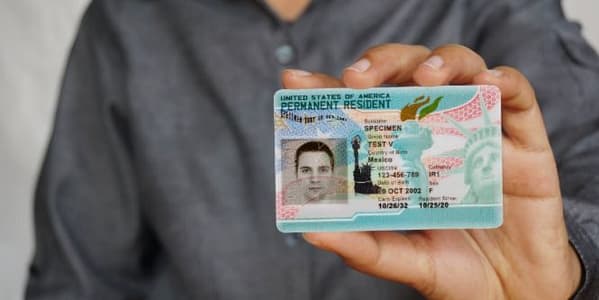
Green Card Holder Travel Restrictions: What You Must Know Before Leaving the U.S. With a Criminal Record
Green card holder travel restrictions have fundamentally changed following the Supreme Court's decision in Blanche v. Lau, creating serious risks for lawful permanent residents with criminal records. A single international trip can now result in being treated as a first-time applicant at the border, potentially leading to inadmissibility status, loss of work authorization, and removal proceedings. Understanding these new rules is crucial for anyone with pending charges, past convictions, or even old arrests. This guide explains who is at risk, what happens during border inspections, and the critical steps you must take before leaving the U.S.
Understanding the Blanche v. Lau Supreme Court Decision
What the Court Actually Decided
On June 23, 2026, the Supreme Court issued its decision in Blanche v. Lau, fundamentally altering the legal landscape for green card holders returning from international trips. The 6-3 ruling, authored by Justice Clarence Thomas, addressed a specific question: whether border officers must have clear and convincing evidence that a lawful permanent resident committed a qualifying crime before treating that person as seeking admission rather than as a returning resident.
The Court answered no. Border officers do not need to meet this evidentiary standard at the port of entry. Instead, the decision establishes a two-step framework that separates the border encounter from subsequent removal proceedings.
At step one, which occurs at the border, authorities may treat a lawful permanent resident as seeking admission if they have committed a qualifying offense. The statute requires only commission of the crime to classify the individual in this manner. Step two happens later during removal proceedings, where a conviction or admission to the offense is required to establish inadmissibility.
The case centered on Muk Choi Lau, a Chinese citizen who became a lawful permanent resident in 2007. In May 2012, New Jersey charged him with selling nearly $300,000 worth of counterfeit shorts. He left the country while the charge was pending and attempted to return in June 2012. A border officer refused to admit him and instead paroled him into the United States. More than a year later, Lau pleaded guilty to trademark counterfeiting. The government then initiated removal proceedings based on his conviction.
How This Changes the Rules for Green Card Holders
The distinction between being admitted and being paroled carries serious consequences. When admitted, a lawful permanent resident maintains their ordinary status as a returning resident. When paroled, the person may physically enter the United States but is not legally admitted, which threatens immigration status and work authorization.
This ruling shifts the burden of proof in ways that affect legal strategy and outcomes. If you are treated as already admitted, the government can only remove you for deportability. For crimes involving moral turpitude under deportability grounds, the government must prove the crime was committed within five years after the date of admission. That five-year window protects long-time residents.
Once reclassified as seeking admission, however, the inadmissibility track applies. A single conviction for a crime involving moral turpitude can make you inadmissible at any time, with no five-year limit. The burden shifts to you to prove admissibility rather than requiring the government to prove deportability.
Justice Ketanji Brown Jackson dissented, joined by Justices Sonia Sotomayor and Elena Kagan. Jackson warned that the ruling could leave lawful permanent residents in limbo with loss of benefits, including employment disruptions. She emphasized that demotion to seeking admission status is not costless, as it makes detention or parole possible. The downsides include loss of the physical green card and ability to work.
The Criminal Offense Exception Explained
The decision specifically concerns the exception contained in Section 101(a)(13)(C)(v) of the Immigration and Nationality Act. This provision applies to lawful permanent residents who have committed offenses described in Section 212(a)(2), which includes crimes involving moral turpitude.
The Court rejected the Second Circuit's interpretation that border officers needed clear and convincing evidence at the time of reentry. Nothing in the Immigration and Nationality Act imposes that burden on border officers making quick judgments at the border. The heightened evidentiary standard applies at removal hearings, not during the initial border encounter.
A pending charge can be enough to trigger parole status. The government can act on a charge and let the eventual conviction supply the necessary proof during removal proceedings. This means green card holders with open criminal cases face risk even before any conviction occurs.
Who Is at Risk When Traveling With a Criminal Record
Pending Criminal Charges
Open criminal cases create immediate risk at the border. When returning from international travel, pending charges appear in the officer's system. Officers may ask questions about suspected criminal activity, and anything you say about a prior or open case can determine whether grounds exist to place you in removal proceedings.
A pending charge does not automatically make you removable, but it can lead to secondary inspection, parole rather than admission, detention, or removal proceedings. Charges involving moral turpitude, controlled substances, or aggravating facts trigger additional questioning. These include fraud, theft, shoplifting, forgery, identity-related offenses, or aggravated assaultive conduct.
The risk exists even if the criminal case remains unresolved, you have not been convicted, you have not admitted the conduct, or the charge may ultimately be reduced or dismissed. Prior uneventful travel does not eliminate the risk.
Past Convictions That Trigger Problems
Since 2003, the Department of Homeland Security has operated an airport screening system to identify green card holders with criminal convictions. The criminal conviction database is vast and highly efficient. Convictions from many years in the past are quickly identified and can threaten your permanent resident status.
Specific convictions create serious consequences:
- Conviction of a crime involving moral turpitude
- Conviction of a controlled substance violation
- Conviction of multiple crimes
A criminal-law outcome that appears favorable under state law may still have serious immigration consequences. Immigration law applies its own rules regarding convictions, admissions, crimes involving moral turpitude, and inadmissibility.
Old Arrests and Expunged Cases
Dismissed, sealed, and expunged records under state law often still count as a conviction under federal immigration law if there was a finding of guilt or a plea plus any form of penalty or restraint. Customs and Border Protection runs your name against FBI, NCIC, and DHS databases.
An expungement order does not mean the agency will disregard the arrest or conviction when making determinations on immigration matters. Immigration authorities can access and consider expunged records when deciding about your status. Even if a state has expunged or sealed a conviction, it may still be recognized for immigration purposes.
Marijuana-Related Offenses
Marijuana possession carries specific risks. A border officer could treat you as an inadmissible arriving alien if you admit to past marijuana use, regardless of whether it was legal in the state where you used it. Carrying a medical marijuana card is a sure tipoff.
Admitting that you work for a legal dispensary or grower gives the government reason to believe you are a marijuana trafficker. A conviction for possessing more than 30 grams of marijuana, or two or more marijuana possession convictions regardless of amount, makes you deportable. Permanent residents with a history of marijuana possession should avoid foreign travel until they become U.S. citizens.

What Happens at the Border When You Return
The Secondary Inspection Process
Approximately 5% of international arrivals are referred to secondary inspection at U.S. ports of entry. CBP operates under broad inspection authority granted by 19 U.S.C. § 1582 and INA § 235, allowing officers to pull anyone into this extended screening process for any reason or no reason.
The process unfolds in a separate area away from primary inspection. Officers may ask detailed questions about your travel history, residence, activities abroad, or prior immigration violations. They collect biometric data including fingerprints and photographs. The inspection can last anywhere from 30 minutes to several hours, with complex cases involving device review or ICE referrals sometimes running overnight.
Your Fourth and Fifth Amendment protections are sharply weaker at the border than inside the country. CBP can search your phone and laptop without a warrant under the border search exception. Officers may review deleted content, WhatsApp conversations, banking transactions, and even your social media accounts to verify information. Advanced forensic searches requiring reasonable suspicion are governed by CBP Directive 3340-049A.
Being Treated as 'Seeking Admission' vs. Returning Resident
The legal distinction determines everything. A returning resident maintains ordinary permanent resident protections and can only be denied entry through a hearing before an immigration judge. An arriving alien faces a different regime entirely.
CBP may classify you as seeking admission if they believe you have committed an offense covered under INA § 212(a)(2), which includes crimes involving moral turpitude. At this classification stage, no conviction is required, no admission of guilt is required, and no heightened evidentiary standard applies.
Parole Into the U.S. and What It Means
Parole allows you to physically enter the United States but does not constitute formal admission for immigration law purposes. While individuals who receive parole are allowed to enter, they are not provided with an immigration status.
This distinction carries serious weight. Parole ends on the date the parole period expires or when you depart the United States or acquire an immigration status. If you leave while on parole, the parole terminates when you depart.
When CBP May Confiscate Your Green Card
Officers cannot revoke your green card on the spot. Only an immigration judge, after due process, can formally revoke your status. However, CBP can physically take your card if they believe you have violated the terms of permanent residency.
The most dangerous moment occurs when officers present Form I-407, Record of Abandonment of Lawful Permanent Resident Status. Signing this form means voluntarily surrendering your green card, and it is very difficult to undo. You are not required to sign. The government must prove abandonment by clear, convincing, and unequivocal evidence in court, not at the airport. If you refuse to sign, CBP must issue a Notice to Appear and refer your case to immigration court.
The Serious Consequences of Inadmissibility Status
Loss of Work Authorization Documentation
Being paroled rather than admitted strips away your work authorization. While parole allows physical entry, it terminates your legal status as a returning resident. Your employer verification documents become invalid, and you cannot legally work until your case resolves.
Parole status ends on the date specified or when you depart the United States. During this period, you exist in legal limbo without the employment authorization that comes with admitted permanent resident status. Employers who reverify your work eligibility through I-9 processes will discover the issue, potentially leading to immediate termination.
Difficulty With Employment and Housing
Loss of work authorization creates cascading problems. Employers cannot legally retain workers who lack valid employment authorization documents. Additionally, landlords may request documentation to verify identity and creditworthiness, though they must apply the same standards to all applicants.
The Fair Housing Act prohibits discrimination based on national origin, and requesting immigration documents can be discriminatory. However, your inability to provide standard verification documents while in inadmissibility status complicates rental applications and lease renewals.
Burden of Proof Shifts to You
Inadmissibility proceedings place you in a far less favorable position than deportability cases. If charged as inadmissible, you bear the burden of proving you are "clearly and beyond doubt" admissible. This standard never shifts to the government.
In contrast, deportability proceedings require the government to establish removability through clear and convincing evidence. The government carries that burden entirely. This distinction determines case outcomes. Essentially, inadmissibility proceedings presume you are excludable unless you prove otherwise.
The burden applies when you are treated as an applicant for admission rather than someone previously admitted. Immigration judges must determine which burden applies, as applying the incorrect standard constitutes legal error.
Removal Proceedings Based on Inadmissibility
Inadmissibility grounds reach a broader set of offenses than deportability grounds. Deportability charges include time limits for certain crimes, such as the five-year window for crimes involving moral turpitude. Inadmissibility charges eliminate these protective time restrictions.
A single crime involving moral turpitude conviction makes you inadmissible at any point, regardless of how long ago it occurred. This expanded scope combines with the shifted burden of proof to create substantial removal risk for green card holders reclassified at the border.
What You Must Do Before Traveling Outside the U.S.
Get a Pre-Travel Criminal-Immigration Assessment
Before booking any international trip, consult an experienced immigration attorney if you have any criminal history. A short consultation in advance costs far less than resolving a status problem after the fact. The analysis requires reviewing police reports, charging documents, plea agreements, court records, and specific immigration statutes that may apply. A brief consultation before a trip can help identify risks that might otherwise lead to lengthy delays at the airport, removal proceedings, or other serious immigration consequences.
Understand Which Crimes Involve Moral Turpitude
The term has no precise statutory definition. Courts and the Board of Immigration Appeals have applied it across decades of litigation to offenses including fraud, theft with intent to deprive, assault with intent to harm, and offenses involving intentional wrongdoing or moral depravity. Carrying a concealed weapon can qualify, while simple assault and disorderly conduct usually do not. An immigration attorney can analyze your specific conviction under current standards before you travel.
Talk to Both Immigration and Criminal Defense Attorneys
Green card holders with pending criminal charges should speak to their criminal defense lawyers, who are required by law to research and explain any risks. Immigration attorneys maintain professional relationships with criminal defense attorneys and work together to ensure defense counsel understands possible effects of a conviction on residency status. They may be able to reduce the charge or obtain a deferred judgment which can keep your record clean.
Consider Waiting Until Criminal Cases Are Resolved
Traveling while charges are pending carries the highest risk under Blanche v. Lau. Unless travel is unavoidable, consider waiting until pending matters are fully and favorably resolved before leaving the United States. Travel should not be assumed safe simply because you have not been convicted or because the criminal matter remains unresolved.
Make a Safety Plan for Your Family
Memorize key phone numbers in case your phone is taken. Give your attorney your travel details and return date. Inform your household of their rights and share Know Your Rights resources with them. Let a trusted U.S. citizen or lawful permanent resident adult know your bank account information or where your money is kept. Ask a trusted adult to be your children's backup guardian if you are detained or deported, ensuring you have paperwork noting this decision. Keep every original copy of your immigration papers, traffic citations, court documents, and criminal history records in a safe place.
Need An Attorney?
Green card holder travel restrictions have become significantly more complex following Blanche v. Lau. A single international trip with any criminal history can trigger inadmissibility proceedings, loss of work authorization, and potential removal from the United States. Accordingly, pre-travel assessment is not optional but essential for anyone with pending charges, past convictions, or even old arrests.
The stakes are too high to rely on guesswork or past travel experiences. Schedule a consultation with an experienced immigration attorney before booking any international trip. They can review your specific situation, analyze your criminal record under current immigration law, and help you make an informed decision. This proactive step protects your permanent resident status and your future in the United States.
Need a Criminal Defense Attorney? CALL NOW: 213-932-8922
Yuliya Kelmansky is an Expert Criminal Defense Attorney who has over 10 years of practice defending a variety of criminal cases.