Target, Home Depot Lead Retail Theft Prosecutions in Los Angeles
Retail theft prosecutions have surged in Los Angeles County, with Target and Home Depot leading the charge against organized crime rings and repeat offenders. These major retailers report the highest number of theft incidents, prompting aggressive legal action backed by Proposition 36's enhanced penalties. The crackdown has exposed multi-million dollar fencing operations and serial shoplifters exploiting California's legal system. Understanding why certain retailers pursue prosecution while others don't reveals strategic loss prevention decisions impacting store operations, community safety, and the broader fight against retail crime. Navigating these complex legal challenges requires knowledge of California's evolving theft laws and enforcement priorities.
Target and Home Depot Report Highest Theft Incidents in LA County
Theft Statistics at Major Retail Chains
California recorded 132,076 shoplifting incidents in 2024, representing the highest level since statewide tracking began. Shoplifting now stands 47.5 percent higher than pre-pandemic levels. The LAPD documented 52,673 retail crime incidents between 2020 and 2024, peaking at 14,421 in 2023.
Target and Home Depot emerge as the most frequent victims in prosecution cases. Target's shrink passed the $1 billion mark, up from $763 million the previous year. Home Depot loses billions of dollars annually to organized retail crime, investigating approximately 400 suspected cases in the past year alone. The company's theft cases grow at double-digit rates year over year.
Department stores account for 14,433 incidents, representing 27.4 percent of all retail crime in Los Angeles over a five-year period. Drug stores recorded 4,667 incidents, highlighting vulnerabilities in high-foot-traffic environments with thin staff-to-floor ratios. Clothing stores ranked third at 6,207 incidents, followed by gas stations at 5,741 and general merchandise stores at 5,428.
The arrest rate for retail crime in Los Angeles sits at just 12.8 percent, meaning more than 87 of every 100 retail crimes go unsolved. This low clearance rate creates an environment where organized networks operate with relative impunity.
Geographic Concentration of Retail Crime
More than 90 percent of California's statewide increase in retail theft occurred in four counties: Alameda, Los Angeles, Sacramento, and San Mateo. This concentration reflects the role of organized retail crime networks operating large-scale fencing operations in major metropolitan areas. The National Retail Federation consistently ranks Los Angeles as the number one city in the nation for organized retail crime activity.
Recent prosecution cases span multiple cities across Los Angeles County. A circuit breaker theft ring operated across Lakewood, Pomona, City of Industry, Burbank, Alhambra, Paramount, Long Beach, Los Angeles, Cerritos, West Hills, Inglewood and Gardena. The geographic spread indicates coordinated networks targeting stores systematically rather than isolated incidents.
Shoplifting reports in 2023 showed 767 incidents in Canoga Park, home to a Westfield shopping center, while Downtown recorded 747 incidents as another retail hub. High-profile locations faced significant theft activity, with The Grove experiencing 263 shoplifting reports, peaking at 37 incidents in August.
Types of Merchandise Most Frequently Targeted
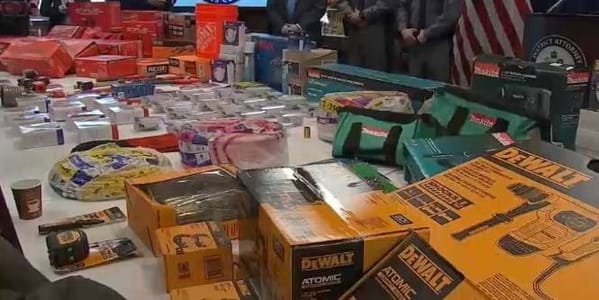
Thieves target items based on resale value and ease of transport. Home Depot thefts focus on circuit breakers and electrical items valued at nearly $42,000 in one operation. Power tools and spools of wire worth $3,000 represent common targets. One repeat offender resold over $70,000 in stolen cordless tools and batteries.
A search warrant executed with Target investigators yielded over $38,000 in stolen goods from Target, Home Depot, and Lowe's. Another fencing operation involved stolen merchandise exceeding $1 million, affecting retailers including Nike, Navy Exchange, Proctor & Gamble, CVS, Nordstrom and Target.
Beauty products constitute another major category. Suspects allegedly stole over $1 million in merchandise from Ulta Beauty, CVS, Kroger, Target, and HY-V stores in Calabasas, Palmdale and Lancaster. Designer clothes and medical supplies also attract organized groups. The average American family pays more than $500 annually in additional costs due to organized retail crime impact.
How Proposition 36 Empowers Aggressive Prosecution
Felony Charges for Repeat Offenders
California voters overwhelmingly approved Proposition 36 in November, fundamentally changing how prosecutors handle retail theft cases. The measure allows individuals with two or more past convictions for certain theft crimes to face felony charges, even when stolen items are worth $950 or less. This threshold reverses previous policies that treated such offenses as misdemeanors.
Penal Code 666.1 grants prosecutors authority to upgrade petty theft or shoplifting charges to felony offenses based on criminal history. The law contains no washout period, meaning prior qualifying convictions can elevate current charges regardless of age. A theft committed decades ago still counts toward the two-conviction threshold.
Sentences reach up to three years in county jail for first offenses under the new felony classification, with subsequent offenses punishable by three years in state prison. Prosecutors maintain discretion to charge these cases as either misdemeanors or felonies, creating flexibility in case handling. When three or more people act together to steal or damage property during a felony, sentences can be extended by an additional three years.
Aggregating Theft Amounts Across Multiple Incidents
Penal Code 490.3 introduces a critical change allowing prosecutors to combine the value of stolen property across multiple thefts to meet the $950 threshold required for felony grand theft. Previously, proving a single theft exceeded this amount was necessary for felony charges. Under the expanded aggregation rule, there is no requirement that thefts occur close in time or be part of a common scheme.
For example, if someone shoplifts $500 worth of goods on two separate occasions, prosecutors can total these amounts and charge the individual with felony theft. This provision applies notwithstanding any other law, making it broader than previous aggregation statutes that required acts to be motivated by one intention or general impulse. The change eliminates loopholes that previously allowed offenders to avoid harsher penalties for smaller, repeated crimes.
District Attorney's Zero-Tolerance Approach
Early implementation data shows prosecutors filed approximately 1,500 to 3,500 theft-related felony cases in the first 90 days under Proposition 36. These filings represent a 10 to 15 percent share of the roughly 15,000 felony cases filed in an average month. Counties vary substantially in applying the new provisions, with the number per 100,000 residents ranging from 24 in Kern County to approximately 2 in San Francisco County.
The focus on theft in counties such as Alameda, Sacramento, and Los Angeles may partly be driven by pronounced increases in retail theft in these areas. District Attorney offices formed specialized teams of prosecutors and investigators to fight organized retail crime, working with local businesses and law enforcement to build sound evidence. These teams participate in organized retail crime alliances, bridging the gap between public and private investigations affecting both large and small businesses.
Case Study: Major Organized Retail Theft Cases Filed Against Criminal Networks
Multi-Million Dollar Fencing Operations Uncovered
Since January 2025, prosecutors filed cases involving millions of dollars in stolen merchandise based on successful law enforcement operations. Jose Victor, Maria Muniz Zaragoza, and Cristian Zaragoza face charges for running a fencing operation out of their home and two businesses in South Gate, with total losses exceeding $1 million. The trio allegedly handled stolen property from Nike, Navy Exchange, Proctor & Gamble, CVS, Nordstrom and Target.
Khaled Ahmed and Sandra Cervantes operated a fencing operation from their Marina del Rey home and two downtown Los Angeles businesses. Investigators recovered merchandise valued at $19,200 and $1.3 million in cash. Affected retailers include CVS, Ralphs, Target, Bath and Body Works, Macy's, Kroger, Walgreens and Nordstrom, with merchandise including controlled substances and other pharmaceuticals.
Norma Rodas, Krystal Harris, and Kaia Sandridge allegedly stole over $1 million in merchandise from Ulta Beauty, CVS, Kroger, Target, and HY-V stores in Calabasas, Palmdale and Lancaster. Blanca Escobar received over $350,000 in stolen merchandise from Target, Macy's, TJ Maxx, CVS, and Walgreens at her business near MacArthur Park.
Home Depot Circuit Breaker Theft Ring Busted
Authorities arrested 14 people accused of running the largest organized retail theft operation targeting Home Depot in the company's history, with nine facing felony charges. The suspects linked to 600 thefts at 71 different Home Depots, with losses exceeding $10 million across multiple Southern California counties.
David Ahl, who ran ARIA Wholesale in Tarzana, faces 48 felony counts including conspiracy, organized retail theft, grand theft, receiving stolen property, and money laundering. During searches, investigators seized an estimated $3.7 million in Home Depot property and $800,000 in alleged money laundering proceeds. Ahl's boosters systematically stole expensive electrical components like breakers, dimmers, and switches, sometimes hitting every Home Depot in Ventura County in a single day.
Alexandro Mojico, Jacqueline Galicia, and Hertsel Enayati face 28 felony counts for an alleged organized retail theft operation to steal and sell circuit breakers and other electrical items from Home Depot and Lowe's in 2023 and 2024, valued at nearly $42,000.
Prosecution of Serial Shoplifters with Multiple Priors
Brenda Yanez faced charges of organized retail theft, grand theft, and possession of stolen property after authorities seized more than $1 million in stolen cosmetics from CVS, Sephora, Ulta Beauty, Rite Aid, Nordstrom, and the 99 Cents Only Store. Officers found stolen items along with tools used to remove anti-theft devices.
Law Enforcement Task Force Collaboration
California recovered more than 1.6 million stolen items valued at over $76.2 million through the California Highway Patrol's Organized Retail Crime Task Force since its creation in 2019. Working alongside local law enforcement and retailers, the task force arrested more than 5,330 suspects. The Task Force conducted 4,718 investigations.
The LASD Organized Retail Crime Task Force investigates cases throughout Los Angeles County. Grant-funded prosecutors secured 2,615 theft-related convictions, an increase of nearly 18 percent over the previous quarter. Of those convictions, 910 were directly tied to organized retail theft, with 772 being felony convictions.
Why These Retailers Choose to Prosecute While Others Don't
Cost-Benefit Analysis of Legal Action
Retailers weigh multiple factors when deciding whether to pursue prosecution. Legal fees, employee time spent in court, and potential negative publicity often outweigh the value of stolen merchandise. Some jurisdictions impose thresholds for stolen goods value that determine prosecution feasibility, while legal complexities and burden of proof requirements can deter retailers from pursuing cases.
Resource allocation presents another critical consideration. Many retailers prefer investing in improved security measures or staff training rather than legal action against individual shoplifters. More than 41 percent of companies prohibit employees from stopping or apprehending shoplifters, primarily due to violence and liability concerns from such confrontations. Guards cost substantial amounts, with off-duty police officers commanding even higher rates. Some retailers calculate that stolen merchandise represents lower long-term costs than comprehensive security investments.
Retailers also prioritize customer experience, handling theft incidents discreetly to avoid disrupting store environments or upsetting customers. Public relations considerations factor heavily, as companies seek to avoid negative publicity from prosecuting shoplifters.
Corporate Loss Prevention Strategies
Home Depot maintains full commitment to prosecuting shoplifters across its Miami-area stores and beyond, demonstrating major investment in loss prevention. The company deploys sophisticated approaches including security cameras, electronic tagging of merchandise, and undercover personnel designed to detect and document incidents effectively.
Home Depot maintains comprehensive shoplifter databases shared with other retailers, influencing future police interactions and store access. Asset protection staff actively assist police in prosecuting cases by supplying surveillance footage, witness statements, and other evidence.
Partnership with Law Enforcement Agencies
Home Depot collaborates closely with local police departments to build solid cases and move prosecutions forward. Sixty-one percent of retailers report that limited law enforcement resources negatively impact their ability to investigate and prosecute retail crime. Cross-jurisdictional thefts and lack of multi-agency information sharing create additional obstacles.
Despite these challenges, 53 percent of retailers participated in law enforcement investigations involving transnational theft groups over the past year. This collaboration represents efforts to combat criminal networks beyond individual retailer capabilities.
Impact on Store Operations and Community Safety
Employee and Customer Safety Concerns
Retail theft jeopardizes the safety of store employees and customers, particularly as organized groups coordinate thefts that create unsafe situations. Frontline employees increasingly encounter individuals who become confrontational when challenged. Concerns about workplace safety contribute to lower morale, increased stress, and higher employee turnover. Fifty percent of retailers reported an increase in repeat offender activity, while 40 percent noted a rise in organized retail crime events. Violence associated with organized retail theft makes retail establishments less safe for consumers.
Store Closure Considerations
Rising crime forced many retailers to divert substantial financial resources toward increased security measures. For some operators, the risks and costs became untenable, leaving them with no option but to close stores in high-crime areas. Store closures result in lost jobs and lost state, local and federal tax revenue estimated at over $2 million annually per store for sites that sell fuel.
Warning Decals and Deterrent Measures
Retailers continue investing in technologies, employee training, and security measures to protect employees, customers and merchandise. Visible theft and frequent security incidents make shoppers uncomfortable, prompting retailers to lock up high-value merchandise, which creates friction during the shopping experience.
Community Response to Retail Crime Crackdown
Retail crime affects employees, customers, and surrounding neighborhoods that feel ripple effects. In rural and underserved areas, a convenience store may be the only nearby location to purchase groceries or fuel for miles. When stores close, residents lose convenient access to essential goods and a dependable neighborhood fixture.
Conclusion
The enforcement efforts by Target and Home Depot reflect the growing focus on retail theft and organized theft in California. Proposition 36 has changed the potential consequences for certain repeat theft offenses, while retailers continue working with law enforcement to address theft and related losses.
For individuals accused of shoplifting or retail theft, the specific facts, the value of the property, and any prior convictions can significantly affect the charges and potential penalties. If you are facing a retail theft or shoplifting charge in California, contact an experienced shoplifting attorney to discuss your case, understand your legal options, and protect your rights.
RELATED ARTICLE:
Call 213-932-8922, for a free consultation.