


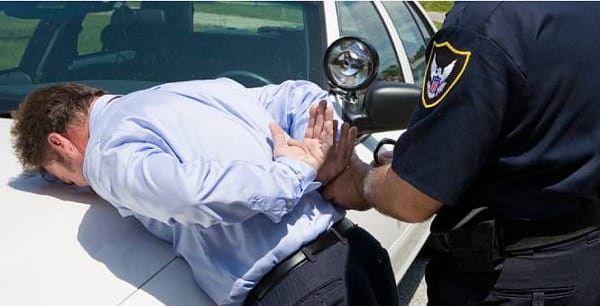
Is Road Rage a Criminal Offense in California? Assault and Battery Charges
The answer might surprise you. Road rage itself isn't a specific crime under state law. However, the actions you take during an aggressive driving incident can lead to serious criminal charges, including assault, battery, reckless driving, and even felony prosecution. Understanding the distinction between road rage as a behavior and the criminal offenses that result from it is crucial if you're facing charges. The consequences can include jail time, significant fines, and permanent license revocation, affecting both your freedom and your future.
Road Rage Is Not a Crime—But the Actions Behind It Are
What California Law Actually Says About Road Rage
California law doesn't define road rage as a standalone criminal offense. Rather, the term appears in California Vehicle Code 13210, which addresses license suspensions for assaults "commonly known as 'road rage'" [1]. This statute gives courts the power to suspend driving privileges for six months on a first offense and one year for subsequent offenses when someone commits an assault on another driver, bicyclist, or pedestrian on a highway [2].
The statute treats road rage as a descriptor for certain aggressive behaviors, not as a separate crime. Courts can order license suspensions in addition to penalties under Penal Code 245(a), which addresses assault with a deadly weapon [1]. The law also permits judges to require completion of a court-approved anger management or "road rage" course instead of or in addition to suspension [2].
Why There's No Specific Road Rage Statute
The absence of a specific road rage law stems from how California's legal system categorizes criminal conduct. Road rage describes the motivation behind an action, not the action itself. Prosecutors charge individuals based on the specific criminal acts committed, such as assault, battery, or reckless driving.
California courts distinguish between aggressive driving and road rage based on intent [3]. Aggressive driving involves traffic violations like excessive speeding or tailgating. Road rage involves deliberate attempts to intimidate, harm, or punish other drivers for perceived slights [3]. That distinction matters for prosecution because intentional conduct can expose drivers to both criminal and civil liability simultaneously [3].
Common Behaviors That Cross Into Criminal Territory
Several road rage behaviors regularly result in criminal charges. Threatening gestures, verbal insults, and hand signals can escalate to assault charges if another person reasonably fears imminent harm [2]. Physical confrontations after exiting a vehicle lead to battery charges, even when no injury occurs [2].
Using a vehicle to threaten or harm others transforms the car into a deadly weapon under California law. Intentionally ramming another vehicle, forcing someone off the road, or aggressively driving toward a pedestrian can result in assault with a deadly weapon charges under Penal Code 245 [2]. Brandishing a firearm during a road dispute escalates the incident to criminal assault charges with potential weapon enhancements [2].
Criminal threats charges arise when drivers threaten to kill or physically harm someone with the intent to intimidate [2]. The threat must place the victim in reasonable, sustained fear for their safety or their family's safety. This fear can last as briefly as 30 seconds to meet the legal standard [2].
Criminal Charges You Can Face in a Road Rage Incident
Multiple criminal charges can stem from a single road rage incident. Prosecutors evaluate the specific circumstances of each case to determine which statutes apply. The charges you face depend on your actions, whether anyone was injured, and if weapons were involved.
Reckless Driving Under Vehicle Code 23103
Vehicle Code 23103 makes it illegal to drive with willful or wanton disregard for the safety of persons or property [1]. This includes excessive speeding, tailgating, swerving, or other aggressive maneuvers that put others at risk. A misdemeanor conviction carries up to 90 days in county jail and fines up to USD 1000 [1]. Penalties increase substantially if someone sustains great bodily injury due to reckless driving [1]. The offense can be charged as a felony in such cases, carrying up to three years in state prison [4].
Assault Charges Under Penal Code 240
Penal Code 240 defines assault as an unlawful attempt, coupled with present ability, to commit violent injury against another person [1]. Physical contact is not required. If you threaten or attempt to apply force and the other person reasonably believes you can harm them, prosecutors can file assault charges [1]. Simple assault is always a misdemeanor, punishable by up to six months in county jail and fines up to USD 1000 [1].
Battery Charges Under Penal Code 242
Battery involves actual physical contact. Under Penal Code 242, prosecutors can file charges if you strike or use physical force against another driver [1]. The slightest touching counts if done rudely or offensively. Misdemeanor battery carries up to six months in county jail and fines up to USD 2000 [1]. If the battery causes serious bodily injuries, prosecutors can file charges under Penal Code 243(d) for aggravated battery, which carries substantially harsher penalties [1].
Assault with a Deadly Weapon Under Penal Code 245
Penal Code 245(a)(1) applies when drivers use their vehicles in a manner consistent with assaulting someone [1]. A car becomes a deadly weapon under California law when used to threaten or harm others. This statute is a wobbler, chargeable as either a misdemeanor or felony [1]. Felony convictions carry up to four years in state prison [1]. The charge applies even without physical contact if your vehicle was used to frighten or intimidate another person.
Criminal Threats Under Penal Code 422
Criminal threats charges arise when aggressive drivers make threats, placing others in fear for their safety [1]. The threat must be specific, immediate, and cause the victim to experience sustained fear [5]. This wobbler offense carries up to one year in county jail for misdemeanor convictions or up to three years in state prison for felony convictions [6]. Felony convictions count as a strike under California's three-strikes law [6].
Other Charges Including Brandishing and Murder
Brandishing a firearm during a road dispute violates Penal Code 417 [2]. This wobbler carries up to one year in county jail or up to three years in state prison [2]. If a driver is killed, prosecutors can file murder charges under Penal Code 187 [1]. This requires malice aforethought, meaning the killer acted with wanton disregard for human life [1]. Second-degree murder convictions in road rage cases carry sentences of 40 years to life [7].
Understanding Assault and Battery Charges in Road Rage Cases
Most people misunderstand how assault and battery charges function in California. The distinction between these offenses determines which charges prosecutors file after a road rage incident.
How Assault Charges Work When No Contact Occurs
Assault charges don't require physical contact. Under Penal Code 240, prosecutors must prove three elements: you acted willfully, your action would likely result in force being applied, and you had the present ability to apply that force [8]. Swinging at someone and missing qualifies as assault. Throwing an object that doesn't hit the target is assault. Aggressively lunging toward someone in a way that makes them believe harm is imminent can constitute assault [8].
The charge focuses on the threat and attempt, not the outcome. If you swing a fist at another driver during a roadside confrontation but miss, that's assault even though no contact occurred [9]. Veering your vehicle toward a pedestrian or slamming on brakes directly in front of a motorcyclist satisfies the legal standard because you had present ability to commit violent injury [10].
When Physical Contact Leads to Battery Charges
Battery requires actual touching. Penal Code 242 defines it as willful and unlawful use of force or violence against another person [4]. The contact doesn't need to cause pain or injury. A shove, a grab, even spitting on someone qualifies as battery [8]. The slightest touch suffices if done rudely or angrily[4].
Making contact with something closely connected to a person also counts. Striking an object someone is holding or hitting their bicycle can result in battery charges because of the close connection between the physical object and the person [4].
Aggravated Battery and Serious Bodily Injury
Aggravated battery under Penal Code 243(d) involves causing serious bodily injury through willful touching [11]. Serious bodily injury means any serious impairment of physical condition, regardless of whether medical treatment is necessary [12]. Lost teeth, loss of consciousness, cuts requiring stitches, broken teeth requiring sutures, bone fractures, and concussions all qualify [12]. Whether injuries are serious enough gets evaluated case-by-case [13].
Penalties and Jail Time for Assault and Battery
Simple assault carries up to six months in county jail and fines up to USD 1000 [14]. Simple battery carries up to six months in county jail and fines up to USD 2000 [15]. Aggravated battery is a wobbler. Misdemeanor convictions carry up to one year in county jail and fines up to USD 1000 [12]. Felony convictions carry two, three, or four years in state prison and fines up to USD 10000 [15]. Felony aggravated battery counts as a strike under California's Three Strikes law [11].
When Your Vehicle Becomes a Deadly Weapon
A vehicle transforms into a deadly weapon the moment a driver uses it to threaten or harm another person. Courts regularly prosecute these cases under existing assault statutes.
How Cars Are Treated as Weapons Under California Law
California courts define a deadly weapon as any object capable of producing death or great bodily injury when used in a particular manner [16]. Vehicles easily satisfy this definition. The California Supreme Court established that objects become deadly weapons based on how they're used, not what they inherently are [17]. Intentionally ramming another vehicle, forcing a car off the roadway, or driving toward a pedestrian supplies the necessary elements for prosecution [18]. Prosecutors must prove you acted willfully, knew the natural consequences of your actions, and possessed present ability to inflict force [18].
The Difference Between Misdemeanor and Felony ADW Charges
Assault with a deadly weapon using a vehicle is a wobbler [19]. Prosecutors decide whether to file misdemeanor or felony charges based on the facts and your criminal history [17]. Felony convictions carry two, three, or four years in state prison and fines up to USD 10000 [16]. Misdemeanor convictions carry up to one year in county jail [16]. A felony conviction with great bodily injury counts as a strike under California's Three Strikes Law [16]. However, without bodily injury, the conviction isn't a strike [17].
Permanent License Revocation Under Vehicle Code 13351.5
Vehicle Code 13351.5 mandates lifetime driver's license revocation for felony ADW convictions involving a vehicle [16]. The DMV immediately revokes your privilege to drive upon receiving the court abstract [20]. The statute explicitly prohibits reinstatement under any circumstances [20]. Misdemeanor convictions don't trigger this revocation [21]. Reducing a felony conviction to a misdemeanor through Penal Code 17(b) can restore driving privileges [22].
DMV License Suspensions and What Happens to Your Driving Privilege
Courts possess discretion to suspend your driving privilege following road rage assault convictions. This administrative penalty operates separately from criminal sentencing and affects your ability to drive legally in California.
How Vehicle Code 13210 Allows License Suspension
Vehicle Code 13210 grants courts authority to suspend driver's licenses for assaults committed against other motorists, bicyclists, or pedestrians on highways [23]. The DMV can pursue suspension through two avenues: as a "lack of skill" case or as a "negligent operator" case [24]. Either path requires a finding that your driving conduct demonstrates you shouldn't maintain driving privileges.
The DMV exercises independent authority separate from criminal court proceedings [25]. Even if criminal charges get reduced or dismissed, the DMV can still impose administrative action based on your driving record and the conduct involved [25].
Six Month Suspension for First Offense vs One Year for Subsequent
First-time offenders face a six-month license suspension [23][25]. Second or subsequent offenses carry a one-year suspension [23][25]. The court determines when suspension commences: either on your conviction date or upon release from confinement [23][26].
Challenging the Suspension Through Administrative Hearings
You have the right to request an administrative hearing, but you must act within 10 days of receiving suspension notice [25][5]. This tight deadline requires an immediate response. Missing it results in automatic suspension taking effect.
The hearing provides an opportunity to present evidence and challenge the record against you [24]. A DMV hearing officer presides over the proceeding and evaluates whether suspension should stand [5]. You can examine witnesses, submit documents, and testify on your own behalf [5].
Completing Anger Management to Keep Your License
Courts may order completion of a court-approved anger management or road rage program instead of or in addition to license suspension [23][26]. Completing these programs demonstrates increased emotional awareness, improved conflict resolution skills, and reduced aggressive behaviors [27].
Defenses and Legal Options If You're Charged
Defense attorneys employ several strategies to challenge road rage charges. Success depends on case-specific facts and evidence available.
Self-Defense When the Other Driver Was the Aggressor
Self-defense requires reasonable belief you faced imminent danger of bodily injury [6]. The belief must be objectively reasonable, meaning another person in identical circumstances would share your perception [6]. You must prove immediately displaying force was necessary because safer alternatives weren't available [6]. If you were blocked in traffic or being followed, necessity becomes clearer [6]. Force used must be proportional to the threat faced [6].
Showing No Willful Intent or That It Was an Accident
Prosecutors must prove you acted willfully. Defense counsel can argue actions were accidental, resulted from misunderstanding, or lacked intent to harm [28]. For instance, accidentally exposing a legally carried firearm differs from threatening brandishing [6].
Misidentification and Witness Errors
Eyewitness misidentification contributes to 75% of wrongful convictions overturned by DNA testing [1]. Stress, poor lighting, cross-race identification, and weapon focus all impair witness accuracy [2]. Defense attorneys challenge witness credibility by highlighting inconsistencies and presenting contradictory evidence [29].
Negotiating Reduced Charges Before Trial
Prosecutors may reduce felony charges to misdemeanors or dismiss companion charges through plea negotiations [6]. Presenting mitigation packages showing your character, employment, and driving record strengthens negotiating position [30].
Conclusion
Road rage behaviors undoubtedly carry serious legal consequences in California, even though no specific road rage statute exists. The actions you take during an aggressive driving incident can result in assault, battery, or deadly weapon charges, along with license suspension or permanent revocation. These penalties affect your freedom, finances, and ability to drive legally.
Understanding the distinction between your behavior and the criminal charges that follow matters when you're facing prosecution. At any rate, the stakes are too high to navigate alone. Consult with an experienced criminal defense attorney who can evaluate your case, identify viable defenses, and work to protect your rights and driving privileges.
References
[1] – https://innocenceproject.org/eyewitness-misidentification/
[2] – https://www.nbcnews.com/news/us-news/california-man-found-guilty-road-rage-murder-6-year-old-way-kindergart-rcna135781
[3] – https://codes.findlaw.com/ca/penal-code/pen-sect-243/
[4] – https://leginfo.legislature.ca.gov/faces/codes_displaySection.xhtml?lawCode=VEH§ionNum=13210
Need an Attorney? CALL NOW: 213-932-8922
Yuliya Kelmansky is an Expert Attorney who has over 10 years of practice defending a variety of cases.