


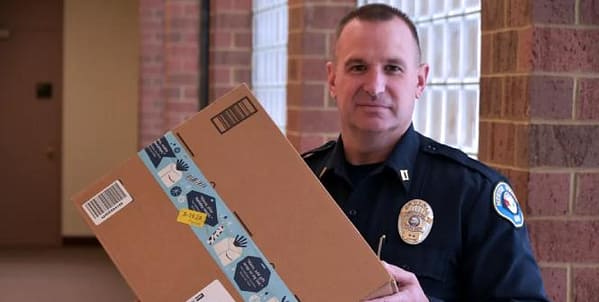
Penalty for Receiving Drugs in the Mail: What Happens If Feds Intercept Package
The penalty for receiving drugs in the mail can include mandatory minimum prison sentences of five to ten years, even for first-time offenders. Federal agents deliberately deliver intercepted packages to your doorstep, building evidence the moment you accept the box. Understanding what happens when your seized package becomes a federal case in California requires knowledge of postal inspection procedures, controlled delivery defense strategies, and your constitutional rights. The legal process unfolds rapidly once a package gets flagged, making immediate action critical for anyone facing these charges.
How Postal Inspectors Detect Drugs in Your Package
Postal inspectors rely on a detailed profiling system that flags packages based on observable characteristics before any physical inspection occurs. This screening process operates at massive scale, handling over 170 million pieces of mail annually, with trained personnel identifying suspicious patterns that indicate drug trafficking activity [1].
Drug package profile characteristics
The package profiling system uses five primary criteria that postal inspectors examine on every suspicious piece of mail. Heavy taping along package seams ranks as the first indicator, as traffickers seal parcels excessively to prevent drug odors from escaping detection by trained canines [2]. Poor preparation for mailing serves as the second criterion, often visible through amateur packaging that suggests the sender avoided face-to-face interaction with postal officials [2].
Uneven weight distribution within a package triggers inspector attention, particularly when combined with apparent package reuse showing multiple shipping labels or altered boxes [2]. Label characteristics provide the most detailed profiling data: handwritten addresses with misspellings, origins from known drug-source states, person-to-person rather than business mailings, return zip codes that don't match the accepting post office location, and fictitious return addresses all elevate suspicion [2]. Names appearing on both sender and recipient fields often use common aliases like "John Smith" with no verifiable connection to either address [2].
Red flags that trigger investigation
Specific package anomalies prompt postal inspectors to request drug-sniffing dog inspections or initiate the Administrative Non-Mailability (ANP) program. Packages arriving with no return address coupled with excessive postage create immediate red flags, as senders often overestimate required postage to avoid in-person transactions at post offices [3]. This excessive postage typically appears as numerous stamps rather than printed postage labels [3].
A city or state postmark that doesn't match the return address signals potential fraud [3]. Packages marked with restrictive endorsements reading "Personal" or "Confidential" receive scrutiny when addressed to former employees or using outdated job titles [3][1]. Physical characteristics triggering investigation include unusual weight relative to size, lopsided shapes, packages leaking unknown substances, or stains and crystallization on wrappers indicating chemical contents [1][4].
The Postal Inspection Service processed 54,877 packages suspected of containing marijuana through the ANP program in fiscal year 2019, with 1,839 of 95,491 pounds of seized narcotics identified as illicit drugs other than marijuana [4]. Packages containing marijuana emit strong odors that trained detection methods easily identify [4].
USPS inspection process vs private carriers
USPS mail receives Fourth Amendment constitutional protections that private carriers cannot claim. The ANP program allows postal inspectors to detain and process suspected packages by requesting consent from mailers or addressees to open them, avoiding warrant requirements for abandoned packages [4]. Private carriers like UPS, FedEx, and DHL operate under different rules requiring advance electronic data for all packages, achieving near-universal compliance rates for customs information and suspicious package screening [5].
Drug traffickers prefer USPS specifically because international rules through the Universal Postal Union require delivery of international mail unless law enforcement directs otherwise [5]. Many parcels arrive without proper customs forms or electronic tracking data, creating screening gaps that private carriers don't experience [5].
The role of tracking and surveillance
The Postal Inspection Service maintains approximately 10,000 pieces of law enforcement surveillance equipment valued at over $65 million for investigative purposes [4]. This arsenal includes license plate reader technology, GPS data coordination with rental car companies, and hidden cameras placed inside blue collection boxes that capture faces of suspects accessing mail [4].
Advanced detection technology includes handheld narcotic analyzers capable of scanning more than 450 suspected controlled substances in single tests without direct contact with materials [6]. X-ray machines screen packages at international mail facilities, with suspicious items separated for examination using Gemini spectroscopy devices that shine laser beams through substances to identify chemicals without officer exposure [1]. Data analytics transform single fentanyl seizures into intelligence about shipping patterns, recently linking one intercepted package to 2,800 suspicious parcels from two international shippers over five months [1].
What Happens After Your Package Gets Intercepted
Once postal inspectors confirm drugs inside your package, they don't destroy the contraband or file charges immediately. Law enforcement executes a controlled delivery, allowing the package to proceed to your address under official supervision with one goal: catching you in possession.
The controlled delivery trap
A controlled delivery represents the final move in an investigation that often spans months before you know federal agents are watching. The U.S. Postal Inspection Service operates a forensic laboratory examining approximately 275,000 items annually, identifying around 900 suspects from that evidence alone. Postal inspectors trace shipping patterns, coordinate with the DEA, analyze dark web activity, and track cryptocurrency transactions long before deciding to deliver drugs to your door.
The person handing you the package wears a postal uniform and appears identical to any mail carrier. Agents monitor your reaction, note your statements, and wait for your signature. Accepting that package provides prosecutors with the primary evidence needed to prove knowing possession in a seized package federal case California.
Why they deliver drugs to your door anyway
Controlled deliveries allow law enforcement to identify and arrest offenders while they possess illicit commodities, mapping complete criminal schemes and organizational structures. The technique enables investigators to trace flow patterns, determine original sources, transit routes, and final destinations [5]. Without controlled deliveries, proving the actual roles played by members of organized criminal groups becomes difficult.
The strategic advantage proves substantial. Law enforcement gains tactical control by planning operational responses with greater precision and advance knowledge [5]. They can seize drugs in safer, more controlled environments under their supervision, reducing risks to personnel and the public compared to live operational seizures [5].
Evidence collection during delivery
Agents record who accepts the package and observe subsequent actions. In the Victor Rodriguez Kessel case, a package addressed to his residence under a different name arrived at his Kansas City home. When law enforcement delivered it, Kessel consented to open it, revealing approximately 274 grams of powder cocaine. He also consented to a residence search, where officers found a revolver handgun and 467 grams of cocaine and marijuana.
Similarly, postal inspectors in Savannah extracted a fingerprint from a CD case inside a seized parcel, identifying Omaro Jajuan Griffin. That single fingerprint initiated an investigation seizing approximately 25 kilograms of cocaine, 30 pounds of marijuana, two pounds of MDMA, $900,000 in cash, and more than 20 firearms.
When search warrants get executed
Search warrants activate only after the specific package gets delivered and brought inside the residence. A Marquette County anticipatory search warrant remained inactive until the contraband-removed package entered the Montello home. Officers then executed the warrant, seizing scales, pill containers, cell phones, the delivered package, and boxes of suspected steroids, pills, and needles.
SWAT teams commonly participate in post-delivery raids. Computers, phones, and every electronic device potentially containing drug purchase communications get seized as evidence. The penalty for receiving drugs in the mail intensifies when search warrants reveal additional contraband, currency, or firearms inside your residence.
Federal Penalties for Receiving Drugs Through Mail
Federal law imposes mandatory prison terms that judges cannot reduce below statutory minimums, regardless of circumstances. The quantity and type of drugs determine baseline sentences under 21 U.S.C. § 841(b)(1) and 960(b), with heroin, cocaine, methamphetamine, and fentanyl triggering the harshest penalties.
Mandatory minimum sentences by drug type
A five-year mandatory minimum applies when drug quantities meet specific thresholds: 100 grams of heroin, 500 grams of cocaine, 28 grams of cocaine base, 5 grams of pure methamphetamine, or 40 grams of fentanyl [4]. The ten-year mandatory minimum activates at higher quantities: 1 kilogram of heroin, 5 kilograms of cocaine, 280 grams of cocaine base, 50 grams of pure methamphetamine, or 400 grams of fentanyl [4].
Marijuana carries a five-year minimum for 100 kilograms and a ten-year minimum for 1,000 kilograms [4]. These sentences carry maximum terms of 40 years for five-year minimums and life imprisonment for ten-year minimums [4].
Real case examples and prison terms
Joseph Crawford received 72 months in federal prison for attempting to receive over two pounds of methamphetamine through the mail, with three years of supervised release following incarceration. The U.S. Postal Inspection Service flagged two suspicious packages from California addressed to his Northfield, New Hampshire residence.
A mother and son duo who shipped approximately 8,400 drug parcels containing an estimated 75 pounds of methamphetamine across the United States received a combined 18 years in federal prison [3]. Victor Rodriguez Kessel earned a 15-year sentence for drug trafficking involving packages intercepted by postal inspectors, with the court ordering forfeiture of $82,000 seized by law enforcement and his residential property [3]. Omaro Jajuan Griffin received the statutory maximum of 20 years in federal prison following fingerprint identification from a seized package [3].
Factors that increase your sentence
Prior felony drug convictions elevate a five-year minimum to ten years and a ten-year minimum to fifteen years [4]. Defendants with two or more prior serious drug felonies face a 25-year mandatory minimum [4]. Death or serious bodily injury resulting from Schedule I or II controlled substances triggers a 20-year mandatory minimum regardless of quantity, escalating to mandatory life imprisonment with a qualifying prior conviction [4].
Asset forfeiture and financial penalties
Criminal forfeiture occurs as part of conviction or plea agreements, while civil forfeiture proceeds against property itself without requiring criminal conviction. In essence, the government must prove property connections to crimes by a preponderance of evidence. DEA seized assets valued at $188,349,172.43 in fiscal year 2023 alone.
Your Legal Rights When Packages Are Seized
Constitutional protections create vastly different legal landscapes for USPS mail versus packages shipped through private carriers. First-class letters and parcels sent through USPS receive Fourth Amendment protection against search and seizure, meaning postal inspectors cannot open them without a search warrant. This protection treats sealed mail as if the sender kept it in their home.
Fourth Amendment protections for USPS mail
The requirement for probable cause and judicial approval before opening first-class USPS mail has stood for over a century. When postal inspectors suspect a first-class package contains contraband, they can seize it from the mail stream, but opening requires a formal search warrant supported by probable cause. Other mail classes beyond first-class do not contain private correspondence and may be opened without warrants.
In contrast, private carriers like FedEx and UPS do not provide the same constitutional shield. These companies maintain policies allowing package inspections for safety and security reasons, which diminishes customers' reasonable expectations of privacy. Police can legally search packages that FedEx or UPS sorters have opened without obtaining warrants, particularly when contraband appears.
The 21-day administrative non-mailability window
The Administrative Non-Mailability program operates under specific time constraints. When postal inspectors detain suspected packages, they request consent from mailers or addressees to open them. If recipients fail to respond within 21 calendar days from the notice date, packages become deemed abandoned or unclaimed. Abandoned packages can then be opened, with contents seized and disposed of if identified as non-mailable items.
When warrants are required and when they're not
Exigent circumstances provide narrow exceptions to warrant requirements. Smoke pouring from packages, leaking substances, or immediate hazards justify unwarranted searches. However, courts reject expansive interpretations of these exceptions. Officers cannot inspect package exteriors, log tracking information, or use drug-sniffing dogs, but accessing contents demands judicial authorization absent true emergencies.
Common warrant violations that dismiss cases
The Robey v. Superior Court case established critical precedent when officers seized a FedEx package emitting marijuana odor but opened it without obtaining a warrant. The Second Appellate District ruled the seizure proper but required officers to hold the package unopened until securing judicial approval. California's Supreme Court affirmed this ruling, rejecting the prosecution's "plain smell" argument and emphasizing that warrant requirements represent cornerstone Fourth Amendment protections. Cases involving warrants based on false affidavits, stale information, or wrong addresses create suppression opportunities that eliminate evidence from trials.
Defense Strategies and What You Should Do
Prosecutors bear the burden of proving you knowingly and intentionally possessed drugs arriving at your address, creating viable defense opportunities even when packages contain your name.
The 'I didn't order it' defense and when it works
The lack of knowledge defense succeeds when prosecutors cannot establish beyond reasonable doubt that you ordered or expected the contraband. This controlled delivery defense proves particularly effective in shared living spaces or when packages arrive addressed to occupants no longer residing at the property. One Florida woman received 65 pounds of marijuana inside Amazon shipping bins she legitimately ordered, immediately contacting police and avoiding charges entirely.
What to do if a suspicious package arrives
Isolate the package immediately without opening, shaking, or sniffing it [7]. Call Postal Inspectors at 1-877-876-2455 and state "emergency" [7]. Wash your hands thoroughly with soap and water after any contact [8].
Why opening the package destroys your defense
Opening establishes possession and potential knowledge in a seized package federal case California. Prosecutors use your actions as evidence proving you expected the delivery.
When to contact a lawyer
Contact an attorney immediately upon package interception or controlled delivery. Remain silent and refuse searches without legal representation present.
Evidence that prosecutors must prove
Prosecutors must demonstrate knowingly possessed illegal substances with intent to commit a crime. Challenging evidence legality, proving non-ownership, or establishing entrapment creates pathways toward reduced charges or dismissal.
Need An Attorney?
Federal drug mail charges carry penalties that can permanently alter your life, with mandatory prison sentences starting at five years for first-time offenders. Postal inspectors use sophisticated profiling and controlled delivery tactics specifically designed to build evidence against you the moment you accept a package.
Understanding your Fourth Amendment rights makes a significant difference in case outcomes. Never open suspicious packages, and contact a criminal defense attorney immediately if federal agents deliver or seize mail at your address. The prosecution must prove you knowingly ordered the contraband, and challenging that knowledge requirement represents your strongest defense strategy.
Your response in the first hours after interception often determines whether charges get filed or dismissed entirely.
References
[1] – https://cnsmaryland.org/2017/12/15/people-machines-and-dogs-hunt-for-drugs-in-the-mail/
[2] – https://www.ojp.gov/ncjrs/virtual-library/abstracts/profiling-postal-packages
[3] – https://www.uspis.gov/combating-illicit-drugs-in-the-mail
[4] – https://www.ussc.gov/sites/default/files/pdf/training/primers/2025_Primer_Drugs.pdf
[5] – https://syntheticdrugs.unodc.org/syntheticdrugs/en/advancedinvestigativetechniques/controlled-deliveries.html
[6] – https://www.uspis.gov/wp-content/uploads/2021/02/USPS-Combating-Illicit-Drugs-in-the-Mail-Strategy-Document.pdf
[7] – https://www.uspis.gov/tips-prevention/suspicious-mail
[8] – https://faq.usps.com/s/article/Suspicious-Mail
Need an Attorney? CALL NOW: 213-932-8922
Yuliya Kelmansky is an Expert Attorney who has over 10 years of practice defending a variety of cases.