


Medical Conditions That Affect Breathalyzer Tests: DUI Defense Guide
Medical conditions that affect breathalyzer tests can be the difference between a conviction and dismissal in your California DUI case. Unfortunately, many drivers aren't aware that certain health conditions can trigger false positive readings, leading to potentially life-altering legal consequences.
When you're pulled over and asked to blow into a breathalyzer, the device doesn't simply measure alcohol – it detects chemicals in your breath that may come from various sources beyond drinking. In fact, conditions like diabetes, GERD, acid reflux, and even certain respiratory disorders can significantly skew test results, making it appear you're intoxicated when you're actually sober.
Understanding how these medical conditions impact breathalyzer accuracy is crucial to your defense. This guide will walk you through the science behind breathalyzer tests, specific health conditions that can affect readings, and the essential legal steps to take if you have a medical condition that might have influenced your test results.
If you're facing DUI charges in California and have a medical condition, you have rights that need protection. The information in this article could be vital to your defense strategy and the outcome of your case.
How Breathalyzer Tests Work and Why They Can Be Inaccurate
Breathalyzer tests represent a cornerstone of DUI enforcement, yet understanding their mechanics reveals why they're not always reliable. These devices often produce results that can be challenged in court, especially for those with certain medical conditions.
What breathalyzers measure
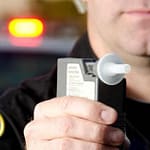
Breathalyzers don't directly measure blood alcohol concentration (BAC)—they estimate it by analyzing alcohol in your exhaled breath. Most devices work through a chemical reaction where alcohol vapor reacts with potassium dichromate, turning the solution from orange to green. This color change creates an electrical current that's converted into a BAC reading .
The science behind these tests relies on a partition ratio that assumes the concentration of alcohol in your breath correlates with your blood at approximately 2,100:1. This means about 2,100 milliliters of breath contains the same amount of alcohol as 1 milliliter of blood . However, this ratio varies among individuals and can fluctuate based on body temperature, breathing patterns, and other physiological factors .
Law enforcement typically uses two types of breath testing devices: preliminary alcohol screening (PAS) tests (handheld devices used during traffic stops) and evidential breath tests (EBTs) (larger, stationary machines at police stations). While EBTs are more reliable, neither is infallible .
Why false positives happen
Several factors can trigger false positive readings on breathalyzers. Studies estimate that approximately 23% of individuals tested will have an actual BAC significantly lower than the reading shows—sometimes by up to 15% .
Poor calibration represents a primary cause of inaccurate results. These devices require regular maintenance and calibration to function properly. Without this upkeep, the reliability of test results diminishes considerably .
Your body temperature plays a surprisingly important role—for every 1 degree your temperature rises above normal, your BAC reading can increase by approximately 8% . Additionally, breathing patterns dramatically impact results—hyperventilating can reduce breath alcohol concentration by about 11%, deep breathing by 4%, while holding your breath can increase readings by 6-12% .
Environmental factors like humidity affect readings because alcohol dissolves more readily in water than in air . Moreover, exposure to chemicals like gasoline, paint thinners, or cleaning products can introduce compounds that breathalyzers may misinterpret as alcohol .
Role of deep lung air vs. mouth alcohol
Breathalyzers are designed to measure "deep lung air" or "alveolar air" from deep within your lungs, as this most accurately reflects blood alcohol levels . Your lungs contain approximately 300 million air sacs called alveoli, surrounded by blood vessels where oxygen and carbon dioxide freely exchange—making this air theoretically in equilibrium with your bloodstream .
Nevertheless, "mouth alcohol" presents a significant problem for accurate testing. This refers to any alcohol present in your mouth rather than from your lungs, which can come from:
- Recent use of mouthwash or breath fresheners
- Alcohol trapped in dental work or after dental surgery
- Regurgitation, burping, or hiccupping during or before the test
- Food or medications containing alcohol (like cough syrup)
To minimize mouth alcohol interference, officers are supposed to observe you for 15-20 minutes before administering the test to ensure you don't eat, drink, burp, or vomit . Some breathalyzers have "slope detectors" programmed to detect mouth alcohol and abort contaminated tests, though these aren't always reliable .
For people with gastroesophageal reflux disease (GERD), acid reflux, or similar conditions, this distinction becomes particularly crucial, as stomach contents containing alcohol can flow back into the esophagus and mouth, creating artificially high readings that don't reflect actual blood alcohol levels .
Medical Conditions That Can Skew Breathalyzer Results
Several medical conditions can produce chemicals in your body that breathalyzers misinterpret as alcohol. These health issues could be your strongest defense against inaccurate DUI charges.
GERD and acid reflux
Gastroesophageal reflux disease (GERD) and acid reflux create serious problems with breathalyzer accuracy. These conditions cause stomach contents to flow backward into the esophagus, allowing alcohol in the stomach to enter the mouth and throat. Studies show that even after the standard 20-minute observation period, people with GERD can have artificially elevated breath test results .
Research examining test subjects with diagnosed GERD found that some exhibited breath alcohol concentrations up to 0.105 g/dL during the absorptive phase—without eructation or regurgitation . This occurs because gastric alcohol passes through the lower esophageal sphincter and contaminates breath samples.
Notably, this contamination only happens when there's a high alcohol concentration in the stomach, and when it occurs, the readings are inconsistent in magnitude . For DUI suspects with GERD, this inconsistency itself becomes evidence supporting a medical defense.
Diabetes and ketone production
Diabetics face unique risks with breathalyzer tests due to their body's production of ketones. When blood sugar is poorly controlled, the body breaks down fat for energy, creating acetone and other ketones that breathalyzers can mistake for alcohol .
This phenomenon is so reliable that some doctors even use breathalyzer tests to help diagnose diabetes . In an illustrative case, a 37-year-old active duty serviceman without a diabetes history had his DKA (diabetic ketoacidosis) detected through an elevated breathalyzer reading despite consuming no alcohol .
The mechanism is straightforward: acetone converts to isopropanol in the body, which breathalyzer devices detect . Therefore, a person experiencing ketosis can register a positive BAC reading even when completely sober. Type 1 diabetics face the highest risk since they produce little or no insulin , but poorly controlled Type 2 diabetes can also trigger false positives.
Asthma and respiratory issues
Asthma impacts breathalyzer results in multiple ways. First, breathing difficulties make it challenging to provide adequate breath samples, potentially causing test failures . Secondly, asthma inhalers themselves directly affect test results.
Spanish researchers demonstrated that asthma inhalers can produce readings above legal driving limits . Tests using the Alcotest 7110-E device showed mean readings of 0.45, 0.44, and 0.32 mg of alcohol per liter of air one minute after using salbutamol, salmeterol, and budesonide inhalers, respectively . Concerning, even inhalers without ethanol as a vehicle produced false positive results .
The propellant gasses in inhalers—particularly chlorofluorocarbons—appear responsible for these false readings . Most readings normalized after ten minutes, yet this timing detail is critical since officers don't always wait sufficient time before administering tests.
Heart disease and breath composition
Heart disease significantly alters breath composition in ways that affect breathalyzer reliability. Research links visceral fat (associated with heart disease) to breath methane concentrations . Since visceral fat accumulation correlates with hypertension, high blood glucose, and obesity—all risk factors for heart disease—these conditions can indirectly affect breath test accuracy .
Studies using gas chromatography have found a significant association between visceral fat content and breath methane in participants . This relationship becomes particularly important considering visceral fat predicts cardiovascular disease better than BMI .
Furthermore, the body naturally emits volatile organic compounds (VOCs) in breath, and specific chemicals link to various medical conditions . Scientists have compiled a database of 327 different breathborne VOCs associated with diseases, including heart conditions . These compounds can interfere with breathalyzer accuracy by creating chemical profiles that devices misinterpret.
Conditions That Mimic Intoxication During DUI Stops
Beyond affecting breathalyzer results, certain medical conditions can make you appear intoxicated even when completely sober. Police officers often rely on observational evidence before deciding to administer chemical tests, which creates a dangerous situation for those with health conditions that mimic intoxication symptoms.
Neurological disorders like Parkinson's and MS
Multiple sclerosis (MS) and Parkinson's disease produce symptoms strikingly similar to alcohol impairment. These conditions affect your physical coordination, speech patterns, and cognitive function in ways that closely resemble intoxication . MS can cause weakness, loss of balance, dizziness, vision problems, and speech difficulties that vary widely between individuals .
Parkinson's disease similarly causes tremors, slowed movements, rigid muscles, balance problems, and speech issues—including slurred speech that officers routinely associate with drinking . These symptoms directly interfere with field sobriety tests, often leading to false assumptions about intoxication .
Traumatic brain injuries
Traumatic brain injuries (TBI) represent a particularly challenging situation during traffic stops. TBIs can cause symptoms including dizziness, confusion, slurred speech, and unsteady gait—all classic signs officers associate with intoxication . Studies show that even patients with a perfect Glasgow Coma Scale score of 15 might have significant intracranial injuries that affect their behavior and coordination .
Long-term TBI effects frequently mistaken for intoxication include post-concussion syndrome, cognitive impairments, speech difficulties, and motor control problems . These symptoms can persist for years following an injury, making it virtually impossible to perform standard field sobriety tests successfully regardless of sobriety .
Epilepsy and seizure aftermath
The period following a seizure—known as the postictal state—creates particular risks for drivers. After a seizure, individuals often experience confusion, disorientation, and trouble with coordination . These symptoms can easily be misinterpreted as alcohol impairment, occasionally resulting in wrongful DUI charges .
Complicating matters further, many anti-seizure medications themselves produce side effects that mimic intoxication, including loss of coordination, drowsiness, double vision, and headaches . These medication effects can trigger police suspicion even when the person hasn't had any alcohol .
Low blood sugar symptoms
Hypoglycemia (low blood sugar) creates perhaps the most convincing alcohol impairment mimicry. Symptoms typically occur when blood sugar falls below four millimoles per liter and include dizziness, confusion, irritability, shakiness, sweating, and disorientation .
Alarmingly, first responders can easily mistake these symptoms for intoxication—with some medical professionals noting the distinction between diabetic emergencies and alcohol impairment is often blurred . Studies estimate that hypoglycemia can cause confusion, slurred speech, and unsteadiness that mimic having a blood alcohol level of 0.08% .
How Medical Conditions Affect Field Sobriety Tests
Field sobriety tests rely heavily on physical coordination and cognitive function—abilities that numerous medical conditions can significantly impair without any alcohol consumption. These tests often become unreliable evidence in DUI cases where health issues are present.
Standardized tests and their limitations
The National Highway Traffic Safety Administration (NHTSA) recognizes three standardized field sobriety tests: horizontal gaze nystagmus (HGN), walk-and-turn, and one-leg stand. According to NHTSA studies, these tests show limited accuracy when conducted individually—HGN is only 77% accurate, one-leg stand 65% accurate, and walk-and-turn 68% accurate . Even when officers administer all three tests together, they accurately determine BAC above 0.10% only 83-93% of the time .
Non-standardized tests and subjectivity
Non-standardized sobriety tests pose even greater problems through their inherent subjectivity. Unlike standardized tests that use specific passing criteria, these tests depend entirely on an officer's evaluation . Courts generally give minimal legal importance to non-standardized tests, recognizing they lack scientific validation and reliable scoring criteria .
Balance and coordination issues
Inner ear disorders, arthritis, leg injuries, and neurological conditions like Parkinson's disease or multiple sclerosis directly affect balance and coordination . Other factors that impact performance include age (especially those over 65), weight (persons more than 50 pounds overweight should not be administered these tests), and environmental conditions like uneven surfaces or poor lighting .
Speech and cognitive impairments
Many medical conditions affect speech patterns and cognitive function in ways that mimic intoxication. Diabetes-related hypoglycemia can cause confusion, slurred speech, and unsteady movements . Anxiety disorders may produce physical symptoms like tremors or difficulty concentrating . Post-seizure states following epilepsy episodes often cause disorientation and speech difficulties .
Properly trained officers should ask about medical conditions before administering field sobriety tests, yet many fail to do so or dismiss the information provided . This oversight creates significant opportunities for challenging test results when building a California DUI defense.
Legal Steps to Take If You Have a Relevant Medical Condition
Taking appropriate action when you have a medical condition that might affect breathalyzer results can make a significant difference in your DUI case outcome. Knowing exactly what steps to follow could potentially save you from wrongful conviction.
Informing the officer at the scene
First and foremost, remain calm and polite when interacting with law enforcement. Clearly state your medical condition early in the interaction: "Officer, I have [specific condition] which sometimes causes symptoms that may look like intoxication." Mention any medications you're currently taking that might affect testing. Even if the officer seems dismissive, continuing to request accommodations creates an important record for your defense.
Wearing a medical alert bracelet
Medical identification jewelry serves as immediate verification of your condition. Dog tags, bracelets, or ID cards should list your diagnosis, symptoms that might mimic intoxication, and emergency contact information . Some California DUI attorneys specifically recommend these for individuals with neurological disorders, TBIs, or seizure conditions . Many officers respect these medical identifiers as legitimate verification.
Requesting medical evaluation
Immediately ask for medical attention if you feel unwell during a stop. Continue requesting paramedics if initially denied—California law grants individuals arrested for DUI the right to medical evaluation if injured . Document all treatment requests and symptoms in writing, specifically noting when and how often you asked for medical help.
Gathering medical documentation for court
Obtain comprehensive medical records spanning at least six months prior to your arrest . Schedule a psychiatric or medical evaluation within 24 hours of arrest—the closer to the incident, the more credible your defense . Engage medical experts who can explain how your condition affects test performance and behavior . Your attorney should request HIPAA authorization forms early to assess what additional testing might strengthen your case .
Conclusion
Understanding how medical conditions affect DUI testing could make the difference between conviction and acquittal in California. As we've seen, breathalyzers don't simply measure alcohol—they detect chemicals that may come from various sources beyond drinking. Consequently, conditions like diabetes, GERD, asthma, and heart disease can trigger false positive readings despite complete sobriety.
Field sobriety tests present additional challenges for those with medical conditions. Neurological disorders, traumatic brain injuries, epilepsy, and hypoglycemia all create symptoms easily mistaken for intoxication. Though standardized tests show limited accuracy even under ideal conditions, they become particularly unreliable when health issues affect balance, coordination, speech, or cognitive function.
Thankfully, you have options if your medical condition may have influenced your test results. Inform officers about your condition immediately during traffic stops. Additionally, consider wearing medical alert jewelry that verifies your diagnosis. Request medical evaluation if symptoms appear during your interaction with law enforcement, and gather comprehensive documentation for court.
Remember that California law protects your rights when medical conditions interfere with DUI testing. The science behind breathalyzer technology has limitations, especially for those with certain health issues. Armed with this knowledge and proper legal representation, you can effectively challenge inaccurate test results and fight wrongful DUI charges based on your medical condition.
References
[1] – https://pmc.ncbi.nlm.nih.gov/articles/PMC11420600/
[2] – https://www.justanswer.com/criminal-law/fzdmv-denied-medical-treatment-dui-accident-i.html
[4] – https://www.nolo.com/legal-encyclopedia/medical-conditions-that-mimic-dui-signs-can-lead-to-criminal-charges.html
[8] – https://pubmed.ncbi.nlm.nih.gov/26110903/
[9] – https://pubmed.ncbi.nlm.nih.gov/31141143/
[12] – https://pmc.ncbi.nlm.nih.gov/articles/PMC1172108/
[13] – https://www.chromatographytoday.com/news/gas-chromatography/64/breaking-news/developing-a-breath-test-for-cardiovascular-disease-using-gas-chromatography/51303
Don’t panic. Let us help and get you a FREE consultation 24/7. Call us and get your free consultation today.
Call Us: 213-932-8922
Yuliya Kelmansky is an expert in Criminal Law who has over 10 years of practice defending a variety of criminal cases.