


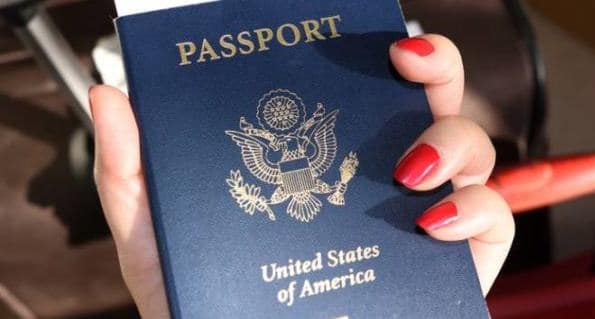
Taking a Dual Citizenship Child Abroad Can Lead to Federal Charges
Many parents believe having dual citizenship gives them the right to take their child to their country of origin during custody disputes. In reality, international parental kidnapping is a federal crime under the International Parental Kidnapping Crime Act (IPKCA), carrying severe penalties including prison time and permanent loss of custody rights. Dual citizenship provides no legal protection from federal prosecution. This article explains what qualifies as international parental kidnapping under federal law, how dual citizenship complicates these cases, the criminal penalties you face, and the defenses available if you're charged with this serious federal offense.
What Qualifies as International Parental Kidnapping
The Legal Definition of International Parental Kidnapping
Federal law defines international parental kidnapping under 18 U.S.C. § 1204 [1]. The statute makes it a crime to remove a child from the United States, attempt to do so, or retain a child outside the United States with intent to obstruct the lawful exercise of parental rights [1]. This offense applies to any person who takes these actions, not just parents.
Under federal law, a "child" means a person who has not attained the age of 16 years [1]. Once a child reaches 16, the federal statute no longer applies, though state laws may still provide protection.
The statute defines "parental rights" as the right to physical custody of the child, which includes:
- Joint or sole custody arrangements
- Visiting rights
- Rights arising by operation of law, court order, or legally binding agreement of the parties [1]
Notably, parental rights exist even without formal custody orders. The rights can stem from state law, court decisions, or binding agreements between parents [1].
When Taking Your Dual Citizenship Child Abroad Becomes a Federal Crime
International parental kidnapping transforms from a family dispute into a federal criminal matter when a parent crosses international borders with specific intent. The crime occurs in two distinct scenarios: removal and retention [2].
Removal happens when a parent takes a child out of the United States without authorization [2]. For instance, a father who moves with his son to another country during a marital dispute to keep the child away from the mother commits federal international parental kidnapping [2].
Retention involves keeping a child outside the United States beyond an agreed-upon period [2]. A parent may receive consent for a two-week international trip but then refuse to return the child at the end of that period. This refusal constitutes wrongful retention and violates federal law.
Intent serves as the critical element prosecutors must prove. The parent must act with the specific purpose of obstructing another person's custodial rights. Taking a child abroad for a vacation differs fundamentally from taking that child to prevent the other parent from exercising custody or visitation rights.
The geographic scope is straightforward. Leaving the United States includes traveling to neighboring countries like Mexico, which sits approximately 100 miles from some U.S. cities [3]. Distance from the border matters less than crossing it with improper intent.
The Role of Custody Orders in Determining Criminal Liability
Court orders play a significant role in establishing criminal liability for international parental kidnapping. Law enforcement typically cannot act unless a court order specifically prohibits the child's travel outside the United States [4]. An order that prevents removal of a minor child from the court's jurisdiction, from a specific state, or from the country gives law enforcement clear authority to intervene [4].
However, custody orders are not required for federal prosecution. Parental rights exist independently through operation of law or binding agreements [1]. If there are no existing custody orders, either parent may technically travel internationally with the child. Under those circumstances, the absence of formal orders creates ambiguity about whether rights are being violated.
Parents can obtain court orders that restrict international travel without consent. These orders provide clear boundaries and make enforcement more straightforward. A valid, enforceable court order represents the most effective prevention method against unauthorized international removal.
International parental child abduction constitutes a crime in every state and the District of Columbia under specified circumstances [5]. Federal jurisdiction applies when a child crosses international borders with intent to interfere with custody rights recognized under U.S. law.
Understanding the International Parental Kidnapping Crime Act (IPKCA)
Congress enacted the International Parental Kidnapping Crime Act in 1993 to address a growing problem that state laws couldn't adequately handle [2]. President Bill Clinton signed the legislation into law on December 2, 1993, creating the first federal criminal statute specifically targeting parents who take children across international borders [2]. The Act appears in Title 18, United States Code, Section 1204, and serves as a powerful tool for federal prosecutors [2].
Key Elements Required for Federal Prosecution
Federal prosecutors must prove two core elements to secure a conviction under IPKCA. First, the defendant either removed a child from the United States, attempted such removal, or retained a child outside the United States. Second, the defendant acted with intent to obstruct the lawful exercise of parental rights.
The Act recognizes three affirmative defenses that can protect defendants from conviction. A parent can avoid liability by showing they acted within provisions of a valid court order obtained under the Uniform Child Custody Jurisdiction Act or the Uniform Child Custody Jurisdiction and Enforcement Act. Similarly, fleeing domestic violence provides a complete defense. The third defense applies when a parent had physical custody pursuant to a court order but failed to return the child due to circumstances beyond their control, provided they notified the other parent within 24 hours and returned the child as soon as possible.
The statute established four specific purposes to combat the historical lack of prosecution in these cases [6]. By creating a federal offense, the United States gained direct authority to request extradition from countries with existing treaties [3]. Federal criminal sanctions provide deterrence for potential offenders [3]. In addition, federal warrants assist diplomatic negotiations with foreign governments for child recovery [3]. These stern measures clarify to other nations the seriousness with which the United States views international parental kidnapping [3].
Jurisdictional Requirements Under IPKCA
IPKCA applies specifically to children who have been living in the United States [2]. The child must have been physically present in the United States before the removal or retention occurred [2]. Federal interest in a case typically involves particularly egregious factual scenarios, use of false identification including United States passports or travel documents, wire or mail communications, and interstate or international travel [3].
How IPKCA Differs from Civil Custody Violations
Criminal prosecution under IPKCA addresses only the offender's status and does not address the child's welfare or return [6]. Prosecutors can investigate and prosecute the kidnapping parent, but they have no control over custodial decisions or whether foreign authorities will order the child's return [2]. The federal criminal statute includes no mechanism to demand the child's return [2]. Consequently, even successful prosecutions and sentences provide no certain way for U.S. criminal courts to order return of a child located overseas [2].
Congress specifically stated that IPKCA should not detract from the Hague Convention and that civil proceedings under the Convention should be the "option of first choice" for left-behind parents [2]. The return of kidnapped children typically occurs through negotiation or civil petitions under the Hague Convention [2]. Since its enactment, prosecutors have used IPKCA to charge only a small number of offenders [6]. Between 1994 and 1999, thousands of international child abduction cases resulted in just 62 indictments and 13 convictions [2].
How Dual Citizenship Complicates International Parental Kidnapping Cases
Almost all international parental kidnapping cases involve children with dual citizenship between the United States and another country [3]. Children acquire this dual nationality through birth outside the U.S., a parent's citizenship, or naturalization [5]. While dual citizenship offers legitimate benefits, it creates significant vulnerabilities in custody disputes that many parents fail to recognize until after a kidnapping occurs.
The False Sense of Security with Dual Citizenship Passports
Parents often feel protected after enrolling their child in the Children's Passport Issuance Alert Program (CPIAP). However, this program only monitors U.S. passport applications and provides no protection against foreign passports. Your co-parent can walk into their country's consulate, register the child as a citizen, and obtain a valid foreign passport without your knowledge or any alert being generated.
The United States does not have exit controls, meaning no one checks your passport when you leave the country. A parent could use that foreign passport to fly your child out of the U.S. without ever touching the American passport you believed was safely secured.
Why Having Citizenship in Both Countries Doesn't Exempt You from Federal Charges
Dual nationals owe allegiance to both the United States and the foreign country [7]. They are required to obey the laws of both countries, and either country has the right to enforce its laws [7]. Taking a dual-citizen child abroad without consent still violates U.S. federal law regardless of the child's foreign citizenship status.
Passport controls prove ineffective under these circumstances. Dual national parents may be citizens of the country to which they're returning, making the child also a citizen of that country and eligible for passports from both nations.
Common Misconceptions About Dual Citizenship Rights
Many parents mistakenly believe their child's foreign citizenship grants them permission to travel to that country during custody disputes. Foreign governments may not recognize U.S. court orders, and local authorities may not acknowledge your U.S. nationality if you're also a national of that country [8]. U.S. consular officials may not be allowed access to dual nationals detained abroad [8].
Passport Issuance and Border Control Challenges
Foreign embassies and consulates in the U.S. may issue passports to children even when a U.S. court order exists prohibiting such issuance [5]. These foreign diplomatic missions are not required to honor requests or court orders restricting passport issuance [9]. Not all countries require both parents to consent to a passport [5]. The Department of State cannot stop another country from issuing passports to children who are citizens of that country [5].
Federal Penalties and Consequences for International Parental Kidnapping
Violating IPKCA carries significant federal criminal penalties. Convicted offenders face imprisonment for not more than three years, fines under Title 18, or both [2]. The statute treats international parental kidnapping as a felony-level offense, reflecting how seriously the federal government views these cases [3].
Criminal Penalties: Prison Time and Fines
Federal sentencing in these cases varies based on factual circumstances. In United States v. Amer, Ahmed Amer received a 24-month prison sentence and a one-year supervised release term after abducting his two children to Egypt. The court imposed a special condition requiring him to return the abducted children to the United States [2]. His case demonstrates that sentences can approach the statutory maximum when parents refuse to cooperate with custody orders.
Beyond federal charges, international parental child abduction qualifies as a crime in every state and the District of Columbia. State prosecutors can charge these cases as misdemeanors or felonies, with some state penalties exceeding federal maximums [10].
Extradition and International Warrants
Extradition presents substantial obstacles for prosecuting international parental kidnapping. The United States lacks extradition treaties with every country [2]. Additionally, many civil law countries refuse to extradite their own nationals. Given that most taking parents flee to their country of origin, nationality often blocks extradition.
Law enforcement uses Unlawful Flight to Avoid Prosecution (UFAP) warrants in parental kidnapping cases through the Fugitive Felon Act. Federal warrants assist diplomatic negotiations and can be used to apprehend abductors before they leave the United States, request provisional arrest upon entry to foreign countries, or ground Interpol red notices [2]. Notwithstanding these tools, criminal charges are rare, and prosecutors rarely pursue extradition.
Long-Term Consequences: Immigration Status and Future Travel
The Immigration and Nationality Act (INA) creates severe consequences for aliens who violate custody orders. Any alien who takes or retains a child outside the United States in violation of a U.S. custody order may be excluded from the United States. This exclusion applies to relatives or friends who assist in keeping the child abroad. The exclusion ceases only when the child is surrendered.
Impact on Custody Rights and Parental Rights
Criminal prosecution provides no mechanism for ordering a child's return from overseas [2]. In reality, successful prosecution doesn't guarantee the child will return to the United States. Criminal charges may negatively impact Hague Convention proceedings, as foreign judges may refuse to order a child's return if the taking parent faces arrest upon arrival.
Defenses, Exceptions, and How to Protect Yourself
Valid Legal Defenses to Federal Kidnapping Charges
IPKCA provides three affirmative defenses [11]. Parents can avoid conviction by showing they acted within provisions of a valid court order obtained under the Uniform Child Custody Jurisdiction Act. The second defense applies when a parent holds physical custody under court order but cannot return the child due to circumstances beyond their control, provided they notified the other parent within 24 hours [3]. The court determined these are the only defenses available to defendants facing IPKCA prosecution [11].
Domestic Violence Exceptions and Safe Harbor Provisions
Fleeing domestic violence provides a complete defense under federal law [3]. Some states offer affirmative defenses to victims escaping abuse patterns or protecting children from harm [6]. However, this defense may not prevent arrest. You might still face consequences including losing custody or jail time before proving your case [6].
Prevention Strategies: Court Orders and Travel Restrictions
Obtain court orders prohibiting international travel without consent [6]. Orders should specify which parent can apply for passports and detail when international travel is permitted. Courts can require supervised visitation or bonds to offset recovery costs if abduction occurs [4].
The Children's Passport Issuance Alert Program
CPIAP alerts parents when someone applies for their child's U.S. passport [12]. Enrollment requires submitting form DS-3077 with proof of identity and legal relationship to the child [12]. The program cannot block foreign passports or guarantee U.S. passport denial [12].
What to Do If You're Falsely Accused
Argue you didn't violate custody agreements, particularly with conflicting testimonies. Your actions may be defensible if you believed the child faced danger. Consult a criminal defense attorney immediately given the complexity of these charges.
Need An Attorney?
International parental kidnapping carries serious federal consequences that dual citizenship cannot shield you from. The federal government treats these cases as felonies with prison sentences up to three years, regardless of your child's foreign passport status. Without doubt, the best protection involves obtaining specific court orders that restrict international travel and clearly define custody boundaries.
Parents who believe their foreign citizenship grants special rights often face harsh reality in federal court. Take the case of prevention seriously by enrolling in CPIAP, securing travel restrictions, and understanding that dual citizenship creates vulnerabilities rather than protections. Your child's dual status makes unauthorized international travel easier to execute but equally illegal under federal law.
References
[1] – https://www.law.cornell.edu/uscode/text/18/1204
[2] – https://www.justice.gov/archives/jm/criminal-resource-manual-1957-international-parental-kidnapping
[3] – https://www.fbi.gov/news/stories/raising-awareness-international-parental-kidnapping
[4] – https://texaslawhelp.org/article/international-parental-child-abduction
[5] – https://travel.state.gov/content/travel/en/International-Parental-Child-Abduction/prevention/prevention-faqs.html
[6] – https://www.womenslaw.org/laws/general/parental-kidnapping/all
[7] – https://travel.state.gov/content/travel/en/legal/travel-legal-considerations/Relinquishing-US-Nationality/Dual-Nationality.html
[8] – https://travel.state.gov/en/international-travel/planning/personal-needs/dual-nationality.html
[9] – https://bringseanhome.org/resources/international-family-abduction-prevention-tips/
[10] – https://www.justia.com/family/child-custody-and-support/enforcing-a-child-custody-or-support-order/child-abduction/
[11] – https://www.justice.gov/archives/usam/criminal-resource-manual-1957-international-parental-kidnapping
[12] – https://travel.state.gov/content/travel/en/International-Parental-Child-Abduction/prevention/passport-issuance-alert-program.html
Need an Attorney? CALL NOW: 213-932-8922
Yuliya Kelmansky is an Expert Attorney who has over 10 years of practice defending a variety of cases.