


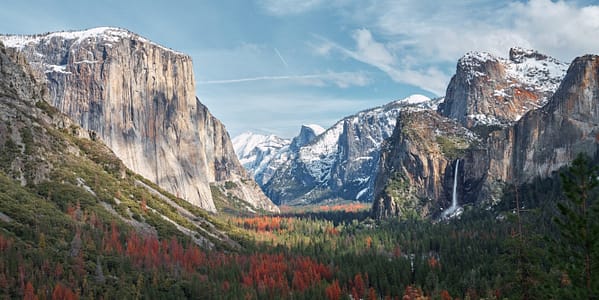
National Park DUI in California
Can a park ranger pull you over for DUI on your weekend trip to Yosemite or Joshua Tree? The answer surprises most California drivers. Park rangers possess full federal law enforcement authority, including the power to conduct DUI stops on federal property. While many people assume these officers simply patrol trails and enforce camping regulations, they're trained law enforcement agents who can arrest you for impaired driving. Understanding your rights and the unique legal challenges of federal DUI charges is crucial if you find yourself in this situation.
Can Park Rangers Pull You Over for DUI in California?
Park Rangers Have Federal Law Enforcement Authority
National Park Service Law Enforcement Rangers are uniformed federal law enforcement officers with broad authority to enforce federal and state laws within American National Park Service sites. These officers serve as the primary police agency in units of the National Park System. Their law enforcement powers extend far beyond issuing camping citations or checking permits.
Rangers enforce laws covered in Title 36 of the Code of Federal Regulations, which governs conduct on federal lands. They also enforce United States Code provisions, most commonly Title 16 (conservation laws), Title 18 (crimes and criminal procedure), and Title 21 (food and drug laws). Under the Assimilative Crimes Act, 18 U.S.C. § 13, rangers have authority to enforce any state law for which there is not a federal equivalent in areas with exclusive and concurrent jurisdiction.
The scope of their power varies based on the type of jurisdiction the federal property holds. In units with exclusive jurisdiction, law enforcement is conducted solely by NPS Law Enforcement Rangers or the U.S. Park Police. Many NPS units have concurrent jurisdiction and share law enforcement authority with state or local county agencies. Some areas have proprietary or partial jurisdiction where state crimes fall solely under state or county authority.
Where Park Rangers Can Stop You
Rangers can pull you over for DUI anywhere within the boundaries of national parks and federal properties under their jurisdiction. Their primary authority is tied to National Park Service lands and certain federal properties. In California, this includes popular destinations like Yosemite National Park, Joshua Tree National Park, Death Valley National Park, Sequoia and Kings Canyon National Parks, and other NPS-managed sites.
The jurisdictional reach extends beyond obvious park boundaries. Rangers can enforce laws in areas immediately adjacent to parks under specific circumstances. If they witness a violation inside park boundaries, they may initiate a stop just outside those boundaries. Cross-deputization agreements with state and local authorities can grant rangers concurrent arrest and enforcement powers in surrounding areas. These arrangements are typically established through memoranda of understanding and are common where parks adjoin municipalities.
When a Stop Can Happen
Rangers can initiate traffic stops when they witness traffic violations or have probable cause to believe a crime has been committed. If a ranger observes impaired driving, speeding, or other violations on federal property, they can conduct a lawful traffic stop. The officer must have reasonable suspicion or probable cause, by the same token as any other law enforcement officer.
Hot pursuit situations allow rangers to continue enforcement actions that began on federal property. If they pursue a suspect off federal property or respond to immediate threats to life, safety, or property, they may act under fresh pursuit or emergency-response doctrines. Note that these situations typically require coordination with local law enforcement. Rangers may also respond outside their core jurisdiction under memorandums of understanding with outside law enforcement agencies or through NPS emergency assistance statutes.
During routine administrative duties like checking permits or conducting safety inspections, rangers can discover probable cause for other violations. If probable cause of a crime is discovered during a legitimate stop or inspection, a full search or arrest could result.
Why Federal Property Makes DUI Charges Different
National Parks Are Federal Land
Federal property exists within state boundaries but operates under different legal authority. While geographically located in California, national parks like Yosemite, Sequoia, and General Grant are federal territory where federal law governs. The United States assumes sole and exclusive jurisdiction over these parks, meaning state law takes a backseat in most situations.
This jurisdictional structure creates a separate legal system within California's borders. California retains limited rights, including serving civil or criminal process for matters occurring outside the parks, taxing persons and property, collecting fishing license fees, and allowing residents to vote in county elections. Beyond these narrow exceptions, federal regulations control what happens on park land.
The legal distinction matters because federal courts handle prosecutions rather than California state courts. Even though you're physically in California, you're legally on federal territory. State authorities may have limited or no power over what happens on federal property. For this reason, a DUI arrest by a park ranger leads to federal charges, not state charges.
Other Federal Properties in California
Federal property extends well beyond scenic national parks. Military bases, federal courthouses, post offices, national monuments, and federally owned parking lots all fall under federal jurisdiction. Army installations, Veterans Administration facilities, and federal office buildings throughout California operate under the same federal legal framework.
Any land or facility owned, operated, or controlled by the federal government qualifies as federal property for DUI enforcement purposes. Drivers often fail to realize they've entered federally controlled areas until after an arrest occurs. Roads maintained by the federal government, parking structures at federal buildings, and even certain highways can trigger federal jurisdiction.
The type of federal property influences which laws apply. National parks follow the Code of Federal Regulations. Military bases may impose additional military DUI charges. Other federal properties rely on the Assimilative Crimes Act, which allows federal courts to adopt state DUI laws when no specific federal statute covers the offense.
How Jurisdiction Affects Your Case
Federal DUI cases follow Federal Sentencing Guidelines rather than California's sentencing structure. These guidelines consider your criminal history, offense severity, and aggravating or mitigating circumstances when determining punishment. Penalties can differ substantially from what you'd face in state court for the same conduct.
Identifying which federal agency has jurisdiction over the property where your arrest occurred is crucial. The FBI, DEA, Border Patrol, or National Park Service may oversee different federal areas. Each agency operates under specific regulations that impact your defense strategy and potential penalties.
Federal regulations applicable to particular property types can substantially affect case outcomes. National Park Service regulations differ from military base rules, which differ from regulations governing other federal facilities. Understanding these distinctions helps attorneys build effective defenses and anticipate prosecution tactics in federal court.
Federal DUI Laws That Apply in California National Parks
36 CFR 4.23: The Main Federal DUI Regulation
Congress empowered the Secretary of the Interior to regulate federal land, including national parks. The Department of the Interior promulgated rules governing DUI and traffic offenses found at 36 CFR 4.23.
Two distinct violations exist under this regulation. Operating or being in actual physical control of a motor vehicle is prohibited while under the influence of alcohol or drugs to a degree that renders the operator incapable of safe operation. The second violation occurs when the alcohol concentration in the operator's blood or breath is 0.08 grams or more of alcohol per 100 milliliters of blood or 0.08 grams or more of alcohol per 210 liters of breath.
The regulation clarifies that legal entitlement to use alcohol or drugs provides no defense. An operator who has been legally entitled to use alcohol or another drug remains subject to prosecution under these provisions.
Testing procedures follow specific protocols. At the request or direction of an authorized person with probable cause, operators must submit to one or more tests of the breath, saliva, or urine for determining blood alcohol and drug content. Blood samples require a search warrant except when exigent circumstances exist. Refusal to submit to a test is prohibited, and proof of refusal may be admissible in any related judicial proceeding.
Chemical test results supplement the elements of probable cause used as the basis for arrest. If alcohol concentration at the time of testing is less than the specified limit, this fact does not create any presumption that the operator is or is not under the influence.
The Assimilative Crimes Act
The Assimilative Crimes Act allows federal prosecutors to utilize state DUI statutes when no applicable federal law covers specific details of the DUI offense. Under 18 U.S.C. § 13, federal courts often apply state DUI laws when federal regulations are silent on specific issues.
This Act fills gaps in federal criminal law. Any act or omission not made punishable by federal law but punishable under state law becomes a federal offense subject to like punishment when committed on federal property. For DUI cases, federal authorities can apply California state DUI laws on federal lands through this mechanism.
The Act incorporates enhanced penalties for certain circumstances. An additional term of imprisonment of not more than 1 year applies if a minor (other than the offender) was present in the motor vehicle when the offense was committed and state law does not provide an additional term under those circumstances.
BAC Limits and Impairment Standards
Federal regulations establish a 0.08% BAC as the standard threshold. However, state law supersedes federal limits if it establishes more restrictive alcohol concentration limits.
California state DUI law requires at least a 0.08 blood alcohol level for an ordinary DUI, just 0.04 for commercial drivers, and 0.01 blood alcohol for minor drivers. These California standards apply on federal property within the state's borders through the regulatory framework.
Impairment alone suffices for prosecution regardless of BAC level. Drivers impaired to a degree rendering them incapable of safe operation face charges even when testing below 0.08%. Other competent evidence bearing upon impairment remains admissible regardless of chemical test results.
Penalties You Face for a Federal DUI in California
Federal DUI convictions carry penalties that differ significantly from California state charges. Classification as a Class B misdemeanor doesn't diminish the severity of consequences you'll face.
Fines and Financial Consequences
Maximum fines reach $5,000 for federal DUI convictions. This amount is five times California's $1,000 maximum for first-offense state DUI charges. The exact fine depends on your BAC level, prior DUI history, and whether injuries or property damage occurred. Fines can range from $500 to the full $5,000 maximum.
In addition to criminal fines, you may face costs for mandatory alcohol education programs. Property damage on federal land triggers additional charges and financial liability.
Jail Time and Federal Prison
First-time federal DUI offenders face up to six months in federal custody. This sentence must be served in a Federal Bureau of Prisons facility, which could be located far from your home and family. Federal prison differs substantially from local county jail where state DUI sentences are typically served.
Enhanced penalties apply under specific circumstances. The Assimilative Crimes Act adds imprisonment of more than 1 year if serious bodily injury occurs, up to 5 years if a minor suffers serious injury, or up to 10 years if a minor dies. High BAC levels, accidents causing injuries or death, and prior convictions all trigger longer sentences.
License Suspension
Failure to request a DMV hearing within 10 calendar days of arrest results in automatic suspension for a minimum of four months. Refusal to submit to chemical testing leads to loss of driving privileges for at least one year.
The DMV imposes these suspensions separately from federal penalties. California's administrative suspension process runs parallel to federal criminal proceedings.
Probation Requirements
Federal probation can last up to five years. The United States Probation Office supervises your probation, including home visits by probation officers. Mandatory DUI education programs become part of your probation conditions.
Criminal Record Impact
Federal DUI convictions cannot be expunged without a presidential pardon. The permanent criminal record affects employment prospects, particularly for positions requiring security clearances or federal employment. Federal convictions may restrict access to federal property and disqualify you from certain federal jobs.
What to Do if a Park Ranger Stops You for DUI
Stay Calm and Be Cooperative
Pull over safely when you see flashing lights behind you on federal property. Keep your hands visible and avoid sudden movements. Rangers face dangerous situations daily during traffic stops, and your calm demeanor reduces tension. Remain polite and respectful throughout the encounter, regardless of how the officer behaves toward you. Your attitude during the stop influences how rangers, prosecutors, and judges view your case later.
Know Your Rights During the Stop
You must provide identification and vehicle documentation, but you're not obligated to answer questions beyond basic identifying information. Officers typically ask if you've been drinking. Do not admit to consuming any amount of alcohol. Many drivers believe saying "just one beer" helps their situation, but this admission gives rangers evidence they need to justify further investigation.
You can politely decline to answer questions by stating you wish to remain silent until speaking with your attorney. Field sobriety tests are voluntary, and you may refuse them. Rangers cannot physically force you to perform these tests.
Whether to Take a Chemical Test
Chemical tests present a different situation. Refusing blood or breath tests on federal land is a federal crime that can result in a six month jail sentence. This charge stands even if you're not convicted of DUI. Rangers must inform you of federal refusal laws, not just California's implied consent law. In one Yosemite case, a federal court dismissed refusal charges because the ranger only mentioned state law and failed to explain federal consequences.
Get Legal Help Immediately
Contact an attorney experienced in federal DUI defense as soon as possible after your arrest. Federal cases require knowledge of federal court procedures and regulations that differ substantially from state court. Specialized attorneys understand how to challenge federal stops, examine evidence, and build defenses specific to federal property.
Conclusion
Park rangers possess full federal law enforcement authority to stop and arrest you for DUI on federal property in California. As a matter of fact, federal DUI charges carry different penalties than state charges, including higher fines, federal prison time, and permanent criminal records that cannot be expunged.
Understanding your rights during a traffic stop is essential. You must provide identification but can decline to answer questions or perform field sobriety tests. Chemical test refusal carries separate federal criminal penalties.
According to your specific situation, contact an attorney experienced in federal DUI defense immediately after arrest. Federal cases require specialized knowledge that standard DUI attorneys may not possess.
References
https://answers.justia.com/question/2026/03/01/can-u-s-national-park-rangers-conduct-tr-1105757
https://www.law.cornell.edu/cfr/text/36/4.23
https://www.law.cornell.edu/uscode/text/18/13

Need a Criminal Defense Attorney? CALL NOW: 213-932-8922
Yuliya Kelmansky is an Expert Criminal Defense Attorney who has over 10 years of practice defending a variety of criminal cases.