


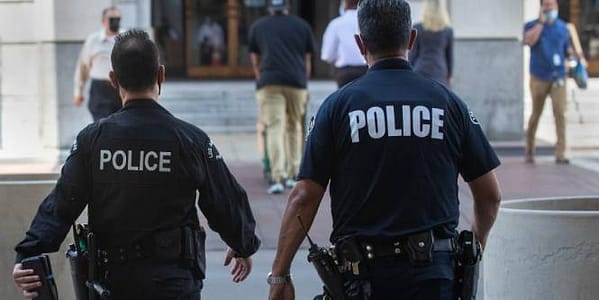
How to Challenge a Sting Operation in LA Sex Crime Cases
Sting operations can lead to serious sex crime charges, even when defendants believe law enforcement used questionable or coercive tactics. Law enforcement agencies in Los Angeles regularly conduct undercover operations targeting alleged sexual offenses, and many defendants feel trapped by tactics that pushed them toward criminal behavior they wouldn't have otherwise committed.
Despite these aggressive tactics, you have legal defenses available. Entrapment, constitutional violations, and procedural errors can all serve as grounds to challenge the prosecution's case. This guide explains how to identify weaknesses in sting operations and build a strong defense strategy with your attorney.
Understanding Sex Crime Sting Operations in LA
What Are Sex Crime Sting Operations
Law enforcement uses undercover tactics to catch individuals attempting to engage in illegal sexual activity. A sting operation involves officers posing as prostitutes, clients, or minors to identify and arrest people involved in sex-related crimes. Officers create undercover profiles, initiate conversations, and arrange meetings that may culminate in arrests once a suspect arrives at a designated location.
These operations aim to catch people engaging in two primary categories of offenses: prostitution-related activities and sex crimes involving minors. Officers document communications and interactions that prosecutors may later use as evidence. Courts have upheld law enforcement's right to use deception in these cases, provided officers don't cross into entrapment territory.
Common Types of Stings in Los Angeles
Prostitution stings represent one category where undercover officers pose as sex workers or potential clients. Officers might pose as patrons seeking sexual services, driving through targeted neighborhoods, or entering massage parlors. Alternatively, they might answer advertisements offering sexual services and arrange meetings. From January 2017 to November 2025, FBI arrest data shows more than 55,000 women were arrested for prostitution offenses, compared to 10,500 men arrested for purchasing prostitution services.
Child sex crime stings form the second major category. Officers impersonate minors on dating websites, web chatrooms, instant messaging apps, and social media platforms. In 2018 alone, the U.S. Department of Justice's Internet Crimes Against Children Task Force Program conducted more than 71,200 investigations, arresting more than 9,100 individuals. Undercover profiles used by officers generally feature sexually suggestive nicknames, though the age of the fake minor typically doesn't appear on public account information.
Los Angeles County and surrounding areas conduct both proactive operations, where officers initiate contact before offenses occur, and reactive operations, where officers intervene after a suspect solicits someone online. Some operations conclude within hours, while others extend for weeks or months.
How Law Enforcement Sets Up These Operations
Officers create opportunities for suspected criminals to reveal their intentions through carefully planned interactions. In prostitution stings, these operations often take place in hotel rooms, parking lots, on dating or escort websites, through apps or classified ads, and on street corners in targeted neighborhoods.
For child sex crime stings, officers establish fake online profiles posing as underage minors or adults willing to arrange meetings with minors. They use social media platforms, dating apps, and various online forums to interact with individuals. The undercover officer engages suspects in conversations that gradually become more explicit, often discussing illegal sexual acts. Officers maintain logs of each online interaction because each exchange could constitute a potential charge and serve as evidence.
Officers don't need to prove that a sexual act occurred to make an arrest. The agreement itself provides sufficient grounds for charges. Once conversations progress to the point where suspects arrange meetings for illegal purposes, law enforcement sets up locations for arrests. When suspects arrive at predetermined locations, officers typically arrest them immediately. All communications conducted in-person, online, by text, or over the phone provide evidence that defendants were soliciting or selling sex for compensation.
Legal Limits on Undercover Police Activity
What Police Can Legally Do in Sting Operations
Law enforcement agencies require proper authorization and oversight before initiating undercover sex crime operations. Officers can legally conceal their identities and pose as criminals, victims, or participants in illegal activities. They may suggest crimes and create opportunities for suspects to reveal criminal intentions without crossing into entrapment.
Police can initiate contact with suspects, engage in conversations about illegal activities, and arrange meetings designed to result in arrests. Officers don't need to identify themselves as law enforcement during these interactions. They can use deception as an investigative tool, provided their tactics remain within constitutional boundaries.
What Crosses the Line Into Illegal Conduct
Entrapment occurs when officers induce or coerce someone into committing a crime they wouldn't have otherwise committed. FBI guidelines specifically require that undercover activities involving inducement be authorized only when the illegal nature of the activity is reasonably clear to potential subjects, and there's either a reasonable indication the subject is predisposed to engage in such activity or the opportunity has been structured to attract only predisposed individuals.
Outrageous government conduct represents another boundary. Courts have overturned convictions when officers initiated and escalated sexual contact beyond what was necessary for investigation. In one case, a court dismissed prostitution charges after police paid a civilian informant to purchase sex acts, citing the informant's questionable motives and officers' unprofessional conduct. The FBI's own guidelines acknowledge risks, including improper execution that establishes defenses such as entrapment or outrageous government conduct.
The Brown case illustrates extreme violations. FBI agents physically and psychologically intimidated a non-target, questioning him for multiple hours without an attorney present and detaining him against his will. Agents threatened prosecution of twenty-one different crimes carrying sixty years imprisonment and over a million dollars in fines. The court concluded that the Fifth Amendment due process guarantee against conscience-shocking injury imposes clear limits on law enforcement conduct.
Constitutional Rights During Sting Operations
Your constitutional protections remain intact regardless of allegations. The Fourth Amendment protects against unlawful searches and seizures. If officers seize evidence without proper warrants, your attorney can challenge the case's validity.
The Fifth Amendment ensures your right to remain silent and avoid self-incrimination. You're not obligated to provide statements against yourself without legal counsel, and coerced confessions can be excluded as evidence. The Sixth Amendment guarantees legal representation and an impartial jury.
Due Process Violations in Sex Crime Cases
Due process violations occur when law enforcement falsifies evidence, uses excessive coercion, or engages in discriminatory practices. FBI guidelines require routine assessment of risk factors, including agent safety, damage through manipulation of processes, needless harm to targets' reputations, and injury to third parties.
Arrests based on unconstitutionally vague laws violate due process. When laws concerning "lewd" or "obscene" conduct fail to provide specific notice that particular behavior is illegal, arrests become illegitimate under the void-for-vagueness doctrine. One North Carolina man was wrongfully arrested for casual flirting with an undercover park ranger, though such conduct wasn't illegal by itself.
The Entrapment Defense in LA Sex Crime Cases
What Qualifies as Entrapment Under California Law
Entrapment provides a complete defense when law enforcement conduct would cause a normally law-abiding person to commit a crime. California applies an objective test, meaning courts examine the officer's behavior rather than the defendant’s intent, criminal history, or character. You carry the burden of proving entrapment by a preponderance of the evidence, which requires showing it's more likely than not that you were entrapped.
The defense centers on whether police engaged in overbearing conduct such as badgering, persuasion by flattery or coaxing, repeated and insistent requests, or appeals to friendship or sympathy. Conduct that makes commission of the crime unusually attractive to a normally law-abiding person also qualifies, including guarantees that the act isn't illegal, promises the offense would go undetected, or offers of extraordinary benefit.
Certain sex crime investigations may give rise to entrapment claims because they often involve extensive undercover interaction. For lewd conduct cases, entrapment occurs when officers block exits and falsely claim the conduct is legal in private. In prostitution stings, following suspects for blocks while pleading to provide services can constitute entrapment. Child pornography cases show entrapment when officers spend weeks cultivating friendships and relentlessly pressuring reluctant individuals to order illegal materials.
Inducement vs. Opportunity
Inducement differs fundamentally from providing an opportunity to commit a crime. Officers can set up sting operations, creating circumstances for criminal actions without entrapping anyone. An opportunity involves mere temptation to violate the law, not being forced to do so.
Entrapment requires law enforcement to urge, harass, or otherwise overly encourage someone to commit a crime they wouldn't otherwise commit. This may result from threats, intimidation, extended fraud, or any means by which the defendant was essentially forced into criminal activity. In contrast, an undercover officer alerting a defendant about an unprotected warehouse shipment provides opportunity, not entrapment. However, threatening punishment unless the defendant commits the burglary, or appearing daily to harass a disinterested defendant, amounts to entrapment.
Evidence That Supports an Entrapment Claim
Recorded conversations, witness testimony, and proof of excessive persuasion support entrapment claims. Communication transcripts showing reluctance to continue conversations or officers using undue persuasion benefit your case. Evidence showing reluctance or resistance, combined with aggressive police conduct, can strengthen an entrapment defense.
Character witnesses attesting to your law-abiding nature and lack of sexually deviant behavior strengthen the defense. Documentation of repeated solicitation, appeals to sympathy, or promises of rewards provides essential proof.
Common Prosecution Arguments Against Entrapment
Prosecutors argue predisposition, claiming you were already willing to commit the crime, and law enforcement only provided the opportunity. Prosecutors may point to prior conduct, criminal history, or a defendant’s willingness to participate as evidence against an entrapment claim. Your responses to the officer’s urging and the seriousness of the crime receive scrutiny.
When Entrapment Defense Works
Entrapment succeeds when you prove police conduct would induce a normally law-abiding person to commit the offense. The defense works best when you lack predisposition, and officers use pressure, manipulation, or promises of reward. Cases involving overbearing tactics against defendants with clean criminal histories show the strongest potential for acquittal.
Identifying Weaknesses in the Prosecution's Case
Reviewing Communication Records and Transcripts
Defense attorneys scrutinize every text message, email, and recorded conversation for evidence that undermines the prosecution's narrative. Digital communications provide time-stamped records showing who initiated contact, the tone of exchanges, and whether you expressed reluctance or hesitation. Authentication is critical because digital evidence can be altered, incomplete, or presented without proper context. Your attorney will verify whether the account actually belongs to the alleged parties and whether content integrity was maintained throughout evidence collection.
Inconsistencies between different statements made by witnesses or alleged victims weaken credibility. Children resisted credibility challenges 54% of the time during cross-examination, significantly more often than they provided compliant responses at 26.8%. Defense lawyers' credibility-challenging questions focused generally on honesty 77.8% of the time, while the remainder referred to specific inconsistencies in testimony. Questions focused on overly specific or irrelevant details elicit inconsistencies that compromise testimony, particularly when witnesses don't understand how peripheral responses affect their credibility.
Examining Police Reports for Inconsistencies
Police reports contain gaps, contradictions, and subjective interpretations that your attorney can expose. Reports vary significantly in quality due to individual writer differences, experience levels, time constraints, and workload stress. Some reports consist of only 3 pages, while others exceed 180 pages, with the variation indicating incomplete documentation of relevant facts. Redacted sections protecting victim identities or sensitive information may also hide exculpatory evidence.
Officers might fail to conduct witness interviews or document arguments that led to investigations. Reports sometimes lack information about suspects despite focusing heavily on victims and crime scenes. Your attorney will identify these deficiencies and question why certain investigative steps were skipped or inadequately documented.
Challenging the Legitimacy of Evidence
For evidence to be admissible, it must be relevant, legally obtained, and not unfairly prejudicial. Chain of custody documentation must track every transfer of devices or digital files. Missing documentation weakens admissibility and creates reasonable doubt about evidence tampering or contamination.
Forensic evidence faces scrutiny for lab errors, outdated testing methods, or misinterpretation. Digital files can be altered, edited, or spoofed, requiring the prosecution to prove authenticity. Partial screenshots or selective message threads distort meaning and context.
Vague or Unconstitutional Laws
Criminal laws must define prohibitions with sufficient definiteness that ordinary people can understand what conduct is prohibited. The void-for-vagueness doctrine requires minimal guidelines to govern law enforcement and prevent arbitrary enforcement. Sex offender residency restrictions have been struck down when neither ordinary persons nor law enforcement could understand the statutory language defining boundaries.
Whether the Conduct Was Actually Illegal
Consent provides a valid defense when sexual acts were consensual and supported by messages, videos, or witness testimony. Mistaken identity, insufficient evidence, and alibis demonstrating presence elsewhere during alleged crimes can result in acquittals or dismissed charges.
Building Your Defense Strategy with an Attorney
Gathering Critical Evidence Early
Retain legal representation immediately and refuse to speak with investigators without your attorney present. Early statements can worsen your legal position regardless of your intentions. Your attorney will issue preservation letters to secure critical data, including messages, phone records, and video footage, before deletion or loss occurs.
What Your Defense Attorney Will Investigate
Your attorney will examine every aspect of the sting operation through the discovery process. This includes obtaining transcripts, chat logs, and all communication records that provide critical defense evidence. Police reports receive scrutiny for inconsistencies, procedural errors, and gaps in documentation. Forensic experts may examine digital evidence for authenticity issues, alterations, or gaps in the chain of custody. Your attorney might consult forensic linguists to examine how language was used in conversations, distinguishing between fantasy role-play and predatory intent. Besides standard investigation, psychologists can testify about differences in mental state between someone engaged in fantasy versus actual criminal predisposition.
Potential Motions to Dismiss or Suppress Evidence
Motions to suppress exclude illegally obtained evidence based on constitutional violations. If law enforcement violated Fourth Amendment protections during searches or Fifth Amendment rights during interrogations, your attorney can file motions to exclude that evidence. Successful suppression can weaken the prosecution's case significantly or lead to complete dismissal.
Negotiating with Prosecutors
Defense attorneys leverage case weaknesses during plea negotiations to secure reduced charges or alternative resolutions. Prosecutors recognize attorneys willing to expose flaws in sting operations, creating an incentive for favorable agreements outside courtroom battles.
Need An Attorney?
Challenging a sting operation requires thorough examination of law enforcement tactics, constitutional protections, and procedural compliance. You have legitimate defenses available when officers cross legal boundaries through entrapment, coercion, or due process violations.
The key to mounting an effective defense is securing experienced legal representation immediately. Your attorney can identify weaknesses in communication records, expose police report inconsistencies, and challenge evidence authenticity. Indeed, many sting operations contain exploitable flaws that skilled defense lawyers recognize and leverage during negotiations or trial.
Don't face these serious charges alone. With the right legal strategy and thorough investigation, you can protect your rights and challenge questionable law enforcement conduct effectively.
References
[1] – https://www.justanswer.com/criminal-law/28do9-legal-fbi-set-sting-operations-con.html
[2] – https://oig.justice.gov/sites/default/files/archive/special/0509/chapter4.htm
[3] – https://pmc.ncbi.nlm.nih.gov/articles/PMC6760857/
[4] – https://pmc.ncbi.nlm.nih.gov/articles/PMC7642213/
[5] – https://www.congress.gov/crs-product/IF13091
[6] – http://www.riaclu.org/news/federal-judge-rules-unconstitutional-states-residency-restriction-sex-offenders/

Need an Attorney? CALL NOW: 213-932-8922
Yuliya Kelmansky is an Expert Attorney who has over 10 years of practice defending a variety of cases.