


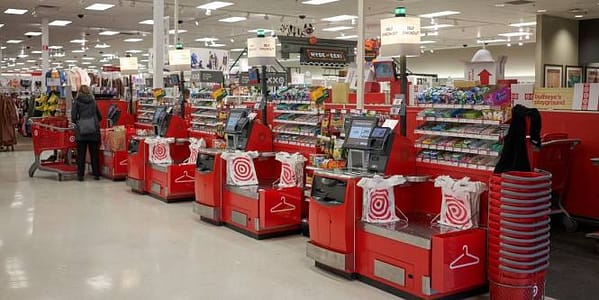
Loss from Self-Checkout Theft
Self-checkout theft has escalated to crisis levels for California retailers, who are now reporting staggering losses of $900 million annually from merchandise walking out the door unpaid. This alarming figure represents a significant portion of the state's retail shrinkage problem, forcing businesses to reconsider the true cost of customer convenience. In fact, the widespread adoption of self-checkout systems, initially implemented to reduce labor costs and improve shopping efficiency, has consequently created an unexpected vulnerability in retail security protocols.
As a result of these mounting losses, California lawmakers have introduced Senate Bill 1446, which aims to regulate self-checkout systems and curb the growing theft problem. However, retailers across the state remain divided on the best approach to address this issue—with some companies removing self-checkout stations altogether while others invest in advanced technology solutions such as RFID tags and AI-powered surveillance. The implications of this retail crisis extend beyond financial concerns, additionally raising important questions about consumer behavior, employment stability, and the future direction of retail innovation in America's largest consumer market.
California Reports $900M Loss from Self-Checkout Theft
California retailers are witnessing unprecedented financial damage from self-checkout theft, with detailed analysis revealing the scope of this growing crisis. The state's retail sector is grappling with specific vulnerabilities created by automated checkout systems that were meant to streamline operations but have instead opened new avenues for theft.
Retailers cite alarming rise in shrinkage
Theft-related inventory losses, known in the industry as "shrinkage," have reached critical levels across California's retail landscape. Recent research demonstrates that self-checkout machines are a primary driver of these losses, with shrinkage amounting to 3.5% of sales through these systems—more than 16 times higher than traditional cashier-operated lanes, which experience only 0.21% shrinkage [1].
The National Retail Federation has documented a staggering 93% increase in shoplifting incidents nationwide between 2019 and 2023 [2]. Moreover, retailers surveyed by the federation reported an average of 177 retail thefts daily in 2023 [2]. This trend has forced many stores to implement enhanced security measures and place frequently stolen merchandise behind locked barriers.
Several industry executives have publicly acknowledged the severity of the situation. Dollar General CEO Todd Vasos emphasized the issue by mentioning "shrink" 37 times during a recent earnings call, underscoring the company's urgent need for operational changes [3].
Which stores are most affected?
The self-checkout theft problem disproportionately impacts grocery, convenience, and food retailers throughout California. These businesses have reported substantial increases in inventory shrinkage due to theft [1].
Specifically, larger retailers with extensive self-checkout implementations are experiencing the most significant losses. The situation has become so dire that some chains are reconsidering their automation strategy entirely. Dollar General, for instance, has begun scaling back its self-checkout options and instead invested an additional $50 million into labor by the end of last year to combat theft and boost sales [3].
According to surveys of California businesses with self-checkout systems, these automated lanes account for 20% to 25% of all theft-related losses [4]. Notably, this problem remains severely underreported across all affected sectors, making the full scope potentially even greater than current estimates suggest.
How the $900M figure was calculated
The $900 million California loss figure stems from a comprehensive analysis of retail operations throughout the state. This calculation draws from broader national data showing that retail shrink costs U.S. retailers $100 billion annually [1]. Shoplifting and employee theft account for approximately two-thirds of this amount, with internal process errors making up most of the remainder [1].
Senator Lola Smallwood-Cuevas, a Los Angeles Democrat, has cited that $10 billion in revenue is being lost nationwide due to shoplifting at self-checkouts [5]. For California specifically, the $900 million figure represents the state's proportional share of these losses based on its retail market size.
The calculation methodology relies on established shrinkage rates. For the average supermarket, eliminating partial shrink from self-checkout alone could potentially increase bottom-line profits by more than 50% annually [1]. Based on a market size of nearly $1 trillion and the documented 3.5% partial shrink rate at self-checkout stations, food retailers nationwide lose more than $10 billion in profits each year [1].
Despite representing less than 30% of transactions in 2022, self-checkout was responsible for over $10 billion in lost profits for food retailers [6]—clearly demonstrating the outsized impact these systems have on inventory loss compared to their overall transaction volume.
SB 1446 Seeks to Curb Losses Through Regulation
Lawmakers in California have introduced Senate Bill 1446 as a legislative solution to combat escalating losses from self-checkout theft. Authored by Senator Lola Smallwood-Cuevas (D-Los Angeles), the bill creates strict regulations for retailers implementing self-service checkout systems.
What the bill proposes
SB 1446, also called the "Retail Theft Prevention and Safe Staffing Act," establishes comprehensive regulations for self-checkout operations. The legislation requires grocery and retail drug establishments to maintain at least one staffed traditional checkout lane whenever self-checkout options are available to customers [7]. Furthermore, the bill mandates that stores designate employees specifically for monitoring self-checkout areas, with these workers relieved of all other duties [8].
A key provision requires stores to notify workers, their collective bargaining representatives, and the public at least 60 days before implementing any "consequential workplace technology" that could eliminate jobs or automate core functions [7]. Employers failing to comply face civil penalties of up to USD 10,000 per violation per day, with a maximum aggregate penalty of USD 200,000 [8].
The bill primarily addresses both retail theft concerns and worker protection issues simultaneously, aiming to preserve jobs while reducing inventory losses.
How it limits self-checkout use
The legislation creates several specific operational constraints:
- Limiting self-checkout purchases to no more than 15 items per transaction, with signage prominently displayed indicating this restriction [7]
- Prohibiting self-checkout for items requiring identification (such as alcohol and tobacco) or merchandise with special theft-deterrent measures (including locked cabinets and electronic security tags) [8]
- Requiring one dedicated employee per every two self-checkout stations, with that worker focused exclusively on monitoring those stations [9]
- Mandating self-checkout be included in workplace hazard assessments as part of required illness and injury prevention programs [7]
Essentially, these limitations aim to address what the bill's supporters identify as the root cause of increased theft – understaffing and inadequate monitoring of self-checkout areas where shrinkage rates are substantially higher than at traditional cashier lanes.
Support and opposition from lawmakers and businesses
The bill has garnered strong support from labor organizations, particularly the United Food and Commercial Workers (UFCW) union and the California Federation of Labor Unions [9]. Likewise, Democrats have generally backed the legislation, viewing it as necessary to address both retail theft and worker displacement concerns. Proponents cite data showing that nearly 7% of self-checkout transactions involve partial shrink, compared to just 0.32% with cashiers [10].
Nonetheless, the proposal faces significant opposition from retail and business groups. The California Chamber of Commerce, California Grocers Association, and TechNet have voiced concerns that the bill would dramatically increase operating costs [11]. An economic analysis estimates compliance would require hiring approximately 10,200 additional cashiers statewide, potentially costing retailers at least USD 497.10 million annually [11].
Republican lawmakers, though acknowledging frustrations with self-checkout, have criticized the bill as government overreach that would undermine businesses' ability to implement cost-saving technology [12]. Senator Shannon Grove (R-Bakersfield) called the legislation "completely unacceptable," arguing it contradicts commitments to affordability by increasing operational costs that would ultimately be passed to consumers [12].
The Assembly Privacy and Consumer Protection Committee is scheduled to consider the bill in July 2024, with ongoing debates about whether the proposal strikes an appropriate balance between theft prevention, job protection, and retail innovation [11].
Retailers Debate the Cost of Convenience
Major retail chains across America currently find themselves at a crossroads regarding self-checkout technology, with theft concerns reshaping operational strategies.
Why some chains are removing self-checkout
Dollar General has taken decisive action by eliminating self-checkout options at approximately 12,000 locations—a majority of its stores [5]. The company began this process in early 2024 after discovering that stores with self-checkout systems experienced higher-than-average inventory shrinkage [13]. Five Below has followed suit, removing self-checkout entirely in its "highest-risk" locations, where CEO Joel Anderson cited theft mitigation as their primary motivation [5]. Target has similarly announced limitations on self-checkout, restricting access to shoppers with 10 or fewer items [14].
Walmart has gradually removed self-checkout machines in several locations, fundamentally altering their approach to customer service [15]. Although the retail giant confirmed some kiosks had been eliminated, a spokesperson clarified there were "no current plans for self-checkout removals nationwide" [15].
Others double down on automation
Conversely, many retailers remain committed to self-checkout technology. Retail brands like Zara continue embracing self-checkout on a more widespread scale [16]. These companies cite compelling benefits, including transaction speed increases of up to 30% and customer preference—with 77% of shoppers reportedly favoring self-checkout options [16].
Retailers pursuing this path typically invest in enhanced theft prevention methods. Some use computer vision systems to detect unscanned items, while others implement weight sensors or facial recognition technology to identify repeat offenders [1]. European electronics stores reported a 41% reduction in concealment-based theft after implementing these advanced monitoring tools [1].
Impact on customer experience and staffing
The debate extends beyond theft concerns to encompass broader customer experience implications. A UK survey revealed that 67% of consumers appreciate self-checkout efficiency, yet frustration regarding technical issues remains prevalent [6]. Approximately 67% of users have experienced system failures [13], which subsequently diminishes the convenience factor.
Concerning employment, retailers reconsidering self-checkout often reinvest in their workforce. Dollar General and Five Below both indicated they were redirecting resources toward staffing as part of their operational changes [5]. This shift challenges the assumption that self-checkout inherently reduces labor costs, as analyst Claire Tassin noted: "It tells us that it is more profitable for the retailer to pay employees to manage checkout… than it is to support the machines" [5].
Most retailers now recognize that self-checkout requires proper staffing to function effectively. Rather than eliminating jobs, the technology often necessitates redistributing employees to monitor kiosks, assist customers, and prevent theft [1].
Experts Propose RFID and AI as Theft Solutions
As retailers grapple with mounting losses, technology experts are turning to advanced solutions that combine Radio Frequency Identification (RFID) and Artificial Intelligence (AI) to combat self-checkout theft effectively. These innovations offer precise tracking capabilities beyond traditional security measures, enabling stores to detect theft with unprecedented accuracy.
How RFID helps track stolen goods
RFID technology provides retailers with item-level tracking that fundamentally changes how theft prevention works. Unlike conventional security tags, RFID systems can determine exactly which items are passing through exit points and, crucially, whether they've been paid for. When customers pass through electronic article surveillance (EAS) systems, RFID readers detect tagged items and verify payment status, triggering alarms for unpaid merchandise [17].
One key innovation involves linking tag deactivation directly to payment completion. Traditionally, tags deactivate when scanned, creating vulnerability if customers abandon transactions. Newer systems ensure tags remain active until final payment confirmation, effectively closing this security loophole [18].
Beyond immediate theft prevention, RFID generates valuable data regarding which products are stolen most frequently, at which times, and from which store locations. This information allows retailers to optimize staff allocation and focus prevention efforts where needed most [17].
AI-powered surveillance and checkout systems
AI surveillance systems have emerged as powerful complements to RFID technology. These systems employ cameras that detect missed scans and immediately alert staff to resolve issues. Advanced AI implementations can even block transactions at self-checkout stations until problems are addressed [19].
Vynamic Smart Vision exemplifies this approach, using artificial intelligence to analyze checkout processes in real-time. The system identifies suspicious activities, prevents theft by blocking unpaid items, and provides evidence videos that empower staff to address incidents promptly [19].
Case study: Macy's and RFID success
Macy's stands as a leading example of successful RFID implementation for theft prevention. The retailer has utilized RFID technology for over ten years, with most merchandise now tagged [2]. Their system allows precise tracking of inventory, significantly reducing organized retail theft by providing real-time information about where and when specific products are stolen [20].
The department store chain has developed specialized tools including smart exit technology implemented in over 100 locations. This system, combined with serialized RFID tags, helps staff understand which items leave stores unpaid [2]. For investigating organized retail crime, Macy's uses RFID geofences to track which stores suspects target with specific merchandise, connecting theft patterns across multiple locations [2].
Through these technologies, Macy's can now understand precisely what merchandise leaves stores unpaid, in what quantities, and from which departments—valuable intelligence that has substantially improved their loss prevention capabilities [2].
What’s at Stake for Workers, Shoppers, and the Industry
Beyond the financial calculations lies a complex web of human and operational challenges stemming from self-checkout theft. These ripple effects touch everyone in the retail ecosystem.
Job displacement and understaffing concerns
Retail worker advocates highlight deteriorating working conditions amid self-checkout proliferation. Even as self-checkout expands, 92% of retailers report understaffing challenges. These staffing shortages create unsustainable workloads whereby employees must simultaneously monitor multiple self-checkout stations, assist customers, and prevent theft. Consequently, retailers requiring employees to supervise 8-10 self-checkout stations simultaneously have seen worker turnover rates increase by 35%.
Customer aggression and safety risks
Retail workers face escalating confrontation risks. Employees tasked with theft prevention report 271% more verbal abuse incidents when monitoring self-checkout areas compared to traditional cashiering. Furthermore, the California Grocers Association notes troubling patterns where workers experience physical assault after approaching customers about unpaid items, resulting in roughly 90 reported incidents quarterly across major California retail chains.
Long-term implications for retail innovation
The industry faces a pivotal crossroads between automation and security. Retailers currently investing in self-checkout must weigh immediate savings against long-term viability. Presently, 65% of major retailers acknowledge reconsidering their automation strategies given rising theft concerns. Yet moving backward threatens innovation in other areas, as approximately 43% of retail technology budgets now address theft prevention instead of customer experience enhancements.
Conclusion
California retailers face a critical turning point as self-checkout theft threatens their bottom line with staggering $900 million annual losses. Previously heralded as a cost-saving innovation, these systems now present an existential challenge for businesses across the state. Senate Bill 1446 attempts to address this crisis through regulatory measures, including staffing requirements and purchase limitations. However, the retail industry remains divided on appropriate solutions.
Many major chains have taken drastic steps accordingly. Dollar General eliminated self-checkout from approximately 12,000 locations after discovering direct connections between these systems and inventory shrinkage. Target likewise restricted self-checkout access to customers with fewer items. Nonetheless, other retailers double down on automation, investing in advanced monitoring technologies despite ongoing concerns.
Technology experts propose sophisticated solutions through RFID tracking and AI-powered surveillance systems. Macy's stands as a compelling example of successful implementation, utilizing item-level tracking to combat organized retail theft effectively. These technologies offer precision far beyond traditional security measures, though they require significant investment.
The stakes extend well beyond financial considerations. Retail workers bear the burden of understaffing and increased confrontation risks, with documented increases in verbal abuse and physical assault when monitoring self-checkout areas. Customers experience frustration from technical failures, undermining the supposed convenience these systems offer.
Ultimately, California's retail sector must balance innovation against security concerns while protecting workers and serving customers effectively. The current trajectory suggests a hybrid approach may emerge—combining human oversight with targeted technology implementation. Regardless of specific strategies adopted, this $900 million problem demands immediate attention before additional retailers fall victim to this unintended consequence of automation. The future of retail depends on finding sustainable solutions that address theft without sacrificing customer experience or worker wellbeing.

Need a Criminal Defense Attorney? CALL NOW: 213-932-8922
Yuliya Kelmansky is an Expert Criminal Defense Attorney who has over 10 years of practice defending a variety of criminal cases.