

California AB 1605 Aims to Stop Alcohol Sales to Repeat DUI Offenders
Questions about what time do they stop selling alcohol in CA may soon have a different answer for repeat DUI offenders. California lawmakers have introduced Assembly Bill 1605, legislation that would mark driver's licenses of certain DUI offenders and ban alcohol sales to them entirely. The bill specifically targets drivers with elevated blood alcohol levels, multiple convictions, or DUI cases involving injury or death. While supporters cite alarming statistics about repeat offenders causing fatal crashes, civil rights advocates raise concerns about potential discrimination and enforcement challenges. Understanding this proposed legislation is crucial for anyone facing DUI charges in California.
California Lawmakers Introduce AB 1605 to Mark DUI Offenders' Licenses
What the Bill Proposes
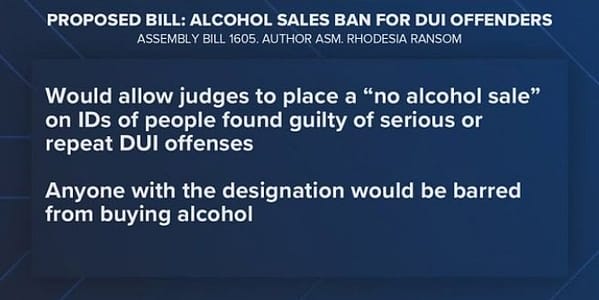
Assembly Bill 1605 grants judges authority to place a "no alcohol sale" notice directly on driver's licenses or Real IDs of serious and repeat DUI offenders. The restriction appears on their identification, requiring stores, bars, and restaurants to refuse alcohol sales. Accordingly, the bill mandates that everyone who sells or furnishes alcoholic beverages must first review written identification issued by California or another state, making violations a misdemeanor.
The proposal follows a similar law recently enacted in Utah, where certain DUI offenders receive licenses marked with a "no alcohol sale" notice. California's approach differs by giving judges discretion to apply the restriction based on the seriousness of the offense and a person's history. Judges can require the designation for up to the length of a person's probation.
The bill requires sellers of alcoholic beverages to refuse service to anyone subject to such an order, making the sale of alcohol to that individual a misdemeanor. Customers at bars, restaurants, and stores would need to show their license before purchasing alcohol, even if they appear of age. Bartenders must manually check every ID before serving a drink.
Who Authored the Legislation
Democratic Assemblymember Rhodesia Ransom of Stockton serves as the lead author of AB 1605. She represents the Tracy district and introduced the measure as part of a bipartisan effort to address California's dangerous driver problem. "We have an epidemic. As a state, we're not leading in resolving this, and we cannot do it by keeping the status quo," Ransom stated during an Assembly Public Safety Committee hearing.
The legislation has attracted support from multiple lawmakers across party lines. Bill co-authors include Juan Alanis, Anamarie Farias, Steve Bennett, Stan Ellis, Corey Jackson, Jerry McNerney, Caroline Menjivar, Cottie Petrie-Norris, Michelle Rodriguez, Susan Rubio, and Catherine Stefani. This bipartisan backing reflects growing concern about impaired driving fatalities statewide.
Ransom joined the statewide organization Mothers Against Drunk Driving (MADD) at a press conference on February 12, 2026, to discuss the legislation and the need to improve road safety across California. She emphasized that the bill addresses the root cause: access to alcohol for people who cannot handle it responsibly or who have demonstrated addiction.
When the Bill Was Introduced
The bill progressed through several legislative stages during early 2026. It passed the Assembly Public Safety Committee with amendments and moved to the Assembly Governmental Organization Committee. Committee hearings discussed the measure on March 24, 2026. The amended Assembly version dated March 26, 2026, was re-referred to the Governmental Organization Committee on April 6, 2026.
The proposal emerged as California grappled with persistent drunk driving deaths. State data reveals more than 110,000 DUI arrests were made statewide in 2021, with about one in four convicted offenders having at least one prior DUI conviction. "Repeated DUIs signal a dangerous pattern that puts lives at risk. When warning signs are this clear, intervention is necessary to protect the public. Judges must have the ability to limit access to alcohol and prevent the next tragedy," Ransom stated.
How the 'No Alcohol Sale' Restriction Works
Judges Decide Who Gets the Marking
AB 1605 does not automatically apply to every DUI conviction. Judges receive discretion to impose the restriction based on the seriousness of the offense, the offender's prior DUI history, and other relevant risk factors. This judicial authority allows courts to evaluate individual circumstances before ordering the alcohol purchase ban.
The court can impose a "No Alcohol Sale" restriction for at least six months, and potentially longer depending on the case. Judges tie the restriction to the offender's probation period, so violating it could carry additional consequences. When granting probation for certain driving under the influence offenses, the court prohibits the person from purchasing alcohol.
Drivers must forfeit their current DMV identification and pay the cost of obtaining a new one. The Department of Motor Vehicles issues an identification card or driver's license with an appropriate designation on the face upon receipt of an abstract of the court record. One California law firm anticipates that licenses and ID cards would likely display a prominent red banner across the top stating the ban.
Where the Ban Applies Across California
The designation bars the person from purchasing alcohol anywhere in California. This statewide restriction covers bars, restaurants, grocery stores, liquor stores, and other retailers. Anyone checking ID for an alcohol purchase must refuse the sale if the notice appears.
The DMV adds a visible "NO ALCOHOL SALE" notation on the front or back of the license or Real ID of covered offenders. When that person tries to buy alcohol, the seller checks ID as usual, sees the notice, and must refuse the sale. Enforcement hinges on ID checks and existing alcohol sales laws.
How Long the Restriction Lasts
Judges can require the designation for up to the length of a person's probation. The bill mandates an alcohol sale ban for at least six months, at the discretion of the judge. The proposed law likely won't go into effect until January 1, 2028. After that time, anyone granted probation for a DUI conviction meeting the criteria would receive a California driver's license or identification card with "NO ALCOHOL SALES," or something similar, displayed on the face of the card.
What Happens If Someone Violates the Ban
Retailers, bartenders, and servers who ignore the notice and sell anyway face administrative or criminal penalties similar to those for selling to minors or visibly intoxicated patrons. The bill makes the sale of an alcoholic beverage to someone subject to such an order a misdemeanor. Sellers of alcoholic beverages must refuse to sell or serve anyone subject to such an order.
AB 1605 covers penalties for anyone selling alcohol to a person on probation and banned from buying alcohol. The legislation requires everyone who sells or furnishes alcoholic beverages to first review written identification, making violations of this requirement a misdemeanor.
Which DUI Offenders Face Alcohol Purchase Bans
Drivers with Twice the Legal BAC Limit
The legislation targets drivers caught operating vehicles with blood alcohol concentrations at or above 0.16%, which represents twice California's legal limit of 0.08%. This elevated threshold indicates severe intoxication and demonstrates particularly reckless behavior. California law recognizes blood alcohol content of 0.15% or higher as an aggravating circumstance that increases standard DUI punishments.
When someone drives with a BAC this elevated, they pose an extraordinary danger to themselves and others on the road. The court can designate these drivers for the alcohol purchase ban even on a first offense if the blood alcohol level reached this threshold. Accordingly, judges evaluate the severity of intoxication alongside other factors when deciding whether to impose the restriction.
Multiple DUI Convictions Within Three Years
AB 1605 applies to drivers with two DUI convictions within a three-year period. This category captures repeat offenders who demonstrate a pattern of impaired driving despite previous legal consequences. California follows a ten-year lookback period for DUI offenses, meaning any DUI conviction within the past ten years counts as a prior offense and increases penalties for current charges.
The bill also authorizes courts to prohibit alcohol purchases when the offense occurred within 10 years of two or more driving under the influence offenses that resulted in conviction. Second DUI offenders in California face two-year license suspensions for non-injury cases and three-year revocations when injury occurs. Third offenders receive three-year revocations for non-injury cases and five-year revocations when injury results.
Multiple convictions signal dangerous patterns requiring intervention. State data from 2021 shows that of the more than 110,000 DUI arrests that year, about a quarter of convicted offenders had at least one prior DUI conviction. In other words, repeat offenders represent a substantial portion of California's drunk driving problem.
DUI Cases Causing Injury or Death
The most serious category includes DUI offenses causing great bodily injury, death, or major property damage. These cases fall under California Vehicle Code 23153 or Penal Code 191.5(b), which covers vehicular manslaughter while intoxicated. When DUI results in injury or death, prosecutors may enhance charges to vehicular manslaughter or second-degree murder, leading to decades in prison under California Penal Code 191.5.
Ransom pointed to data from the California Office of Traffic Safety showing nearly 1,400 people were killed in alcohol-involved crashes in California in 2023. Fourth or higher DUI offenders face four-year revocations for non-injury cases and five-year revocations when injury occurs.
Why Repeat Offenders Drive California's Deadly DUI Crisis
State Data Reveals One in Four DUI Convictions Involve Repeat Offenders
Repeat drunk drivers account for more than one in four DUI convictions in California. State data from 2019 shows 27.2% of convicted DUI offenders had one or more prior convictions within the previous 10 years. While this figure represents a decline from 37% in 1989, repeat offenders remain a persistent threat on California roads.
The recidivism pattern reveals a dangerous cycle. DMV analysis tracked drivers who received a DUI in 2005, finding more than a quarter got another DUI over the next 15 years. Among drivers for whom the 2005 arrest was at least their third DUI, nearly 40% went on to get yet another. Data from 2019 indicates that over three-fourths of drivers in alcohol- and drug-involved fatal crashes had no prior DUI conviction, whereas the majority of drivers in injury crashes had at least one prior DUI or related conviction.
Grieving Mother Shares How Drunk Driver Killed Her Son
Benjamin Montalvo was 21 years old when a distracted, impaired driver struck and killed him while he was riding his bike on June 11, 2020. The driver, Neomi Renee Velado, fled the scene and replaced her smashed windshield before going to work. Velado had been in four prior at-fault crashes, three when she was distracted by her phone, in the first four years she had her license.
"This destroyed us in so many ways," Benjamin's mother, Kellie Montalvo, said. "No parent should bury a child. No brother should carry a casket and no friend should have to see their friend die all because of a phone in someone's hand." Velado pled guilty to two felony counts of vehicular manslaughter with gross negligence and hit-and-run causing injury or death, receiving a nine-year state prison sentence.
Current License Suspensions Fail to Stop Dangerous Drivers
Alcohol-related roadway deaths in California have shot up by more than 50% in the past decade, an increase more than twice as steep as the rest of the country. License suspension as a deterrent has proven ineffective. Many drivers stay on the road for years even when the state takes their license, racking up tickets and additional DUIs with few consequences until they eventually kill.
Sarah Villar, a pediatric physical therapist, was walking her dog with her fiance in San Benito County when a drunk driver swerved off the road and killed her in 2021. The driver had been convicted of driving drunk in 2018, 2019, and 2020, all misdemeanors, and served just a couple weeks behind bars before the fatal crash. Her parents buried her in her wedding dress.
Who Challenges the Bill and What Concerns They Raise
Civil Rights Groups Warn of Discrimination Risks
Opposition to AB 1605 centers on concerns about unintended social consequences. Hien Nguyen with Legal Services for Prisoners with Children argued that a marked license functions as a visible scarlet letter triggering automatic discrimination in employment, housing, and public life. An employer seeing a mark during required I-9 verification or a landlord reviewing IDs gains immediate grounds for discrimination, even if the individual has completed probation or maintained sobriety.
Employment and Housing Impacts Worry Advocates
Rebecca Miller with the Western Center on Law & Poverty emphasized that a driver's license serves as an essential document for everyday life, including applying for jobs, housing, and public benefits. A designation on their driver's license advertises a criminal conviction far beyond the intended scope and with questionable value for public safety. Opponents also noted the measure could disproportionately affect low-income, Black, Latinx, and Indigenous communities.
Enforcement Burden Falls on Restaurant and Retail Workers
Implementation challenges raise additional concerns about placing enforcement responsibility on frontline service workers. Restaurant servers, bartenders, and store clerks already ensure they do not serve alcohol to minors or over-serve customers. The California Restaurant Association stated they are currently reviewing the bill and evaluating its potential impacts and liability risks for restaurants, servers, and bartenders.
Police Chiefs Support the Preventive Approach
While critics raise concerns, law enforcement organizations view the proposal as a necessary tool. The California Police Chiefs Association supports the bill as part of a broader strategy. Jonathan Feldman with CPCA stated the policy discussion remains important for the legislature, noting they work extensively on DUI issues. The preventive side proves just as important as penalties and accountability.
Conclusion
Assembly Bill 1605 represents California's bold attempt to curb a deadly epidemic that claimed nearly 1,400 lives in 2023. The legislation gives judges discretion to mark licenses and ban alcohol sales to serious and repeat DUI offenders. Supporters view this preventive measure as essential when license suspensions alone have failed to stop dangerous drivers. Civil rights advocates, however, raise valid concerns about discrimination risks and enforcement challenges for restaurant workers. With this purpose in mind, the bill balances public safety against individual rights. Therefore, the outcome will shape how California addresses drunk driving for years to come, potentially setting precedent nationwide.
References
[1] – https://contracosta.news/2026/02/12/bill-would-put-no-alcohol-sale-notice-on-licenses-of-repeat-dui-drivers/
[2] – https://www.abc10.com/article/entertainment/television/programs/to-the-point/proposed-law-would-restrict-alcohol-sales-to-repeat-dui-offenders-in-california/103-45435951-42fa-43f5-a675-df5ecdc14672
[3] – https://www.abc10.com/article/entertainment/television/programs/to-the-point/no-alcohol-sales-to-repeat-dui-offenders-thats-goal-of-new-bill/103-d3e913e8-8e3b-47a3-b6d3-676b1f867f6c
[4] – https://www.ots.ca.gov/victims-stories/
[5] – https://calmatters.org/investigation/2025/10/takeaways-california-dui-failure/

Need a Criminal Defense Attorney? CALL NOW: 213-932-8922
Yuliya Kelmansky is an Expert Criminal Defense Attorney who has over 10 years of practice defending a variety of criminal cases.