

Blood Alcohol Testing Methods: Why Modern DUI Tests Can Give Wrong Results
Blood alcohol testing methods are widely trusted by courts and law enforcement, yet they're far from infallible. Despite their scientific appearance, breathalyzers, blood tests, and urine screenings can produce incorrect results that may lead to wrongful DUI convictions. In fact, recent investigations have uncovered systematic errors in these testing procedures, with some jurisdictions throwing out thousands of test results due to calibration problems, software bugs, and improper maintenance.
The consequences of these inaccuracies are serious. A false positive can result in license suspension, hefty fines, increased insurance rates, and even jail time. Furthermore, many factors can skew results – from medical conditions like acid reflux and diabetes to environmental variables like temperature and humidity. This article examines the technical, biological, and procedural flaws in modern DUI testing systems, explores relevant scientific studies questioning their reliability, and discusses how these issues are being addressed in courtrooms across America.
How DUI Testing Works: Breath, Blood, and Urine Explained
Law enforcement agencies employ three primary blood alcohol testing methods to determine if a driver is operating a vehicle under the influence. Each method measures blood alcohol concentration (BAC) differently, with varying degrees of accuracy and reliability.
Breathalyzer Devices: Fuel Cell vs Infrared Technology
Breathalyzer devices provide immediate BAC readings by analyzing alcohol vapor in exhaled breath. Two main technologies dominate the field: fuel cell and infrared spectroscopy.
Fuel cell breathalyzers use electrochemical oxidation to detect alcohol. When a person blows into the device, any ethanol present undergoes a chemical reaction at the surface of platinum electrodes, releasing electrons and generating an electrical current proportional to the alcohol concentration . These devices are highly specific to alcohol and can reliably detect levels as low as 0.01% BAC .
In contrast, infrared spectroscopy breathalyzers pass an infrared light beam through the breath sample. Ethanol molecules absorb light at specific wavelengths, with the degree of absorption proportional to the concentration . The device calculates BAC based on the amount of light attenuation.
Most stationary breath test machines used at police stations employ infrared technology, while many portable devices utilize fuel cell technology . Additionally, some modern devices like the Draeger Alcotest incorporate both technologies as a dual-system, with each test serving as a check on the other .

Blood Tests: Chain of Custody and Sample Handling
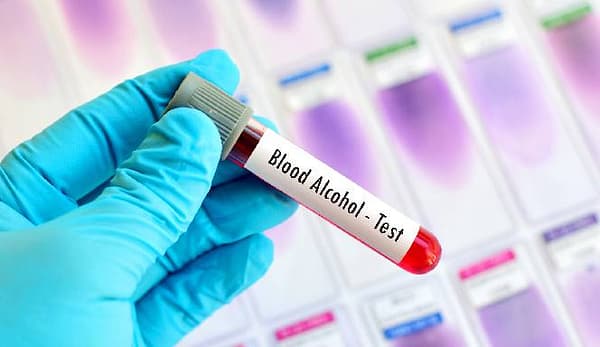
Blood tests are generally considered the most accurate method for determining BAC. However, their reliability depends heavily on proper collection and handling procedures.
The chain of custody is crucial in blood testing. Law enforcement must carefully document where the sample was at all times, from extraction to analysis . Each transfer of custody must be recorded, with any gaps potentially rendering the evidence inadmissible in court .
Proper sample handling is equally important. Blood must be collected in containers with appropriate preservatives to prevent fermentation, which could artificially increase the alcohol concentration . Moreover, the area where blood is drawn should be cleaned with non-alcoholic substances, as alcohol-based cleaning products can contaminate the sample .
According to the U.S. Supreme Court ruling in Birchfield v. North Dakota, police officers must obtain a warrant before forcing someone to submit to a blood test . Consequently, officers typically secure a telephonic warrant by presenting facts that support the need for blood testing .
Urine Tests: Why They're No Longer Admissible in Some States
Urine tests have become increasingly disfavored and are often seen as a last resort when breath and blood tests aren't viable options . Several scientific and practical limitations have led some states to restrict their admissibility.
Primarily, urine tests don't directly measure current BAC but rather reflect what was in the system hours ago . Although there's a proportional relationship between urine alcohol concentration and BAC, the conversion is merely an estimate and not very reliable . The level of alcohol in urine can be 1.33 times the level in blood, but this ratio varies widely between individuals .
Proper collection protocol requires a "first void" procedure—emptying the bladder completely and waiting 20-30 minutes before collecting the sample . Many law enforcement agencies skip this crucial step, resulting in inflated numbers and unreliable results .
Besides technical issues, urine tests present practical challenges. Unlike breath tests, they require private facilities and someone must observe the sample collection to ensure integrity, creating privacy concerns . Subsequently, these practical and scientific limitations have led many states to restrict urine testing to specific circumstances or eliminate their admissibility altogether.
Common Technical Failures in Modern DUI Tests
Technical reliability remains the Achilles heel of modern blood alcohol testing methods. Despite their widespread use in law enforcement, several mechanical and operational issues frequently compromise test accuracy.
Calibration Drift in Breathalyzer Devices
Breathalyzer devices suffer from a phenomenon known as calibration drift, wherein sensor sensitivity gradually diminishes over time. Similar to a guitar going out of tune, these devices require regular adjustment to maintain precision . Without proper maintenance, readings can become significantly higher or lower than actual blood alcohol levels. Regrettably, calibration drift stands as the primary source of false test results .
Law enforcement agencies must follow strict calibration schedules, typically checking devices every 30 days using certified reference standards . Comprehensive logs should document each calibration event, including date, time, operator name, and any adjustments made . Yet, many departments fail to adhere to these protocols. Studies reveal that for approximately 23% of users, the actual BAC can be substantially lower than indicated—sometimes by as much as 15% .
Software Bugs in Dräger Alcotest 9510
The Dräger Alcotest 9510, widely used by police departments, contains software flaws that can produce erroneous readings . Sullivan Law Group attorneys discovered a particularly concerning issue: as the device's fuel cell ages and naturally reports lower BAC readings, the software automatically increases the reported results to compensate .
Furthermore, independent experts identified problems with breath temperature correction. Since body temperature fluctuations can alter test results significantly—with a single degree increase potentially inflating readings by 6%—proper temperature adjustment is crucial . Nonetheless, certain jurisdictions chose not to install temperature measurement components in their devices .
Another software issue involves calibration age correction. The code intended to adjust for fuel cell degradation limits adjustments to only the first six months, despite breathalyzers requiring annual recalibration . Critically, the correction algorithm doesn't account for usage frequency, treating heavily used units the same as rarely used ones .
Expired Mouthpieces and Sensor Contamination
Breathalyzer sensors gradually deteriorate through exposure to environmental factors such as heat, dust, and chemicals . This sensor wear directly impacts measurement accuracy. Additionally, many agencies fail to replace mouthpieces according to manufacturer schedules.
Another overlooked issue involves contamination from external sources. Ethyl alcohol in hand sanitizers can affect sensor sensitivity, sometimes producing false positive readings between +0.012% and +0.018% BAC . Likewise, the sensor may sustain damage upon contact with silicon, rubber, volatile chemicals, and chlorine-based substances .
Mouth alcohol presents a particular challenge for accurate testing. Though manufacturers program "slope detector" algorithms to identify mouth alcohol contamination, research indicates these detectors work correctly only about 52% of the time . Moreover, manufacturers typically keep these algorithms proprietary, preventing independent verification of their effectiveness .
Environmental Interference: Temperature and Humidity Effects
Environmental conditions dramatically influence breathalyzer accuracy. Temperature affects both the device itself and the sample analysis. Most breathalyzers perform optimally between 20°C and 30°C (68°F-86°F) . Outside this range, sensor performance deteriorates. Cold conditions cause breath to condense, altering how sensors interpret alcohol levels, whereas extreme heat interferes with sensor calibration .
Humidity likewise plays a critical role. High humidity can dilute the alcohol concentration in breath samples, potentially causing false negatives. Conversely, excessively dry conditions might produce higher-than-accurate readings due to the absence of interfering water vapor . Low atmospheric pressure, common at higher altitudes, allows alcohol to evaporate more readily, potentially inflating BAC readings .
Perhaps most concerning, some breathalyzers' temperature checks have been disabled in certain state configurations. Consequently, units could record results even when operating outside their requirements, with no indication on the printout that the test might be invalid .
Medical and Biological Factors That Skew BAC Results
Beyond technical issues with testing equipment, physiological and biological factors often skew blood alcohol content results. Individual medical conditions can cause innocent drivers to face DUI charges despite minimal or no alcohol consumption.
GERD and Acid Reflux Impact on Breath Tests
Gastroesophageal reflux disease (GERD) presents a significant challenge to breath test accuracy. This condition occurs when the pyloric sphincter between the stomach and esophagus opens inappropriately, allowing stomach contents to flow back into the esophagus and mouth. For individuals who have consumed alcohol, this reflux introduces unprocessed alcohol directly from the stomach into the mouth.
During a breath test, this "mouth alcohol" mixes with deep lung air, causing cumulative readings that falsely inflate BAC results. According to Dr. A.W. Jones, a leading scientist in alcohol breath testing, GERD's impact depends primarily on the timing between drinking and testing. The closer in time the breath test occurs to alcohol consumption, the greater the likelihood of inaccurate results.
Some experts believe GERD allows alcohol to remain in the stomach for up to three hours after drinking. Notably, most breath tests happen within two hours of the last drink, making GERD highly relevant in many cases. Hiatal hernias produce similar effects by forcing stomach contents, including alcohol, into the esophagus.
Diabetes and Acetone Misreadings
Diabetics face unique challenges with breath testing through several mechanisms. When blood sugar levels rise and insulin function is compromised, the body burns fat instead of glucose, producing ketones as byproducts. These ketones, particularly acetone, get excreted through breath.
Some breathalyzers cannot distinguish between acetone and ethyl alcohol, resulting in false positives. Type 1 diabetics experiencing ketosis may register as intoxicated without drinking any alcohol whatsoever. This occurs specifically when diabetics are ketotic – often during episodes of poor glucose management.
Nevertheless, the National Highway Traffic Safety Administration has downplayed this issue, stating that acetone levels rarely reach the threshold needed to produce significant BAC readings in functioning drivers. Their research indicates a practical maximum of 0.01%-0.02% BAC influence from acetone alone.
Mouth Alcohol from Recent Consumption or Mouthwash
Residual mouth alcohol represents one of the most common causes of false positive breath tests. After consuming alcohol, some remains temporarily trapped in mouth tissues. Sources include:
- Recent alcohol consumption (even small amounts)
- Alcohol-containing products like mouthwash (Listerine contains 26.9% alcohol)
- Dental work or dentures that trap alcohol
- Dental cavities or recent dental surgery
The U.S. Department of Transportation acknowledges this issue, requiring officers to observe suspects for 15-20 minutes before testing to ensure mouth alcohol dissipates. Unfortunately, many officers administer tests prematurely, especially when suspects fear admitting recent consumption might harm their case.
Scientific studies demonstrate how quickly mouthwash can affect readings. Breath alcohol values following Listerine use measured 52.8 mmol/L (240 mg/dL) after two minutes, decaying exponentially thereafter. Even after ten minutes, some residual effect remained, potentially influencing borderline cases.
Scientific Studies That Question Test Accuracy
Multiple scientific investigations have called into question the reliability of both consumer and police-grade blood alcohol testing devices. These studies expose systematic issues beyond isolated device failures.
University of Pennsylvania Study on Personal Devices
Researchers at the Perelman School of Medicine conducted a comprehensive validation study comparing smartphone-paired breathalyzers to venipuncture BAC testing (the gold standard) and police-grade devices . Twenty moderate drinkers consumed vodka to reach peak BACs between 0.06% and 0.14% . The findings revealed troubling inconsistencies – all devices underestimated BAC by more than 0.01% .
Even more concerning, certain popular devices performed dangerously below standards. The Drinkmate and DRIVESAFE Evoc devices failed to detect BrAC levels of 0.08% more than 50% of the time compared to police-grade devices . Essentially, these consumer products would mislead users into thinking they were legally safe to drive when they were actually impaired .
New York Times Investigation on Police-Grade Devices
In 2019, The New York Times published a landmark investigation into police breathalyzers after analyzing tens of thousands of documents and interviewing over 100 lawyers, scientists, and officials . Their investigation discovered that machines marketed as precise to the third decimal place frequently generated skewed results .
The Times identified numerous technical deficiencies – machines requiring precise calibration that weren't properly maintained, devices producing results 40% too high, and programming errors in device software . Furthermore, in some cases, states selected devices their own technical experts didn't trust .
Massachusetts and New Jersey Test Invalidations
Based primarily on scientific evidence questioning test accuracy, courts in Massachusetts and New Jersey invalidated over 30,000 breath tests in a single 12-month period . In Massachusetts, Judge Robert Brennan issued a statewide suspension of breath test results in November 2019 after finding "presumptive unreliability" in thousands of tests .
Independent experts examining Massachusetts' Alcotest 9510 devices discovered that instead of generating error messages when inconsistent results occurred, the machines simply printed potentially incorrect results . Ultimately, approximately 36,000 test results spanning eight years were deemed inadmissible .
Similarly, New Jersey's Supreme Court ruled that proper calibration protocols were essential after discovering a State Police coordinator failed to use appropriate thermometers when calibrating devices . This decision called into question over 20,000 convictions between 2008-2015 , with experts finding "thousands of programming errors" in the Alcotest 7110 software .
Legal Challenges and Courtroom Implications
When blood alcohol tests yield disputed results, defense attorneys employ specific legal strategies to challenge their admissibility in court. These challenges often determine whether a DUI case proceeds or collapses entirely.
Suppression Motions Based on Calibration Logs
Defense attorneys frequently file suppression motions targeting breathalyzer maintenance records. In California, Title 17 of the Code of Regulations mandates thorough documentation of calibration procedures, chain of custody, and observation notes . Accordingly, missing or irregular calibration logs provide grounds to question test reliability. These records typically aren't included in initial discovery packets, requiring specific requests or formal motions . Indeed, courts examine maintenance documentation to verify devices meet legal standards for scientific evidence . Upon discovering calibration inconsistencies, judges may exclude test results completely, potentially leading to case dismissal .
Cross-Examination of Operator Certification
Effective cross-examination of breathalyzer operators remains crucial in DUI defense. Questioning typically focuses on whether the officer maintained continuous observation of the suspect for 15-20 minutes prior to testing . This observation period ensures the defendant hasn't consumed anything, burped, or regurgitated—actions that could artificially increase mouth alcohol readings . Furthermore, attorneys challenge operator training, proper administration protocols, and certification compliance . Establishing violations of standardized procedures often leads to test exclusion in some jurisdictions or diminishes evidence credibility in others .
Implied Consent Laws and Refusal Penalties
Implied consent laws establish that obtaining a driver's license constitutes automatic agreement to chemical testing when suspected of DUI . Henceforth, refusing these tests triggers automatic administrative penalties regardless of criminal case outcomes . First-time refusal in California results in a one-year license suspension plus an additional two days in jail if convicted . New York imposes fines up to $500 plus a six-month to one-year license suspension . Massachusetts implements an automatic six-month suspension for first-time refusals . Interestingly, approximately 20% of DUI suspects nationwide refuse chemical testing despite these penalties .
Conclusion
Despite their widespread acceptance in law enforcement and courtrooms, blood alcohol testing methods clearly suffer from significant technical and biological limitations. Throughout this examination, evidence points to troubling flaws in breathalyzers, blood tests, and urine screenings that undermine their reliability. Calibration drift, software bugs, environmental interference, and improper maintenance collectively compromise the accuracy of devices meant to determine a person's sobriety.
Additionally, biological factors such as GERD, diabetes, and residual mouth alcohol further complicate testing accuracy, potentially criminalizing individuals who have consumed minimal or no alcohol whatsoever. Scientific studies from respected institutions confirm these concerns, revealing systematic failures rather than isolated incidents.
The legal system has begun acknowledging these issues, evidenced by mass invalidations of test results in states like Massachusetts and New Jersey. Consequently, defense attorneys now routinely challenge test reliability through suppression motions and rigorous cross-examination of testing procedures.
Citizens facing DUI charges should understand both their rights and the scientific limitations of these testing methods. Law enforcement agencies must likewise adopt stricter maintenance protocols, better operator training, and enhanced quality control measures.
The presumption that blood alcohol tests provide infallible scientific evidence no longer stands under scrutiny. Until manufacturers address these fundamental flaws and agencies implement proper testing procedures, innocent drivers will continue facing life-altering consequences based on questionable evidence. Justice demands better standards for technologies that wield such power over citizens' lives and liberties.

Need a Criminal Defense Attorney? CALL NOW: 213-932-8922
Yuliya Kelmansky is an Expert Criminal Defense Attorney who has over 10 years of practice defending a variety of criminal cases.