The Optional Polygraph Test: Protect Your Legal Rights
A polygraph test might appear to offer a simple path to proving your innocence, but agreeing to one in California can seriously compromise your legal position. These examinations remain inadmissible in California courts due to their scientific unreliability, yet statements you make during testing can be used against you in criminal proceedings. Law enforcement may present the polygraph as routine or beneficial, but the reality involves significant constitutional risks.
Many times investigators will use the polygraph results simply as a tool to coerce a confession or more evidence from the person being tested. They are even allowed to lie to you and declare you didn’t pass it, when in fact you may very well have.
This is why you always need to exercise your right to remain silent, and ask for a lawyer.
The Science Behind Polygraph Tests and Why It’s Questionable as a “Lie Detector”
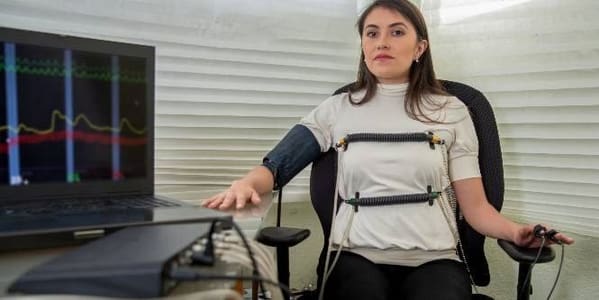
Polygraph machines measure physiological changes that occur when someone answers questions. The device monitors heart rate, blood pressure, respiration rate, perspiration, and skin conductivity through sensors attached to the body. A blood pressure cuff wraps around the upper arm to track cardiovascular activity, while pneumograph tubes placed around the chest and abdomen record breathing patterns. Fingertip sensors measure galvanic skin response, detecting sweat production through changes in electrical conductivity.
Physiological Responses Measured During Testing
The cardiovascular measurements track both heart rate and blood pressure fluctuations. Blood pressure changes modulate air pressure within the arm cuff, which the polygraph records and displays. Respiratory monitoring uses two pneumograph devices that measure thoracic movements and volume changes during breathing. The galvanometer attached to fingertips sends a small electric current through the skin. Dry skin resists electricity, but perspiration reduces this resistance, allowing more current to pass through.
Polygraph examiners monitor these physiological responses throughout questioning sessions. The machine records all measurements on graph paper or computer displays, creating a visual representation of the subject's physical state during each answer. Examiners analyze these readouts to identify patterns they interpret as signs of deception.
The Theory Behind Lie Detection
The polygraph operates on two assumptions: deception produces distinct psychological states across different people, and these states generate reliably different physiological reactions. Examiners ask control questions designed to produce known truthful or deceptive responses, then compare those physiological patterns to responses from relevant questions. The underlying belief holds that lying activates the autonomic nervous system differently than truth-telling.
In reality, the test doesn't measure lies or truthfulness directly. Polygraphs measure arousal, which anxiety, nervousness, fear, confusion, or other emotions can trigger. The device cannot differentiate between anxiety caused by dishonesty and anxiety caused by other factors (psychological, environmental or medical). Someone might respond strongly to a question because it carries significance in an investigation, not because they're lying. Conversely, individuals with certain personality traits may control their physical responses even when being deceptive.
Common Misconceptions About Polygraph Accuracy
Many people believe polygraph tests provide near-perfect lie detection. A 2003 National Academy of Sciences report found that polygraph testing could identify lies about 70% of the time, though its false-positive error rate remained unknown. The report concluded the scientific basis for polygraph testing was weak and much research on accuracy was of low quality. A 2019 review confirmed these conclusions still stand, with research quality changing little since 2003.
The American Polygraph Association claims an 89% accuracy rate, but critics note this research wasn't peer-reviewed or conducted by independent researchers. Most psychologists and scientists agree there is little basis for polygraph validity. The American Psychological Association states most psychologists concur that little evidence supports polygraph accuracy in detecting lies.
Another misconception holds that polygraph results are admissible in court. Most state and federal jurisdictions maintain rules against admitting lie detector evidence. The Supreme Court determined that excluding polygraph evidence doesn't violate a defendant's right to fair trial. California courts specifically reject polygraph evidence due to the unreliable science behind these tests.
Why Polygraph Tests Are Unreliable and Inadmissible in California Courts
Scientific research consistently demonstrates that polygraph tests produce unacceptably high error rates. Studies show accuracy ranges from 60% to 90%, percentages insufficient to meet legal standards for scientific reliability. A landmark 2003 National Academy of Sciences report found polygraph testing could identify lies about 70% of the time, but concluded the scientific basis was weak and research quality low. A 2019 review confirmed these findings remain valid.
False Positives and False Negatives
False positives occur when truthful individuals fail polygraph tests. Research indicates a false positive rate of approximately 15%, meaning innocent people are incorrectly identified as deceptive. False negatives, where liars pass the test, occur at rates between 10% and 20%. Some research suggests polygraphs identify just 75% of guilty people while accurately judging truth-tellers only 57% of the time.
Screening situations magnify these problems. In typical personnel security screening with a base rate of one guilty person out of 1,000 employees, a 95% accurate polygraph would identify the guilty person but also flag 50 innocent people as deceptive. Even assuming 99% validity, there would still be 10 false positives for every correct detection. Laboratory studies show accuracy rates ranging from the low 60s to mid-90s, but real-world field studies consistently report error rates high enough to raise due-process concerns.
Subjective Interpretation by Examiners
Interpretation of polygraph results depends heavily on examiner judgment. The machine produces physiological data, but examiners draw conclusions about truthfulness based on their subjective analysis. Different examiners might reach different conclusions from identical data, leading to inconsistent assessments. The choice of which physiological response was decisive often depends on impressions formed during pre-test interviews rather than objective criteria.
Examiner bias presents additional concerns. Some operators may be financially motivated to provide sought-after results. Examiners working exclusively for prosecutors or employers face conflicts of interest. The subjective nature of question selection also affects outcomes, as examiners must judge whether control questions have equal arousal value to relevant questions.
California's Legal Position on Polygraph Evidence
California Evidence Code § 351.1 establishes a categorical ban on polygraph evidence. Courts cannot admit polygraph results, examiner opinions, or any reference to offers to take, failures to take, or the taking of polygraph examinations in criminal proceedings unless every party signs a written stipulation. Even then, trial judges retain discretion to exclude evidence for undue prejudice or lack of probative value.
The California Supreme Court adopted the Kelly/Frye reliability test for novel scientific evidence in People v. Kelly (1976). Polygraph technology repeatedly failed this test because it lacked general acceptance in the scientific community. The Court reaffirmed this exclusion in People v. Wilkinson (2004), describing § 351.1 as a categorical prohibition.
Stress Responses vs. Actual Deception
Polygraphs measure generalized arousal, not deception itself. Anxiety, embarrassment, trauma, lack of sleep, caffeine, and certain medications can trigger physiological responses identical to those produced by lying. Individuals with PTSD experience heightened autonomic nervous system reactivity, causing truthful answers to produce responses that appear deceptive. Medical conditions like diabetes can cause physical symptoms examiners misinterpret as deception.
The physiological responses measured are not uniquely related to deception. Multiple psychological and physiological processes, including some consciously controlled, affect polygraph measures and test results.
The Hidden Risks of Taking a Police-Administered Polygraph
Police departments use polygraph examinations as interrogation tools rather than truth-verification devices. The testing process creates multiple opportunities for law enforcement to gather incriminating information, pressure suspects into confessions, and build cases regardless of whether someone passes or fails.
Statements Made During Testing Can Be Used Against You
Polygraph results themselves cannot be introduced as evidence in California courts, but statements you make during the examination face no such restriction. Anything said before, during, or after the polygraph session can be used against you in criminal proceedings. Prosecutors routinely present these statements in court by referring to the polygraph examiner as an "investigator" rather than a polygrapher, concealing the true nature of the questioning.
The pre-test interview alone may last two hours or more while the actual testing phase runs less than 15 minutes. During this extended interview, examiners establish the salience of specific questions and secure your cooperation. This lengthy process provides ample opportunity for you to make damaging statements. Research shows disclosures of new information occur in over 70% of polygraph tests, including those with truthful outcomes.
Interrogation Tactics During Polygraph Examinations
Law enforcement agencies train their best interrogators as polygraph examiners specifically to extract damaging statements from suspects. The examination procedure promotes your belief in the machine's infallibility, which can augment physical reactions by increasing fear and anxiety over detection. Police legally deceive suspects during interrogation, including lying about polygraph results and telling suspects the machine proved they are lying.
Examiners may ask questions that could incriminate you. Refusing to answer affects test results and leads examiners to conclude you are deceptive. This creates a psychological trap where remaining silent appears suspicious while answering provides prosecution material.
How Failed Results Influence Police Investigation
A failed result or deceptive outcome justifies continued interrogation, additional psychological pressure, and attempts to extract confessions or additional statements. Those statements are admissible in court. Research on false confessions demonstrates that psychological pressure from being told a machine proved you lied causes innocent people to confess to end the process.
Police use inconclusive or failed polygraph results as evidence of guilt when deciding whether to continue investigating you. Approximately 25% of persons tested are disqualified from police employment based on information developed during polygraph testing.
Constitutional Rights at Risk
The polygraph examination process conflicts with your Fifth Amendment right against self-incrimination and Sixth Amendment right to an attorney. Examinations cannot be conducted without your voluntary cooperation, but police pressure and deception tactics undermine the voluntary nature of consent. Miranda warnings before polygraph testing do not adequately protect your rights when the entire process is designed to extract information through psychological manipulation.
California Labor Code Protections Against Mandatory Polygraph Testing
California Labor Code section 432.2 establishes strong protections for workers facing workplace polygraph demands. This statute prohibits employers from requiring job applicants or current employees to submit to polygraph tests as a condition of employment or continued employment. The law extends beyond simple prohibition, requiring employers to provide written notice of these rights before administering any such test.
Employment-Related Polygraph Prohibitions
Employers cannot demand, require, or request employees to take polygraph tests. This prohibition covers hiring decisions, promotion considerations, and ongoing employment status. If an employer chooses to administer a polygraph test, they must first advise the person in writing of the rights guaranteed by section 432.2. The legislature added this notice requirement in 1981 specifically to prevent abuses suffered by California workers who were often unfamiliar with their rights regarding polygraph testing.
Employers who label tests as "voluntary" while creating pressure for participation still violate the statute. Using test refusal as grounds for termination, demotion, or any adverse employment action constitutes illegal retaliation. The California Supreme Court recognized that polygraph examinations inherently intrude upon the constitutionally protected zone of individual privacy.
Exceptions for Law Enforcement and Security Positions
The prohibition does not apply to federal government agencies or state government entities and their local subdivisions. Counties, cities, districts, authorities, and other governmental agencies remain exempt from these restrictions. Federal law similarly permits polygraph testing for certain security service firms, including armored car companies, alarm services, and guard services. Pharmaceutical manufacturers, distributors, and dispensers may also administer polygraph tests to specific job applicants under federal regulations.
Legal Consequences for Employer Violations
Section 432.2 serves as valid basis for wrongful termination claims in violation of public policy. Courts have established four requirements such claims must satisfy: the policy must be supported by constitutional or statutory provisions, it must benefit the public rather than individual interests, it must have been articulated at termination time, and it must be fundamental and substantial. Labor Code 432.2 meets all four requirements.
Employers face substantial damages for violations. One case resulted in a $100,000 damages award against an employer who failed to provide proper written notice. Claims can be brought up to four years after the violation occurs under the statute of limitations for wrongful termination in violation of public policy.
How to Protect Your Rights When Asked to Take a Polygraph
Polygraph examinations during criminal investigations are completely voluntary in the United States. No law enforcement officer can compel you to take one. Your constitutional protections provide clear grounds for refusal.
Your Right to Refuse Without Legal Consequences
Based on the Fifth and Fourteenth Amendments to the United States Constitution, you cannot be compelled to answer questions that may result in criminal liability. Refusing a polygraph test is not a criminal offense and does not constitute obstruction of justice. You cannot be arrested or charged solely because you declined testing. In most jurisdictions, prosecutors cannot inform the jury that you refused a polygraph test, protecting you from having the exercise of your constitutional rights used against you at trial.
The Private Polygraph Alternative
An experienced criminal defense lawyer can arrange for a private polygraph examination. In this scenario, a polygraphist conducts an examination privately to see how well you are likely to fare if you take a polygraph through law enforcement. If you fail the private polygraph, the results remain confidential under attorney-client privilege. If you pass, the results can be shared with law enforcement and prosecution with your consent. This alternative offers strategic advantages while protecting unfavorable outcomes.
When to Consult a Criminal Defense Attorney
You should always consult with an experienced criminal defense lawyer before agreeing to take, or taking, a polygraph. Whether innocent or guilty, speak with a criminal defense lawyer before agreeing to or declining a polygraph. An attorney can explain the potential advantages and disadvantages as they relate to your particular situation and help determine whether taking a polygraph is in your best interest.
What to Say When Declining a Test
The recommended response is simple and calm: "I would like to speak with my attorney before making any decisions about testing". You do not need to explain your reasoning, debate the merits of polygraph testing, or justify your decision. Other appropriate responses include: "I am exercising my constitutional right to decline. I would like to speak with my attorney", or "I appreciate the offer, but I would like to consult with an attorney before making that decision".
Documenting Polygraph Requests and Pressure
You cannot be penalized for changing your mind about a polygraph test. If you initially agreed but later decide against it, contact law enforcement and inform them that you changed your mind because an attorney advised you not to take the test. Law enforcement cannot hold you for refusal to take a lie detector test, and it cannot be held against you for refusal.
Call a Lawyer Immediately
Polygraph tests represent a significant legal risk despite their scientific unreliability. As has been noted, California courts exclude polygraph evidence on account of weak scientific foundations, yet statements you make during examinations remain fully admissible in criminal proceedings. Law enforcement uses these tests as interrogation tools designed to extract incriminating information rather than verify truth.
Above all, remember that refusing a polygraph test is your constitutional right and carries no legal penalty. Whether facing criminal investigation or workplace pressure, consult with an experienced criminal defense attorney before making any decisions about polygraph testing. Your attorney can arrange private testing if strategically beneficial while protecting you from the hidden dangers that police-administered examinations create for your legal position.
Understanding why polygraph tests are problematic, how California law addresses them, and the specific protections available to you is essential for safeguarding your legal rights when facing such requests.

Need a Criminal Defense Attorney? CALL NOW: 213-932-8922
Yuliya Kelmansky is an Expert Criminal Defense Attorney who has over 10 years of practice defending a variety of criminal cases.